

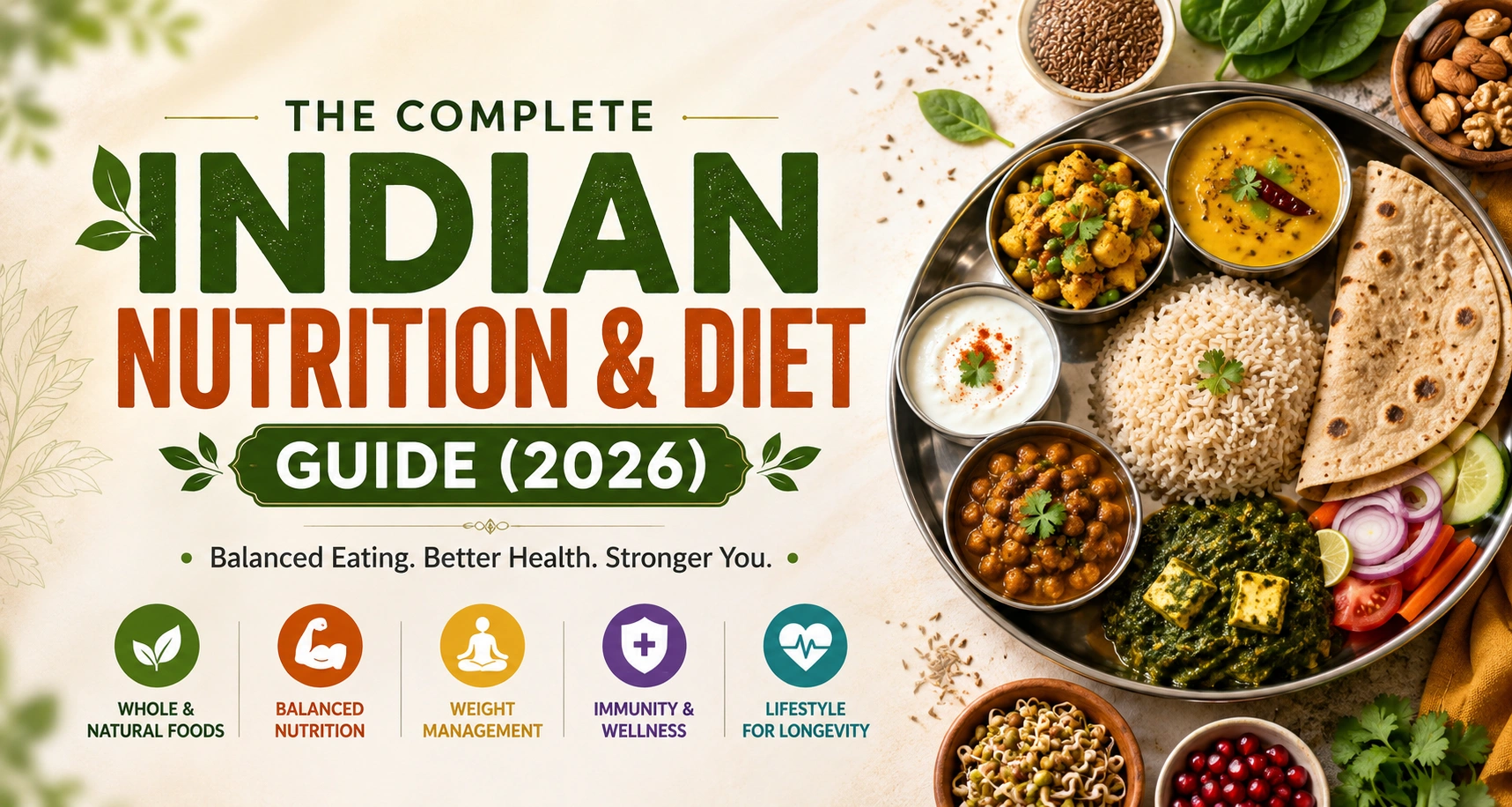
Nutrition advice online tends to come in two flavors: generic Western diet plans that ignore how Indians actually eat, or single-ingredient hype — one drink, one supplement, one “hack” — with no bigger picture around it. Neither actually helps you build something sustainable.
This guide ties together everything we’ve published on food, diet, and metabolism into one place, organized by what you’re actually trying to solve rather than publish date. Whether you’re rebuilding your daily plate from scratch, chasing a stubborn stall in weight loss, or trying to figure out if a GLP-1 medication is worth discussing with your doctor, there’s a section below built for that specific problem.
What’s in this guide
- Building your daily diet
- High-protein meals and breakfasts
- Weight-loss drinks and detox routines
- Metabolism, stress, and cortisol belly
- GLP-1 medications and medical weight loss
- Nutrient deficiencies and supplements
- Smart snacking
- Common questions
- Where to start
Building your daily diet
Before chasing any single food or drink, get the overall plate right. Indian diets already have real advantages here — lentils, vegetables, and whole grains are staples in most households — but two things quietly undo that advantage: portion balance and meal timing. A thali that looks healthy can still lean too heavily on refined carbs if the dal and vegetable portions shrink to make room for extra rice or an extra roti.
Start with how to create a balanced Indian diet plan using the “perfect plate” method, which breaks the plate down into proportions rather than calorie counts — a far easier system to stick to long-term. Once that structure is in place, apply it toward weight-loss goals specifically with our Indian diet plan for weight loss, which adjusts portion ratios without cutting out entire food groups.
If you want to borrow ideas from outside India, our breakdown of the Mediterranean diet in 2026 covers what actually transfers well to an Indian kitchen (olive oil swaps, fish and legume ratios) and what doesn’t (a lot of the specific produce isn’t local or seasonal here). And if you’re looking to diversify beyond your usual weekly rotation, regional Indian cuisine, rediscovering tradition highlights dishes from across the country that are both nutritionally balanced and rarely make it onto restaurant menus. For weekday practicality — because none of this works if it’s too much effort to sustain — our Indian meal prep ideas for office lunch guide covers vegetarian, easy-to-pack options that hold up well by lunchtime.
High-protein meals and breakfasts
Protein is the one macronutrient most Indian diets under-deliver on, and it shows up most obviously at breakfast — a meal that, in a lot of households, is built almost entirely around refined carbohydrates (poha, plain paratha, white bread). A few targeted swaps make a bigger difference here than almost anywhere else in the day, since breakfast protein has a knock-on effect on cravings and energy for the rest of the day.
If you’re vegetarian, start with the best protein foods for vegetarians in India to understand your options beyond paneer and dal — there’s more variety available than most people realize, from soy-based options to specific lentil combinations that improve amino acid completeness. For actual recipes rather than just ingredient lists, we’ve got both a general high protein breakfast ideas roundup and a more India-specific 10 high protein Indian breakfast recipes, quick and filling list for mornings when you’re short on time. If weight management is the specific goal rather than just protein, 7 healthy, easy Indian breakfast recipes for weight loss balances protein with calorie awareness. And if you’re eating for two, our best breakfast smoothies for pregnancy guide accounts for the additional nutrient needs that come with that.
Weight-loss drinks and detox routines
Drinks are one of the easiest habits to make consistent, since they don’t require the planning or willpower that a full meal change does — and we’ve tested several of the most talked-about options rather than just repeating popular claims.
Our best detox drinks at home in India guide is the broadest starting point, covering combinations that use common kitchen ingredients. From there, go deeper into specific options depending on your goal: fat-burning drinks to add to your daily routine for general metabolic support, the matcha green tea smoothie for weight loss if you want something closer to a light meal replacement, and clove water for weight loss for a simpler, single-ingredient option. If you’re keeping energy up during a fasting period, 6 energizing drinks to power through Navratri is built specifically around fasting-friendly ingredients. And if chagaccino has been showing up on every café menu near you, our piece on chagaccino and mushroom tea/coffee trends looks at what’s actually behind the trend versus what’s marketing.
Metabolism, stress, and cortisol belly
Diet alone doesn’t explain every case of stubborn weight gain, particularly around the midsection — stress hormones play a real, well-documented role, and this has become one of the most-searched topics in our nutrition content over the past year.
Start with why every Indian should track their metabolic health in 2026 for the broader context on why metabolic markers matter beyond just weight on a scale. From there, 7 morning habits that boost metabolism covers practical daily changes that compound over weeks rather than promising overnight results. If you’ve heard the term “cortisol belly” but aren’t sure what it actually means physiologically, what is cortisol belly? the science behind stress and weight gain explains the mechanism, and how to reduce cortisol belly naturally covers what actually helps versus what’s oversold on social media. Cravings tie directly into this cycle too — chronic stress and blood sugar swings feed each other — so see how to stop sugar cravings with science-backed hacks if that’s a recurring issue for you.
GLP-1 medications and medical weight loss
For readers considering a medical route rather than diet and exercise alone, GLP-1 drugs have become one of the most-discussed weight-loss topics of the past two years, and the conversation in India is still catching up to the amount of information (and misinformation) circulating elsewhere.
Our GLP-1 drugs explained: Ozempic, Wegovy, Mounjaro guide is the place to start for understanding how these medications actually work at a mechanism level, rather than just what they’re prescribed for. From there, is Ozempic worth it? benefits, side effects, and what doctors say covers the tradeoffs in more depth, including the parts of the conversation that tend to get skipped in social media posts. If you’re already on a GLP-1 medication, appetite suppression makes hitting your protein targets trickier than usual — our high protein snacks for GLP-1, for one person guide is built specifically around smaller, protein-dense portions that work with a reduced appetite rather than against it.
Nutrient deficiencies and supplements
Cutting calories or restricting entire food groups — even with good intentions — can quietly create nutrient gaps that don’t show up until symptoms like fatigue or hair thinning appear months later.
Vitamin B12 deficiency is one of the most common gaps in Indian diets, especially for vegetarians and vegans, since B12 is almost exclusively found in animal products. Alongside that, check whether you’re getting enough essential fatty acids with our best omega-3 supplement for women and flaxseed oil omega 3-6-9 softgel capsules guides — both cover plant-based ways to close a gap that’s harder to fill through diet alone if you don’t eat fish regularly. And for a more traditional angle on nutrition that predates the modern supplement industry entirely, our roundup of India’s top 10 medicinal plants looks at ingredients that have supported wellness for generations, worth understanding on their own terms rather than only through a “supplement” lens.
Smart snacking
Snacking is often where an otherwise solid diet plan quietly falls apart — not because snacking itself is a problem, but because most default snack options (packaged, fried, or sugar-heavy) undo the balance built into the rest of the day. See our healthy snack ideas for adults guide for options that satisfy the same craving without the same tradeoff.
Common questions
Q.1 Do I need to follow all of these guides at once?
No. Pick the section that matches your actual goal right now — most people only need two or three of these at a time, not the whole guide simultaneously.
Q.2 Is it safe to combine detox drinks with a GLP-1 medication?
This is exactly the kind of question to bring to your prescribing doctor rather than decide from an article, since interactions and appetite effects vary by medication and dose.
Q.3 How long before metabolism or cortisol-focused changes show results?
Most of the habits covered in that section are built to compound over 4-8 weeks, not days — that’s a feature of sustainable change, not a downside.
Where to start
If you’re starting from scratch: read the balanced diet plate guide first, pick two or three high-protein breakfast recipes to rotate through during the week, and add one drink from the detox section as a daily habit. Come back to the metabolism and GLP-1 sections only if stress-related weight gain or medical options are specifically relevant to you — they’re not meant to be a universal starting point, just the right next step for the readers who need them.
This guide is updated as we publish new nutrition and diet content — check back for additions.