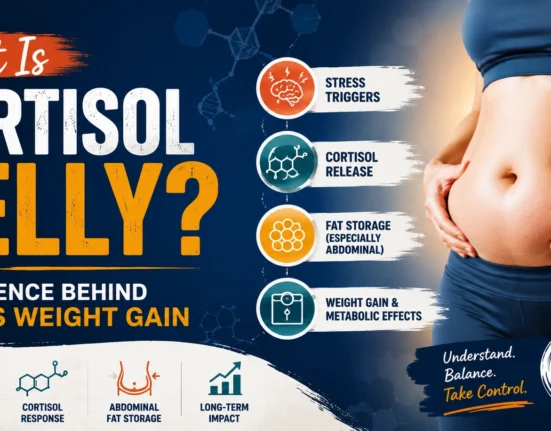

Have you ever cut calories, increased your cardio, and followed your diet perfectly, only to watch the scale stay frozen while your midsection refuses to budge?
If so, you aren’t dealing with a lack of willpower. You are likely dealing with stress belly fat—a physiological response to chronically elevated levels of the stress hormone, cortisol.
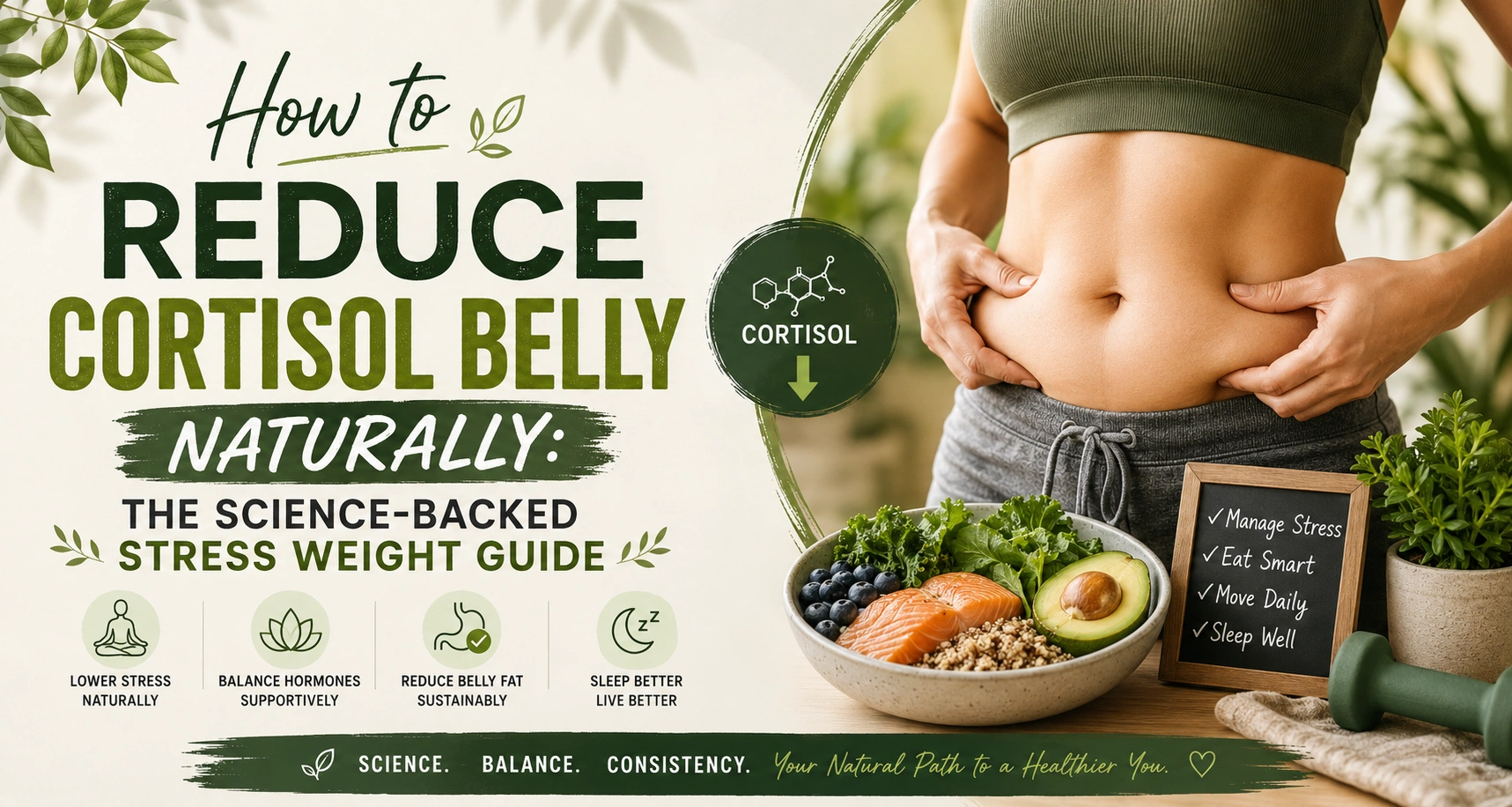
In this comprehensive guide, we will break down the exact cortisol belly symptoms, explore the biological science behind how stress forces your body to store visceral fat, and outline a realistic, step-by-step blueprint on how to reduce cortisol belly and reduce cortisol naturally.
What is “Cortisol Belly”?
In medical literature, “cortisol belly” refers to the accumulation of deep abdominal fat (known as visceral fat) that is triggered by high levels of cortisol. Cortisol is an essential glucocorticoid hormone produced by your adrenal glands. In moderate, acute amounts, cortisol is your friend: it helps you wake up, regulates blood pressure, and fuels your “fight-or-flight” survival mechanism.
However, when modern life keeps your stress response activated 24/7, cortisol levels remain chronically elevated. This triggers a biological process that selectively redirects fat storage away from your limbs and directly to your abdomen.
5 Common Cortisol Belly Symptoms You Should Know
Unlike subcutaneous fat (the soft pinchable fat right under your skin), visceral fat is deeper, harder, and surrounds your vital organs. Recognizing the physiological signs of chronic stress is the first step toward reclaiming your health.
Here are the primary cortisol belly symptoms to look out for:
- A “Hard” Abdominal Midsection: Visceral fat pushes outward from behind the abdominal wall, making your stomach feel firmer and tight rather than soft and jiggly.
- Face Rounding (Moon Face): High cortisol can cause sodium and fluid retention, leading to puffiness around the jawline and face.
- Intense Sugar and Carb Cravings: Cortisol depletes immediate glucose in your bloodstream and tricks your brain into thinking it is in immediate physical danger, causing intense cravings for fast-digesting carbohydrates.
- The “Tired but Wired” Phenomenon: Cortisol should naturally peak in the morning and drop at night. Chronically stressed individuals often have flatlined cortisol during the day (causing fatigue) and a spike at night (causing insomnia).
- Rapid Weight Gain Exclusively Around the Waist: Gaining weight around your stomach while your legs and arms remain relatively lean is a classic hallmark of hormonal, stress-induced fat distribution.
The Biological Science Behind Stress Belly Fat
To understand how to reduce cortisol belly, we must first understand why cortisol targets your waistline in the first place.
Your fat cells are not all identical. Abdominal fat cells have up to four times more cortisol receptors (glucocorticoid receptors) than fat cells located in other parts of your body, such as your thighs or arms.
When your brain perceives stress (whether from a toxic work environment, lack of sleep, or excessive caffeine), it secretes Adrenocorticotropic Hormone (ACTH), telling your adrenal glands to pump out cortisol.
Once in the blood, cortisol activates an enzyme called 11-beta hydroxysteroid dehydrogenase (11-beta HSD). This enzyme, which is highly active in visceral abdominal tissue, converts inactive cortisone into active cortisol right inside your belly’s fat cells.
This process causes: * Increased Lipogenesis: The biological formation and storage of fat. * Suppressed Growth Hormone & Testosterone: Both of which are critical for maintaining lean muscle and burning fat. * Muscle Breakdown (Gluconeogenesis): Cortisol breaks down muscle protein into amino acids to produce glucose, reducing your metabolic rate.
How to Reduce Cortisol Belly Naturally: The 5-Step Blueprint
Reversing hormonal weight gain requires a completely different approach than treating standard, caloric weight gain. If you try to burn off a cortisol belly with extreme caloric deficits and aggressive, high-intensity workouts, you will increase your body’s stress response, causing it to hold onto fat even tighter.
Instead, follow this science-backed blueprint to soothe your nervous system and reduce cortisol naturally.
1. Restructure Your Exercise (Avoid High-Intensity Exhaustion)
While exercise is essential, chronic high-intensity interval training (HIIT) and prolonged cardio sessions throw gasoline on an active cortisol fire. Intense workouts raise cortisol levels significantly. If your body is already stressed, it won’t recover, and your metabolism will stall.
- Prioritize Strength Training: Lift weights 3 to 4 times a week for 45 minutes. Strength training builds muscle, improves insulin sensitivity, and does not spike cortisol to the extent that endurance cardio does.
- Emphasize Low-Intensity Steady State (LISS): Replace intense cardio with daily 30-to-45-minute outdoor walks. Walking lowers your sympathetic (“fight-or-flight”) nervous system and activates the parasympathetic (“rest-and-digest”) state.
- Avoid Working Out Exhausted: If you slept poorly, swap your heavy lifting session for gentle stretching or a walk.
2. Follow an Insulin-Stable, Nutrient-Dense Diet
Cortisol and insulin have an intimate relationship. When cortisol rises, it causes your liver to dump glucose into your bloodstream. Your pancreas must then release insulin to clear it. Chronically high cortisol eventually leads to insulin resistance, making weight loss nearly impossible.
- Never Skip Breakfast: Skipping meals is a physiological stressor that triggers a morning cortisol spike. Eat a high-protein breakfast (at least 30g of protein) within an hour of waking up.
- Prioritize Anti-Inflammatory Foods: Focus on wild-caught fish (rich in Omega-3 fatty acids), leafy greens, berries, olive oil, and avocados. Omega-3s have been clinically shown to reduce cortisol reactivity.
- Ditch the Refined Sugars: Sugar causes rapid glucose and insulin spikes, which force the adrenal glands to release adrenaline and cortisol to stabilize the subsequent crash.
3. Harness Clinically Proven Adaptogens and Micronutrients
Several natural compounds have strong clinical evidence supporting their ability to lower circulating cortisol levels.
- Ashwagandha (KSM-66): This adaptogen is highly researched. Double-blind, placebo-controlled studies have shown that 600mg of Ashwagandha daily can reduce cortisol levels by up to 30% while lowering anxiety and improving sleep quality.
- Magnesium Glycinate: Known as nature’s relaxant, magnesium regulates the hypothalamic-pituitary-adrenal (HPA) axis, helping to calm the nervous system and lower stress hormones.
- L-Theanine: An amino acid found in green tea that promotes relaxation and focus without drowsiness by boosting soothing neurotransmitters like GABA.
4. Optimize the Sleep-Cortisol Cycle
Your circadian rhythm directly dictates your cortisol production. Cortisol should naturally peak around 8:00 AM (to wake you up) and decline to its lowest point around midnight (allowing melatonin to take over). If you sleep less than 7 hours, this cycle breaks.
- Wait to drink your coffee in the morning: A cup of coffee shortly after waking will affect your natural cortisol peak. Wait 90-120 minutes after waking to have your first cup of coffee.
- Eliminate Blue Light Before Bed: Blue light from screens suppresses melatonin and stimulates cortisol production. Put your phone away 60 minutes before sleeping.
- Keep a Strict Sleep Schedule: Going to sleep and waking up at the exact same time every day stabilizes your biological clock and regulates cortisol production.
5. Shift Your Autonomic Nervous System
If you spend your entire day rushing, responding to notifications, and drinking coffee, your sympathetic nervous system is perpetually active. You must intentionally trigger “micro-recoveries” throughout the day to tell your body it is safe.
- Inhale into the Physiological Sights: Double breathe in through your nose and then breathe out slowly and long through your mouth. However, doing this 3-5 times will immediately reduce your heart rate and lower the stress level.
- Audit Your Stimulants: Don’t drink caffeine after 12:00 PM and don’t drink energy drinks. Stimulants elicit the same physiological state as stress, which releases the hormones adrenaline and cortisol.
Summary Checklist: Reversing Stress Belly Fat
To successfully reduce cortisol naturally, print out or save this daily checklist:
| Habit Area | Daily Target Action | Expected Result | | :— | :— | :— | | Nutrition | Eat 30g+ protein within 1 hour of waking up. Avoid refined sugars. | Prevents morning cortisol spikes; stabilizes insulin. | | Exercise | Swap 1 cardio workout for a 30-min walk in nature. Focus on lifting. | Down-regulates fight-or-flight; burns visceral fat. | | Caffeine | Wait 90 minutes after waking before drinking coffee. | Protects natural cortisol waking response. | | Supplements | Supplement with 600mg Ashwagandha and 300mg Magnesium. | Clinically reduces adrenal stress reactivity. | | Sleep | 7-8 hours of sleep. No phone screens 1 hour before bed. | Optimizes overnight fat-burning and muscle recovery. |
Frequently Asked Questions (FAQ)
Q.1 When will cortisol belly go away?
Since a cortisol belly is a problem of the hormones, it will take time for your endocrine system to settle. In 2-3 weeks most people will experience a noticeable decrease in bloated face and puffiness if they focus on regulating their nervous system. The results of a fat burning program around the waist can only be seen in 6-12 weeks after a thorough lifestyle modification.
Q.2 Does calorie restriction get rid of stress belly fat?
No. Severe calorie restriction is a primary physiological stressor. Cutting your calories too low will spike your cortisol, slow down your thyroid, and signal your body to store fat around your vital organs for survival. Focus on eating nutrient-dense, insulin-stable meals instead of extreme starvation.
Q.3 Which exercise is the best to lower cortisol belly?
The most effective exercise is resistance strength training ( 3-4 times per week) + low intensity walking ( daily – LISS). High intensity cardio should be avoided until your body is healed.
Related Topics:-