

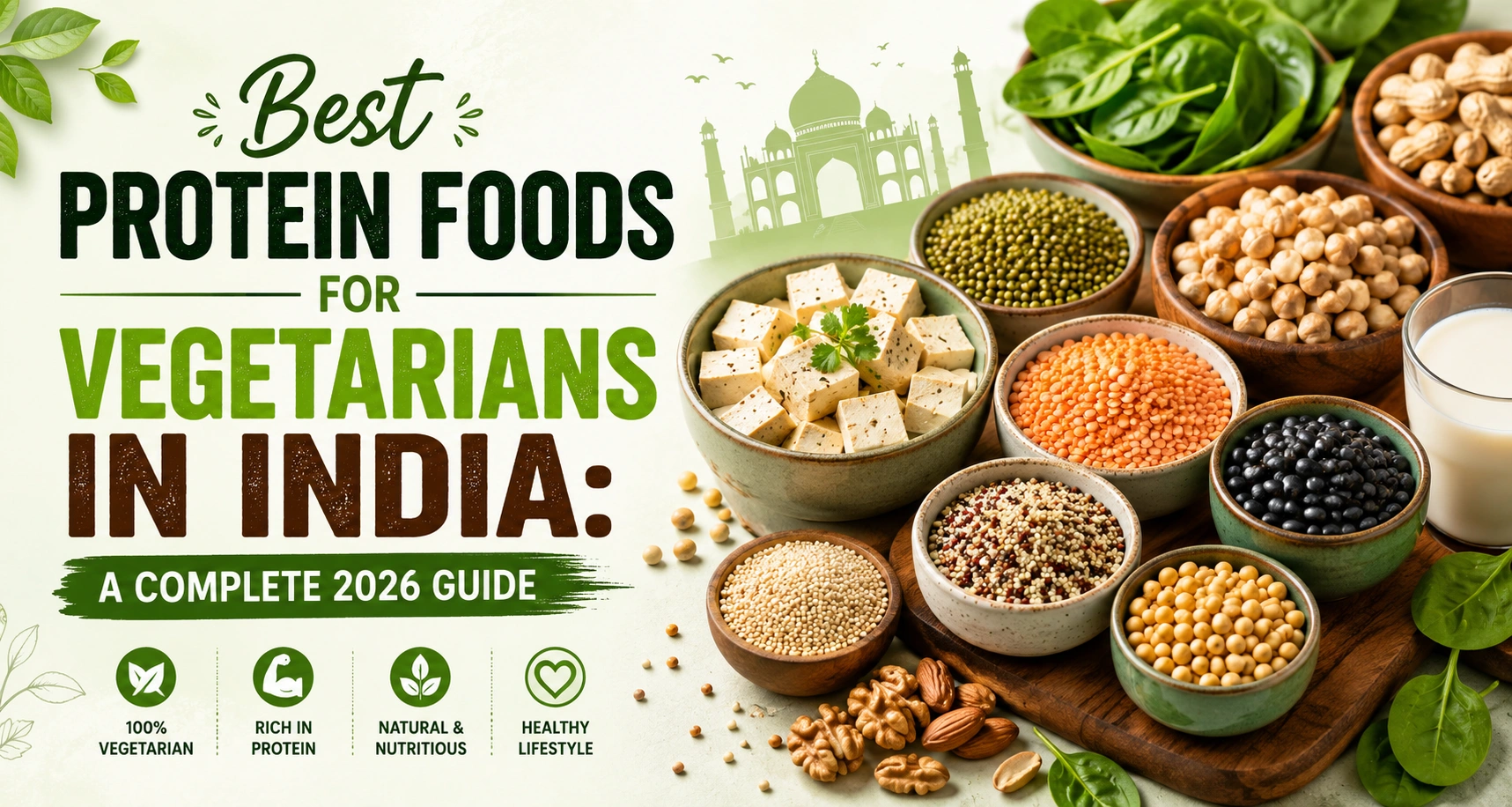
“But where do you get your protein?” If you’re a vegetarian in India, you’ve heard this question more times than you can count — from gym trainers, well-meaning relatives, and fitness influencers who act as if protein only exists inside chicken breasts and eggs. The truth is more interesting, and more reassuring, than that assumption suggests.
India has one of the most protein-rich vegetarian food traditions in the world. Dal, paneer, curd, chana, rajma, soya — these are not compromise foods or protein “alternatives.” They are genuinely excellent sources of protein that have sustained hundreds of millions of people across generations. The problem isn’t availability; it’s knowledge of how much protein each food contains, how to combine them effectively, and how to eat enough of them consistently.
This guide covers the best protein foods for vegetarians in India — with exact protein counts, costs in INR, meal planning guidance, and the specific advice that separates those who actually hit their protein targets from those who try and fall short.
FEATURED SNIPPET TARGET The best protein foods for vegetarians India are: soya chunks (52g/100g — highest protein), peanuts (25g/100g), paneer (18g/100g), hemp seeds (31g/100g), quinoa (14g/100g), chana and rajma (8–9g cooked), moong dal (7g cooked), Greek yoghurt/hung curd (10g/100g), tofu (8–10g/100g), and milk (3.4g/100ml). Combining legumes with grains (dal-rice, rajma-roti) creates complete proteins.
Why Protein Matters — And How Much You Actually Need
Protein is not just a bodybuilding nutrient. It’s the building material for every cell in your body — muscles, enzymes, hormones, antibodies, and the structural proteins in your hair, skin, and nails. Adequate protein intake is essential for weight management, immune function, bone health, and cognitive performance.
For sedentary adults, the recommended level of protein per kg of body weight per day is 0.8–1 g/kg of body weight as per the recommendations of Indian Council of Medical Research (ICMR). For physically active people, those who exercise regularly, those who do strength training or who have physically demanding jobs, the recommended dose is 1.2-1.6 g per kg. For instance, a 60 kg woman, exercising three times a week will require about 72–96g of protein per day.
MYTH BUSTED: “Indians get enough protein from their traditional diet.” Multiple national nutrition surveys, including NNMB data, consistently show that 70–80% of vegetarian Indians fall short of their recommended daily protein intake — primarily because traditional diets are carbohydrate-dominant (roti, rice, bread) with insufficient protein distribution across meals.
Best Protein Rich Foods for Vegetarians in India: Full Comparison
Here is the complete reference table — protein content, cost, and what each food is best used for:
| # | Food | Protein (per 100g) | Approx. Cost (INR) | Complete Protein? | Best For |
|---|---|---|---|---|---|
| 1 | Soya Chunks / Nutrela | 52g | ₹30–₹60/250g | ✅ Yes | Muscle gain, weight loss |
| 2 | Low-Fat Paneer | 18g | ₹80–₹120/200g | ✅ Yes | Muscle, bones, keto |
| 3 | Moong Dal (cooked) | 7g | ₹90–₹120/kg | ❌ Partial | Digestion, weight loss |
| 4 | Chana Dal / Chickpeas | 8–9g (cooked) | ₹80–₹100/kg | ❌ Partial | Fibre + protein combo |
| 5 | Greek Yoghurt / Hung Curd | 10g | ₹40–₹80/200g | ✅ Yes | Gut health, post-workout |
| 6 | Quinoa | 14g | ₹300–₹450/kg | ✅ Yes | Athletes, weight loss |
| 7 | Tofu (firm) | 8–10g | ₹60–₹100/250g | ✅ Yes | Vegan, weight loss |
| 8 | Hemp Seeds | 31g | ₹400–₹600/250g | ✅ Yes | Omega-3 + protein boost |
| 9 | Peanuts / Peanut Butter | 25–26g | ₹80–₹120/250g | ❌ Partial | Budget protein, snacks |
| 10 | Rajma / Kidney Beans | 9g (cooked) | ₹80–₹120/kg | ❌ Partial | Dal-rice combo meals |
| 11 | Milk (full-fat) | 3.4g per 100ml | ₹55–₹70/litre | ✅ Yes | Daily protein top-up |
| 12 | Edamame (green soybean) | 11g (cooked) | ₹120–₹200/250g | ✅ Yes | Snacking, high protein |
The Top Protein Foods for Vegetarians — Detailed Guide
1. Soya Chunks (Nutrela) — The Undisputed Champion
Soya chunks are the highest-protein plant food available in India — and they are extraordinarily affordable at ₹30–₹60 for 250 grams. With 52 grams of protein per 100 grams of dried soya chunks, a single 50-gram serving (which doubles in size when soaked) provides approximately 26 grams of protein — comparable to 100 grams of chicken.
Soya chunks are considered one of the best protein foods for vegetarians India, offering high-quality protein at a much lower cost than most animal-based sources.
Soya Chunks (dried): ~52g protein per 100g
- How to use: Soya chunk curry, biryani, stir-fry, keema substitute, pulao, salad topper
- Preparation tip: Always soak soya chunks in hot water for 15–20 minutes, then squeeze out the water before cooking. This removes the raw soy flavour and improves texture significantly.
- Who should moderate: Those with thyroid conditions should consult a doctor, as high soy consumption may affect thyroid hormone levels.
PRO TIP: Soya chunks contain phytates that can reduce iron and zinc absorption when eaten with iron-rich foods. Squeeze lemon juice on your soya dishes or eat vitamin C-rich foods alongside to counteract this and enhance mineral absorption.
2. Paneer — India’s Most Versatile Protein Food
Paneer is certainly one of the most favorite protein foods among the Indian vegetarian kitchen and rightly so. It comes from the full-fat milk, and is a source of calcium (which is good for bones) and fat (which is good for feeling full). It has about 18g of protein per 100g. It is a complete protein, very versatile in cooking and can be found in every city, town or village throughout India.
The challenge with paneer for weight loss is calorie density — 100 grams of full-fat paneer contains approximately 265 calories, mostly from fat. Low-fat paneer (made from toned or double-toned milk) reduces fat to 1–5g while retaining most of the protein, making it the better choice for those using paneer as a best vegetarian protein food for weight loss.
Paneer (full-fat): ~18g protein per 100g
- How to use: Paneer tikka, palak paneer, paneer bhurji, paneer salad, paneer paratha stuffing
- Budget tip: Make paneer at home from 1 litre full-fat milk (₹55–₹70) — you get approximately 180–200g of fresh paneer for about half the cost of shop-bought.
- Post-workout option: Paneer bhurji (scrambled paneer) with two chapatis provides 30–35g of protein in a single meal.
3. Dal Family — The Everyday Protein Backbone
India’s extraordinary variety of lentils — moong dal, masoor dal, chana dal, toor dal, urad dal — form the protein backbone of most traditional Indian diets. While no single dal is a complete protein, the Indian habit of pairing dal with rice or roti creates a complementary amino acid profile that together provides complete protein.
Moong dal (split green lentil) is nutritionally superior among common Indian dals — it’s the most digestible, richest in folate, and has the highest bioavailability. It’s the best dal for post-illness recovery, weight loss, and daily protein without digestive stress.
Moong Dal (cooked): ~7g protein per 100g
Chana Dal (cooked): ~9g protein per 100g
Masoor Dal (cooked): ~9g protein per 100g
- Key insight: A 200ml katori of cooked dal contains approximately 14–18 grams of protein. Eating two katoris of dal daily is one of the most practical ways for Indian vegetarians to close the protein gap.
- Pairing dal and rice is a smart nutritional choice because they complement each other’s amino acid profiles. Dal is rich in lysine, while rice provides methionine—two essential amino acids that help create a complete protein when eaten together. Long before modern nutrition science explained why it works, this traditional combination had already proven to be a wholesome and well-balanced meal.
4. Chana (Chickpeas) and Rajma (Kidney Beans) — The Fibre-Protein Powerhouses
Kala chana, kabuli chana, and rajma are among the best protein foods for vegetarians in India for a simple reason: they combine high protein with exceptionally high fibre, which controls blood sugar, reduces appetite, and supports gut health simultaneously.
A 100-gram serving of cooked rajma or chickpeas contains 8–9 grams of protein and 7–8 grams of fibre. When combined with rice in the classic rajma-chawal or chole-bhature format, they provide substantial protein alongside resistant starch that feeds beneficial gut bacteria.
Rajma / Kidney Beans (cooked): ~9g protein per 100g
Kala Chana (cooked): ~8.5g protein per 100g
5. Greek Yoghurt and Hung Curd — The Gut-Friendly Protein
Regular dahi provides approximately 3.5 grams of protein per 100ml — useful but not high-protein. Greek yoghurt and hung curd (regular dahi strained through a muslin cloth for 2–4 hours to remove whey) both concentrate protein to approximately 10 grams per 100 grams while reducing the carbohydrate and water content.
The additional benefit is live probiotic cultures that support gut health, immune function, and microbiome diversity. For vegetarians looking for a high-protein, gut-friendly food that requires no cooking, hung curd is one of the most overlooked and underutilised options in the Indian kitchen.
Hung Curd / Greek Yoghurt: ~10g protein per 100g
- DIY: Make hung curd at home by straining 500ml of full-fat dahi through a muslin cloth in the refrigerator overnight. You’ll get approximately 200–250g of thick hung curd — perfect as a dip, marinade, or dessert base.
6. Peanuts and Peanut Butter — The Most Affordable Best Protein Foods for Vegetarians
Peanuts are the most protein-dense affordable food available to Indian vegetarians — 25–26 grams of protein per 100 grams at approximately ₹80–₹120 per 250 grams. That’s more protein per rupee than almost any other food on this list except soya chunks.
Natural peanut butter—made with just peanuts and a pinch of salt—is packed with protein and is one of the easiest ways for vegetarians to boost their daily protein intake. Since it requires no cooking, it’s a convenient addition to everyday meals. Spread it on chapati, blend it into smoothies, enjoy it with apple slices, or stir it into a bowl of oats for a quick and nutritious protein boost.
Peanuts / Groundnuts: ~25g protein per 100g
PRO TIP: Check peanut butter labels carefully. Most commercial brands in India add sugar, hydrogenated palm oil, and emulsifiers. The ingredient list should have a maximum of 2 items: peanuts and salt. Brands like Pintola, MyFitness, and Alpino offer pure peanut butter without additives.
High-Protein Vegetarian Meal Plan for India: Sample Day
Here is a practical full-day meal plan for an Indian vegetarian targeting 90–120 grams of protein — realistic for a 60–70 kg active adult:
Try to get approximately 96-119g of protein each day, taking some of this protein in with meals and the rest between meals. Have warm milk with turmeric in the morning (about 6-7 AM) with 8-10 grams of protein. On breakfast (around 8 AM), have 3 moong dal chillas with green chutney; add one boiled egg if consuming breakfast if eggs. It provides you with 3–4 grams of protein.
For a mid-morning snack (approximately 11 AM), snack on a handful of peanuts and a banana, or a bowl of greek yogurt, mixed with seeds for about 12-15 grams of protein. Serve a bowl of rajma or chana curry, 2 chapatis, a bowl of curd, and a fresh salad at lunchtime (1-2 PM) for a good 20-25 grams of protein.
Get a small bowl of soya chunks cooked with vegetables or 2-3 pieces paneer tikka for an evening snack at 4-5 pm which will provide additional 18-22 grams of protein. Have a well balanced dinner (about 8 PM) of tofu/paneer curry, one bowl of dal, 1-2 chapatis and cooked vegetables. This meal is around 20–25 grams of protein, allowing you to get your daily protein without any hassle.
COMMON MISTAKE: Most Indian vegetarians load their protein intake into dinner (dal + sabzi) and consume very little protein at breakfast. This pattern reduces muscle protein synthesis efficiency — protein is better absorbed and used when distributed across 4–5 smaller meals throughout the day, with each meal containing at least 20–30 grams.
Best Vegetarian Protein Food for Weight Loss in India
For weight loss specifically, the best protein foods are those that maximise protein per calorie while keeping you full longer. Here are the top picks ranked by protein-to-calorie ratio:
- Soya chunks (soaked and cooked): ~20g protein per 50g serving at approximately 85 calories. Best protein-to-calorie ratio available in Indian vegetarian food.
- Moong dal (cooked): High fibre + 7g protein per 100g at only 105 calories. Keeps you full with minimal calorie impact.
- Low-fat paneer: 18g protein per 100g at ~120 calories (vs 265 calories in full-fat). Same protein, significantly fewer calories.
- Hung curd (from low-fat milk): 10g protein per 100g at approximately 80–90 calories. One of the lowest-calorie high-protein foods available.
- Tofu (firm): 8–10g protein per 100g at only 76 calories. Excellent for high-volume, low-calorie, high-protein meals.
- Edamame (green soybeans): 11g protein per 100g cooked at 120 calories. Filling, nutritious, increasingly available in Indian cities.
READ MORE: Best 5 Day Gym Workout Plan for Women at Home → Protein targets matter most when you’re training consistently. If you’re building a home workout routine alongside this nutrition plan, this guide provides a complete 5-day strength and cardio programme designed for Indian women.
Complete vs Incomplete Protein: What Indian Vegetarians Need to Know
A complete protein contains all nine essential amino acids — the ones your body cannot make itself and must get from food. Most animal proteins are complete. Most individual plant proteins are incomplete — they’re missing or low in one or more essential amino acid.
This does not mean vegetarians cannot get complete protein. It means they need to combine foods thoughtfully — which Indian cuisine has done intuitively for centuries:
- Dal + rice = complete protein (legume provides lysine; grain provides methionine)
- Roti + dal = complete protein (same principle)
- Peanut butter on whole wheat bread = complete protein
- Hummus (chana) with whole grain chapati = complete protein
The complete proteins that Indian vegetarians can eat without combining are: soya (and all soy products including tofu and soya chunks), quinoa, paneer, milk, curd, and Greek yoghurt. These are particularly valuable because they work as standalone complete proteins without needing a complementary food.
Common Mistakes Indian Vegetarians Make With Protein
- Relying only on dal for protein without tracking quantity. A single katori of dal contains 7–9 grams of protein. To meet a 70–80g daily target from dal alone, you’d need to eat 8–10 katoris — which is why protein diversification across multiple foods is essential.
- Overindulging in simple carbs and not consuming enough protein throughout the day. If not curd, paneer or chana is added to poha/upma for breakfast, then it is a carbohydrate meal. A dal-free lunch of dal-free plain rice and pickle is is almost completely carbohydrate. The one thing that can be changed in any meal for most Indian vegetarians is to add a protein source to every meal.
- Assuming curd and milk are high protein. Regular dahi is only 3.5g protein per 100ml — useful but not a primary protein source. To significantly increase protein from dairy, switch to hung curd, Greek yoghurt, or paneer.
- Avoiding soya due to myths about hormonal effects. The phytoestrogen concern around soya consumption is largely overstated for moderate intake. Multiple meta-analyses confirm that 25–50 grams of soya protein daily (approximately 50–100g dry soya chunks) has no clinically significant effect on testosterone or oestrogen levels in healthy adults.
- Not eating enough total food. Many people who struggle to hit protein targets are simply not eating enough overall. Protein is a percentage of total intake — eating more whole foods across the day naturally increases protein alongside other nutrients.
READ MORE: Best Detox Drinks at Home India: 10 Easy Homemade Recipes → High-protein diets increase nitrogen waste that the kidneys must process. Supporting kidney health and hydration with these Indian detox drinks is a natural complement to any high-protein vegetarian diet.
Final Thoughts
The question is not whether Indian vegetarians can get enough protein — they absolutely can. The best protein foods for vegetarians India are diverse, affordable, culturally familiar, and genuinely nutritious. Soya chunks, paneer, dals, chana, rajma, curd, peanuts, and milk form the core of a protein-adequate vegetarian diet without requiring any exotic imports or expensive supplements.
The practical challenge is volume and distribution — eating enough protein at each meal, not just one large protein-heavy dinner. Start by adding one high-protein food to every meal: a katori of dal at lunch, hung curd as a snack, a small bowl of soya chunk sabzi at dinner, a handful of peanuts mid-morning. Built consistently over four to six weeks, these small additions transform your protein intake and the results — in energy, body composition, and recovery — will speak for themselves.
Frequently Asked Questions (FAQs)
Q1. Which is the best protein foods for vegetarians India?
Soy chunks, also known as T.V.P. or Nutrela, is the most protein-rich vegetarian food in India having about 52 grams of protein per 100 grams of dry chunks. It is also a complete protein, containing all the essential amino acids. This also makes it nutritionally equal to non-vegetarian sources such as chicken in protein content at a lower rate (₹30-₹60 per 250g)
Q2. How can vegetarians in India get 100g of protein per day?
To reach 100 grams of protein daily as a vegetarian in India: include 2 katoris of dal at meals (28–36g), 100g paneer or tofu (18–20g), 1 katori Greek yoghurt or hung curd (10g), a 50g serving of soaked soya chunks (26g), and 1 glass of milk (8g). Distributed across 4–5 meals, this comfortably reaches 90–120g without supplements.
Q3. What are the best protein foods for vegetarian weight loss in India?
The best vegetarian protein foods for weight loss in India are: soaked soya chunks (highest protein-to-calorie ratio), moong dal (high fibre + protein, very low calories), low-fat paneer (same protein as full-fat at half the calories), hung curd from low-fat milk, firm tofu, and edamame. All of these are highly satiating, high in protein, and relatively low in calories compared to carbohydrate-heavy alternatives.
Q4. Is dal enough for daily protein needs for vegetarians in India?
Dal alone is not sufficient to meet daily protein needs. A 200ml katori of cooked dal provides 14–18 grams of protein. To reach 70–90g daily from dal alone, you would need 5–6 katoris — which is unrealistic for most people. Dal is an excellent protein contributor but needs to be paired with paneer, soya, curd, milk, and legumes across all meals to meet adequate daily targets.
Q5. Is soya safe for vegetarians to eat daily in India?
Yes — moderate daily soya consumption (25–50g of dry soya chunks per day, providing approximately 13–26g of protein) is safe for most healthy adults. The concern about soya’s phytoestrogens affecting hormones is largely unsupported by clinical evidence at these amounts. Those with thyroid conditions, existing hormonal imbalances, or soya allergy should consult a doctor. Otherwise, soya chunks are one of the safest and most nutritious daily protein sources available to Indian vegetarians.