

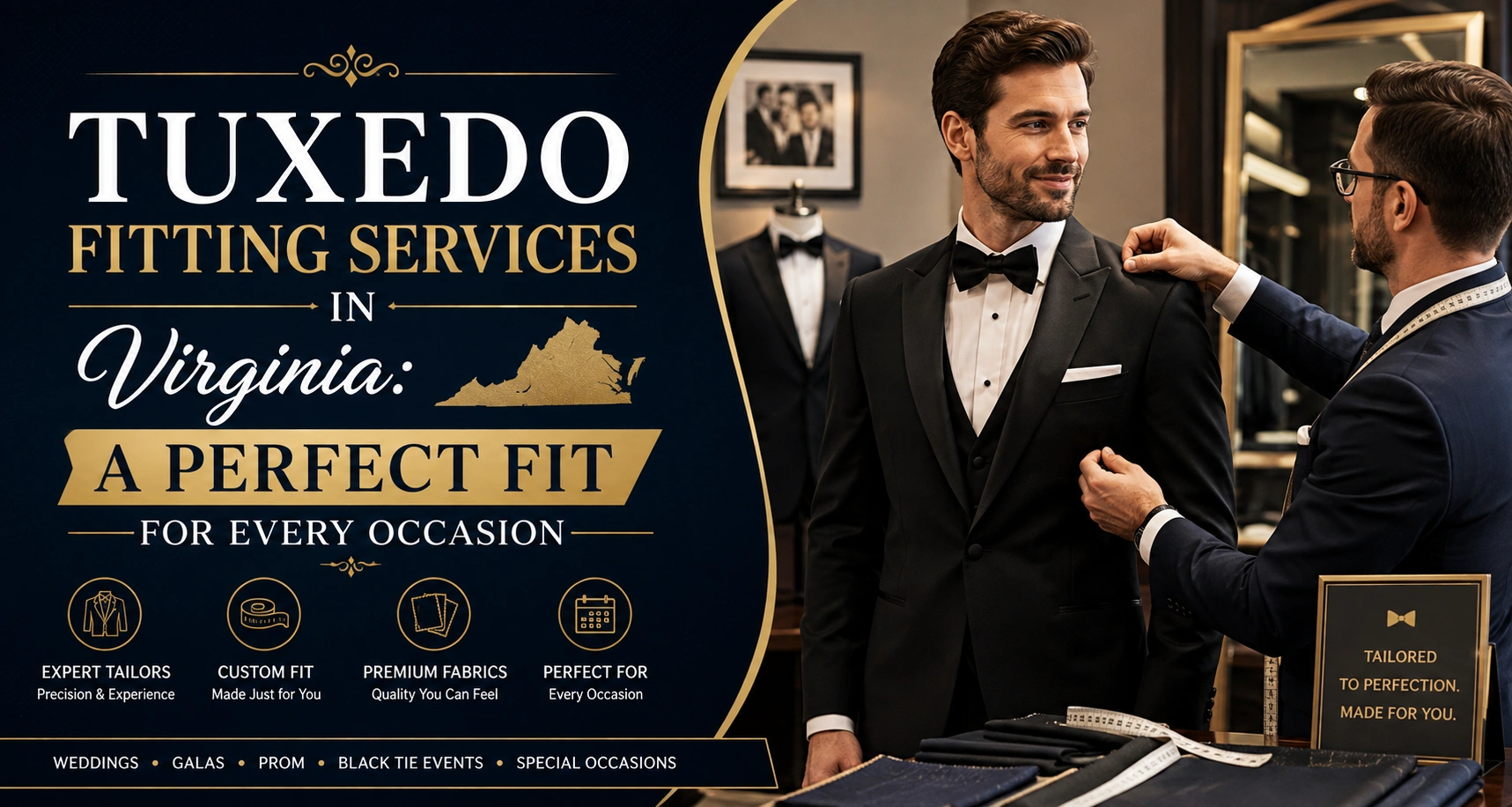
Picture this: you walk into your best friend’s wedding, your prom, or a black-tie gala, and every head turns — not because you’re loud, but because you look like you belong on a magazine cover. That’s the power of a well-fitted tuxedo. And if you’re anywhere in the Old Dominion, finding the right tuxedo fitting services in Virginia can make the difference between looking “put together” and looking absolutely unforgettable.
A tuxedo isn’t just a suit with a bow tie slapped on. It’s a precision garment, and precision requires the right hands, the right measurements, and honestly, the right guidance. Whether you’re a groom-to-be, a prom-goer, or attending a corporate gala, this guide walks you through everything you need to know about getting fitted for a tuxedo in Virginia.
Why a Proper Tuxedo Fit Matters More Than You Think
A lot of guys assume “off the rack” is good enough. It’s not. An off-the-rack tuxedo is built for an average body shape — but very few of us are actually “average.” Shoulders slope differently. Torsos are longer or shorter. Sleeves need adjusting. That’s why professional tuxedo fitting services in Virginia exist: to bridge the gap between generic sizing and a tuxedo that looks tailor-made, because it basically is.
Here’s what a poor fit usually looks like:
- Sleeves that bunch up or stop too short
- A jacket that pulls across the chest when buttoned
- Pant legs pooling around the shoes
- A collar gap at the back of the neck
None of that says “confidence.” A proper fitting fixes all of it, and it usually takes less time than people expect.
What Happens During a Professional Tuxedo Fitting
If you’ve never been professionally fitted before, the process might feel a little unfamiliar. Here’s a simple breakdown of what typically happens.
Step 1: Initial Measurements
A fitting specialist will measure your chest, waist, shoulders, arm length, and inseam. This isn’t a five-second guess — good fitters take their time here because these numbers form the foundation of everything that follows.
Step 2: Style and Fabric Selection
Once your measurements are locked in, you’ll usually get to choose between:
- Classic notch lapel or sleek peak lapel
- Slim fit, modern fit, or classic fit silhouettes
- Fabric options like wool blends, velvet, or lightweight microfiber (great for Virginia’s humid summers)
- Color choices beyond basic black — navy, midnight blue, and burgundy have become increasingly popular for weddings
Step 3: Trying It On
This is where the magic happens. You put on the tuxedo, and the fitter checks how it sits on your shoulders, how the jacket drapes, whether the sleeves hit right at the wrist bone, and how the trousers break over your shoes.
Step 4: Marking Alterations
Using pins and chalk, the specialist marks exactly where adjustments need to happen — taking in the waist, shortening sleeves, hemming trousers, and so on.
Step 5: Final Pickup and Fit Check
After alterations are complete, you’ll try the tuxedo on one more time to confirm everything sits perfectly before the big day.
Where to Find Reliable Tuxedo Fitting Services in Virginia
Virginia has a solid mix of formalwear shops, from small-town tailors to bigger rental chains in cities like Richmond, Virginia Beach, Arlington, and Norfolk. When searching for tuxedo fitting services in Virginia, keep these factors in mind:
Look for Experience with Formalwear Specifically
Not every tailor specializes in tuxedos. Suits and tuxedos share similarities, but tuxedo details — like satin lapels, formal shirt studs, and proper cummerbund placement — require specific know-how.
Check Reviews for Wedding Parties
If you’re outfitting a whole wedding party, look for shops with strong reviews around group fittings. Coordinating five or ten groomsmen requires organization, and not every shop handles that smoothly.
Ask About Turnaround Time
Some alterations can be done same-day; others (especially during peak wedding and prom season) may take a week or more. Always ask early, especially if your event date is fixed.
Confirm Rental vs. Purchase Options
Many Virginia formalwear shops offer both renting and buying. Renting is popular for one-time events like weddings or proms, while buying makes sense if you attend formal events often or want a tuxedo that’s truly yours, forever fitted to your body.
Buying vs. Renting: Which Makes More Sense?
This is one of the most common questions people ask before booking tuxedo fitting services in Virginia. Here’s a quick comparison to help you decide.
Renting is a good fit if:
- You need it for a single occasion
- You want to try a trendy color or style without long-term commitment
- Budget is a bigger priority than ownership
Buying makes more sense if:
- You regularly attend black-tie events
- You want a tuxedo tailored precisely to your body long-term
- You’d rather invest once than pay rental fees repeatedly
Either way, the fitting process remains just as important. A rented tuxedo still needs to be altered to your body — it shouldn’t just be handed to you in a bag and called done.
Tips for a Smooth Tuxedo Fitting Experience
A few small things can make your fitting appointment go a lot more smoothly:
- Wear the shoes you’ll actually wear to the event. Heel height changes how your pants should be hemmed.
- Bring a photo of the outfit you’re imagining. Fitters can guide you better when they know your vision.
- Don’t skip the final fitting. Bodies shift slightly over weeks, and a last check ensures nothing feels off.
- Book early during wedding and prom season. Spring and early summer get busy fast across Virginia.
- Be honest about comfort. If something feels tight or off, say so immediately rather than “hoping it’ll be fine.”
Seasonal Considerations for Virginia Weather
Virginia’s climate swings between humid summers and cold winters, and that actually affects tuxedo choices more than people realize.
- Summer weddings: Lightweight wool blends or tropical-weight fabrics help you stay comfortable without sacrificing style.
- Fall and winter events: Heavier wool tuxedos with vests add both warmth and a polished, layered look.
- Outdoor venues: If your event is outdoors, ask your fitter about breathable linings, since Virginia humidity can be no joke by late spring.
A good fitting specialist will factor in not just your measurements, but also your event’s season and setting.
Final Thoughts
Getting fitted for a tuxedo shouldn’t feel stressful or overwhelming. With the right tuxedo fitting services in Virginia, the process becomes something closer to enjoyable — a chance to figure out exactly how you want to show up for one of life’s memorable moments. From weddings to proms to formal galas, the goal stays the same: a tuxedo that fits like it was made just for you, because with proper fitting, it essentially was.
Take your time, ask questions, book early, and don’t settle for “close enough.” Your future self, standing confidently in every photo from that event, will thank you.
Also Read:- Best Men’s Casual Business Shoes in USA: The Ultimate Buying Guide
Frequently Asked Questions
Q.1 How far in advance should I book a tuxedo fitting in Virginia?
For weddings and prom season, it’s best to book at least 6-8 weeks in advance. Popular shops fill up quickly during spring and early summer.
Q.2 How much do tuxedo fitting services typically cost?
Costs vary depending on whether you’re renting or buying, but basic alterations often range from $30-$100, while full custom fittings for purchased tuxedos can cost more depending on fabric and detailing.
Q.3 Can I get a tuxedo altered if I bought it online?
Yes, most tailoring and formalwear shops in Virginia offer alteration services even for tuxedos purchased elsewhere, though pricing may differ slightly from in-house purchases.
Q.4 What’s the difference between a tuxedo fitting and a suit fitting?
Tuxedo fittings focus on formalwear-specific details like satin lapels, proper trouser breaks for formal shoes, and accessories like cummerbunds or vests, which standard suit fittings typically don’t address.
Q.5 How many fittings does the tuxedo process usually require?
Most people need two fittings: an initial measurement and trial appointment, followed by a final fitting after alterations are complete to confirm everything sits correctly.