

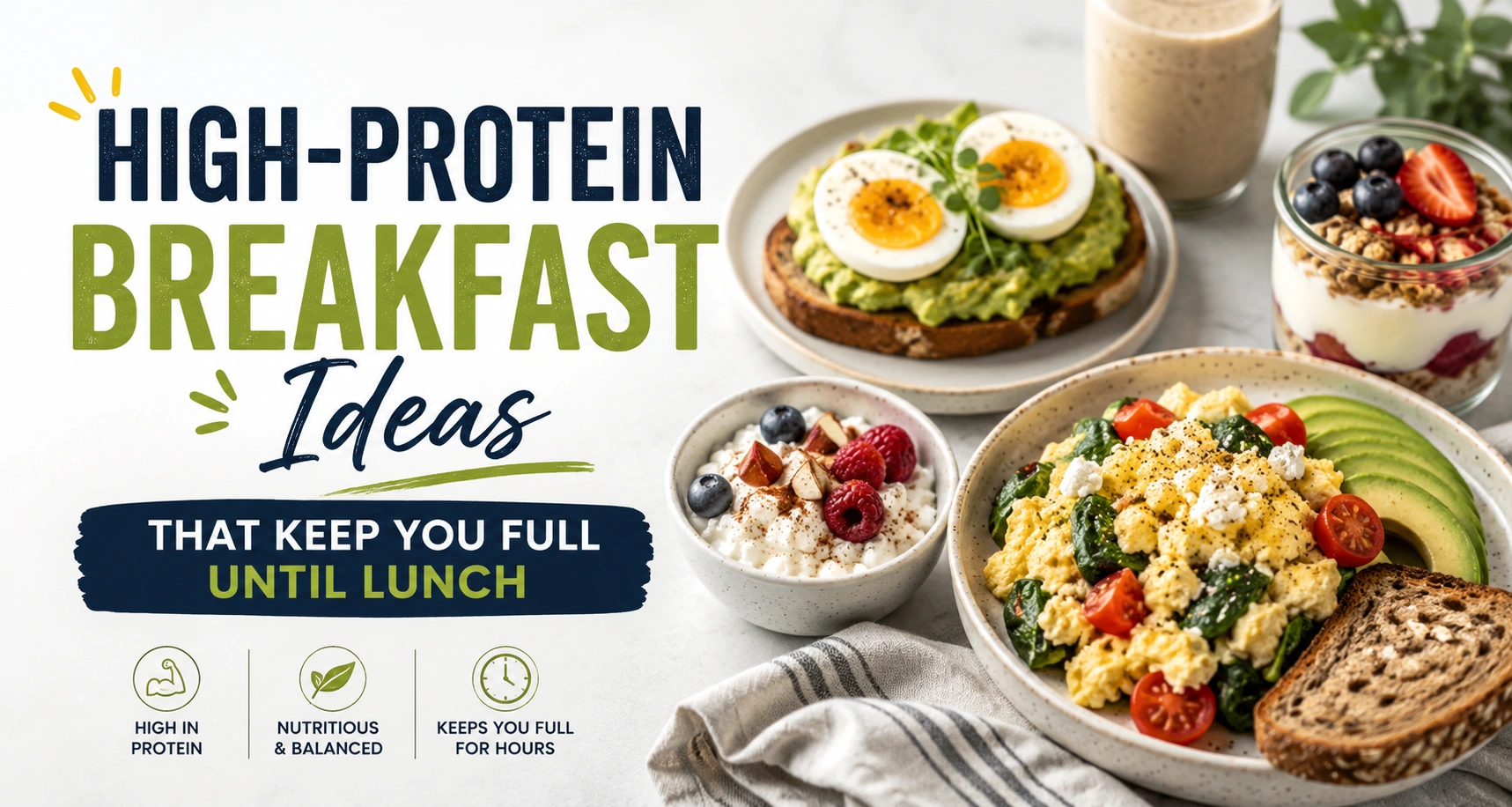
You eat breakfast. You’re hungry again by 10am. If that pattern sounds familiar, the problem usually isn’t how much you ate — it’s what it was made of.
Most research suggests 20 to 30 grams of protein at breakfast delivers the strongest benefits for satiety, blood sugar regulation, and energy. A bowl of cereal or two slices of toast typically delivers somewhere between 5 and 10 grams — nowhere close to the threshold your body actually needs to stay full until lunch. This guide covers exactly why that protein number matters, and gives you 10 practical high protein breakfast ideas that hit it, each with the exact protein count so you’re not guessing.
How Much Protein Do You Actually Need at Breakfast?
The 20–30g target, explained
Research consistently points to 20–30 grams of protein per breakfast as the range that triggers meaningful appetite-control effects. Some researchers, including Lily Nichols, RDN, suggest 25 grams as a practical minimum — enough to supply sufficient leucine, the amino acid most directly responsible for triggering muscle protein synthesis and sustained satiety. Even hitting 15 grams is a meaningful upgrade if your current breakfast sits closer to 10.
For context: two large eggs provide about 12 grams of protein on their own. Add egg whites or a lean meat like turkey, and you’re at 25–30 grams without much extra effort.
Why most people fall short
The UK Reference Nutrient Intake is approximately 0.75g of protein per kg of body weight per day and nutrition research has consistently demonstrated that most people don’t evenly spread their protein throughout the day, eating it mainly at dinnertime and little at breakfast. This imbalance often makes breakfast the best meal to eat well, and the best meal for keeping hunger at bay all day long.
Why Protein at Breakfast Actually Keeps You Full
This isn’t a vague wellness claim. There’s a specific hormonal mechanism behind it, and naming it makes the advice far more useful than “eat more protein.”
Ghrelin — the hunger hormone protein suppresses
Ghrelin is the hormone your stomach releases to signal hunger. Protein-rich meals suppress ghrelin more effectively than carbohydrate-heavy meals of the same calorie count, which is the core reason a high-protein breakfast genuinely delays the next hunger signal rather than just filling your stomach temporarily.
GLP-1 and peptide YY — the fullness signals protein increases
At the other extreme, protein greatly boosts GLP-1 and peptide YY, two hormones produced by the gut that tell the brain when it’s full. A controlled trial published in PMC looked at a 30g animal protein breakfast, a 30g plant protein breakfast, and a 10g high carbohydrate breakfast, testing the changes in levels of the satiety hormones, and the amount eaten at lunch. The high-protein breakfasts performed better than the low-protein, high-carbohydrate breakfast on markers of satiety.
What the research shows
Increasing protein intake can naturally help reduce hunger and overall calorie consumption. Research shows that people who eat more protein often consume fewer calories without consciously dieting, while a high-protein breakfast can curb appetite and reduce food intake later in the day. Since many people skip breakfast—a habit linked to increased hunger and poorer diet quality—starting the morning with a protein-rich meal is a simple and effective way to support appetite control, weight management, and healthier eating habits.
10 High Protein Breakfast Ideas (With Protein Counts)
Every recipe below was calculated using standard nutrition data and delivers between 20 and 36 grams of protein per serving.
1. Greek yogurt protein bowl — 36g protein
Use plain greek yogurt (approx 27g protein), pumpkin seeds (approx 5g) and hemp seeds (approx 3g) and then add fresh berries. This blend provides an estimated 36g protein, a slow release of amino acids and fibre from the seeds and berries which provides additional fullness.
Prep time: 5 minutes · Best for: Busy weekday mornings, no cooking required.
2. Veggie egg muffins — 24g protein (3 muffins)
Beat eggs in diced bell pepper, spinach and sprinkled cheese and place in a muffin tin, baking at 350°F for 18-20 minutes. Each of the 3 muffins provides approximately 24–25g of protein. This is a very dependable meal planning method — make a batch on Sunday and reheat on weekdays.
Prep time: 25 minutes (batch) · Best for: Meal prep; freezes and refrigerates well.
3. Cottage cheese and berries — 26g protein
Low fat cottage cheese is one of the richer sources of protein that you can have without any preparation, as one cup alone provides about 24–28 grams of protein. Serve it with fresh berries and a few almonds to get some fibre and healthy fats to keep it slowed down and promote steady energy. Opt for plain cottage cheese instead of flavored ones — the sugar added makes no difference to the volume and only contributes to calories.
Prep time: 3 minutes · Best for: No-cook mornings; high protein density per calorie.
4. Turkey breakfast hash — 36g protein
Cook 4oz of ground turkey (about 28g protein) with diced zucchini, kale, and onion, then top with a fried or poached egg (about 6g). The result is a savoury, one-pan meal delivering around 36g of protein. Keep it grain-free for a lower-carb option, or stir in leftover quinoa or sweet potato for a more filling version.
Prep time: 15 minutes · Best for: Weekend cooking; reheats well for 2–3 days.
5. Protein overnight oats — 25g protein
In a jar, combine ½ cup rolled oats, 1 scoop of protein powder, 1 cup of your milk of choice and 1 tablespoon of chia seeds and refrigerate overnight. You will be able to have a breakfast that’s easy to prepare and eat in the morning, with approximately 25 grams of protein. No cooking or early morning preparation is needed; this is perfect for busy days.
Prep time: 5 minutes the night before · Best for: Grab-and-go mornings; keeps for 3–4 days refrigerated.
6. Smoked salmon and eggs — 28g protein
Two scrambled or poached eggs will give you about 12 grams of protein, and smoked salmon has an additional 12-14 grams. This breakfast, served on a piece of whole-grain toast, provides about 28 grams of protein, omega-3 fatty acids and will keep you full for longer, helping you to function better and focus your mind on tasks that require it throughout the morning.
Prep time: 10 minutes · Best for: A weekend breakfast that still works on a weekday if salmon is pre-portioned.
7. Breakfast burrito wrap — 30g protein
Scramble 2 eggs with black beans, a sprinkle of cheese, and salsa, then wrap in a whole wheat tortilla. This combination delivers around 30g of protein from the eggs, beans, and cheese together, plus fibre from the beans that extends fullness further than eggs alone would.
Prep time: 10 minutes · Best for: Can be wrapped in foil and eaten on the go; reheats well from frozen.
8. Tofu scramble (vegan) — 22g protein
Crumble firm tofu and sauté with turmeric, nutritional yeast, bell peppers, and spinach. Half a block of firm tofu delivers roughly 20g of protein; the nutritional yeast adds a small additional amount along with a cheesy flavour without dairy. This is the most reliable fully vegan option on this list in terms of protein density.
Prep time: 12 minutes · Best for: Vegan readers; pairs well with whole grain toast for added fibre.
9. Protein smoothie bowl — 30g protein
Blend 1 scoop of protein powder, frozen berries, a small banana, and unsweetened almond milk until thick, then top with granola and seeds. This delivers around 30g of protein in a cold, refreshing format that works particularly well in warmer months.
Prep time: 5 minutes · Best for: Quick mornings; easily adjusted in thickness and toppings.
10. Chia protein pudding — 20g protein
Stir in ¼ cup chia seeds, 1 cup of milk of your choice, and 1 scoop protein powder and refrigerate for 4 hours or overnight until it becomes a creamy protein pudding. It makes a simple, low prep breakfast with about 20 grams of protein, as well as a healthy dose of fibre and plant-based omega-3 fatty acids from the chia seeds to keep you fuller for longer.
Prep time: 5 minutes prep, then refrigerate · Best for: Make-ahead mornings; keeps well for up to 5 days.
High Protein Breakfast Ideas for Vegetarians and Vegans
Plant-based breakfasts can absolutely hit the 20–30g protein target — it just requires a bit more intentional combining than reaching for eggs or meat.
Best plant-based protein sources for breakfast
Tofu, tempeh, Greek yogurt, cottage cheese, and protein powder are the most protein-dense plant-friendly (or vegetarian) options. For fully vegan choices, tofu, tempeh, hemp seeds, and pea-protein powders are the most reliable. Legumes like black beans and lentils add meaningful protein along with fibre that further supports satiety.
A combination of proteins provides a full complement of amino acids
Animal proteins are “complete” proteins in their natural state due to their ability to provide all 9 essential amino acids. Most individual plant proteins are incomplete by themselves but can be made more complete when paired with a grain, for example peanut butter and oats or black beans and a tortilla. This is not so significant when you have a wide variety of protein throughout the day, but it’s a beneficial guideline when creating a protein-heavy plant-based breakfast.
Meal-Prep Tips for High-Protein Breakfasts
Several of the recipes above are specifically suited to batch preparation, which removes the biggest barrier to consistently eating a high-protein breakfast: morning time pressure.
Overnight oats, chia pudding, egg muffins, and breakfast burritos all freeze or refrigerate well. Prepare a larger batch on a Sunday and you’ll have a ready breakfast for most of the week. Egg muffins and burritos both freeze particularly well — wrap individually and reheat from frozen in under 3 minutes. Cottage cheese and Greek yogurt bowls don’t need advance prep at all; keeping the base ingredients stocked is enough to assemble one in under 5 minutes any morning.
A simple framework: pick one bake-ahead option (egg muffins), one no-cook option (Greek yogurt or cottage cheese), and one overnight-prep option (oats or chia pudding) to rotate through the week. This keeps breakfast varied without requiring daily cooking.
Frequently Asked Questions
How much protein should I eat for breakfast to stay full?
Most research points to 20–30 grams of protein at breakfast as the range that delivers the strongest satiety benefits. Some nutrition researchers suggest 25 grams as a practical minimum, since this amount provides enough of the amino acid leucine to effectively support muscle protein synthesis and sustained fullness. Even an increase to 15 grams is meaningful if your current breakfast sits closer to 10.
What is the highest protein breakfast food?
Cottage cheese is among the most protein-dense single breakfast foods, delivering 24–28 grams of protein per cup with minimal preparation. Greek yogurt is similarly dense at roughly 20–27 grams per cup depending on the brand. Eggs are lower per item (about 6 grams each) but combine easily with other protein sources to reach a high total quickly.
Can I get enough protein at breakfast without eggs?
Yes. Greek yogurt, cottage cheese, protein powder, tofu, and tempeh can all deliver 20–30 grams of protein without using eggs at all. Combining several moderate-protein plant foods — such as oats with protein powder and nut butter — also reaches the target effectively for vegan or egg-free diets.
Does a high protein breakfast help you lose weight?
There is research that indicates that it can be. According to one study, women who increased their protein to 30% of their daily calories dropped 11 pounds after 12 weeks as well as consuming 441 fewer calories per day. In addition, a high protein breakfast has been found to be correlated with consuming fewer calories throughout the day, up to 135 calories later in the day. The benefits have to do with reduction of ghrelin, and rise of GLP-1 and peptide YY, which are not specific to any given food, but to the reduction of ghrelin and increase in GLP-1 and peptide YY as a result of that.
Are protein powders necessary for a high-protein breakfast?
No. Whole foods like eggs, Greek yogurt, cottage cheese, turkey, and tofu can all reach the 20–30g protein target without any supplementation. Protein powder is a convenient option for smoothies or oats, particularly for vegans who want to reach the target quickly, but it’s not required to build an effective high-protein breakfast.
Read More:- Signs Your Gut Health Is Off (And What to Do About It)
The Bottom Line
The mid-morning hunger most people chalk up to “just being someone who gets hungry easily” is very often a protein problem, not a willpower problem. Hitting 20–30 grams at breakfast changes the hormonal signals your body sends about hunger and fullness — measurably, not just anecdotally.
None of the ten ideas above require unusual ingredients or advanced cooking skills. Most take under 15 minutes, and several can be prepared entirely in advance. Pick two or three that fit your actual mornings, keep the ingredients stocked, and the mid-morning hunger that used to send you toward the vending machine should start showing up a lot less often.
Sources: Colorado State University Extension — protein and satiety research; PMC — controlled study on dietary protein sources and satiety hormones at breakfast; Lily Nichols, RDN — protein and muscle protein synthesis; appetite regulation research on ghrelin, GLP-1, and peptide YY; nutrition research on breakfast protein intake and daily calorie consumption.