

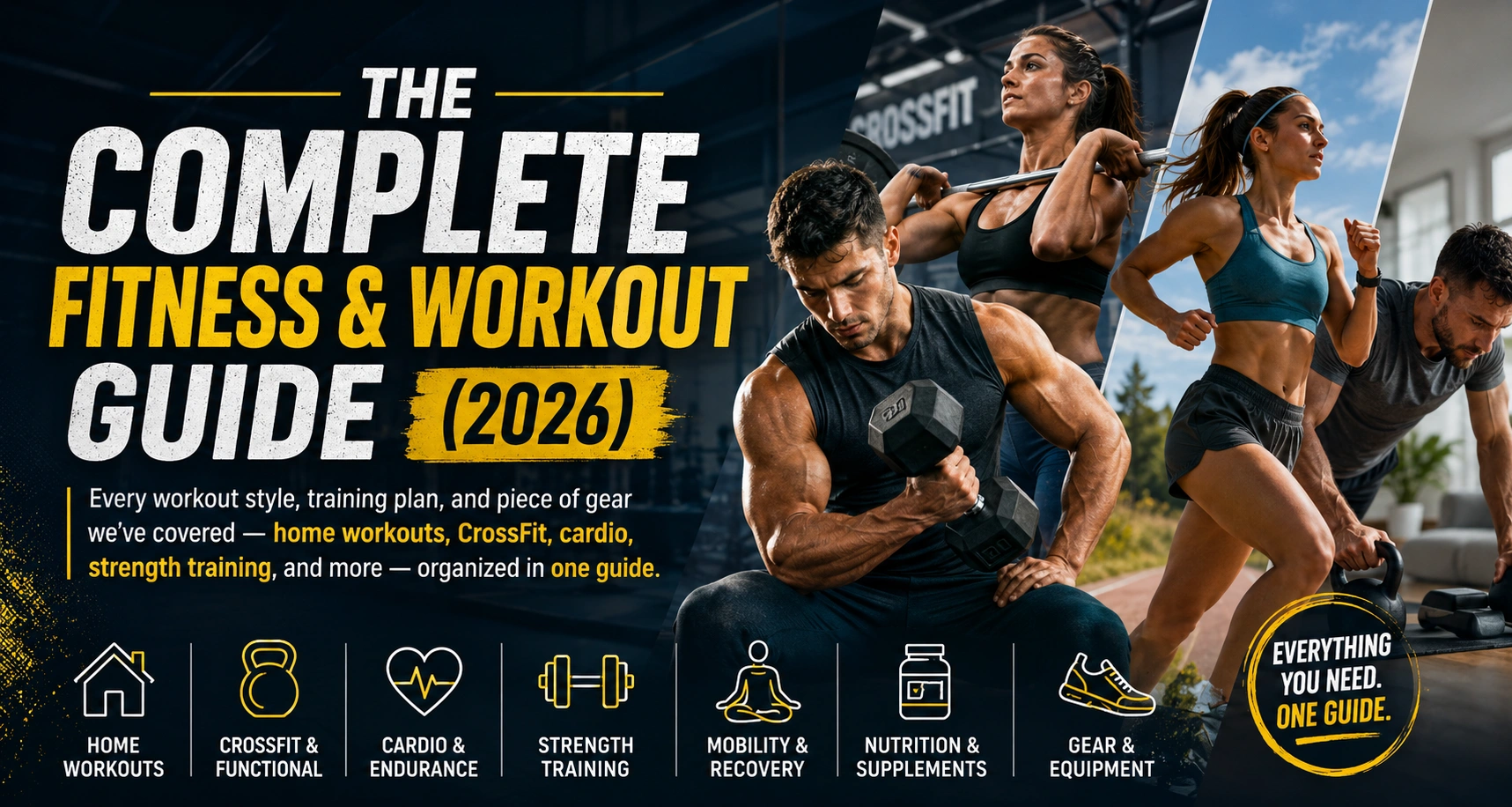
The fitness industry sells the idea that there’s one “right” way to train, and that whichever program is trending this year is the one you should be doing. In practice, the right workout depends entirely on your goal, your equipment access, and how your body responds to different kinds of training — a beginner recovering from a sedentary year needs a completely different starting point than someone chasing a CrossFit PR.
This guide organizes everything we’ve published on fitness and workouts by what you’re actually trying to achieve, so you can find your starting point without scrolling through dozens of unrelated posts.
What’s in this guide
- Home and beginner workout plans
- CrossFit and HIIT training
- Cardio and heart health
- Strength, body composition, and low-impact training
- Stretching and height growth
- Gear, gadgets, and apps
- Training for every life stage
- Common questions
- Where to start
Home and beginner workout plans
Not everyone wants — or needs — a gym membership to get started, and honestly, most people stick with a routine longer when the barrier to starting it is lower. Walking is the most underrated entry point here: our 30-day walking plan for weight loss builds up duration and intensity gradually, which matters more for long-term adherence than jumping straight into something intense and burning out in two weeks.
If you’re ready for structured resistance training without leaving the house, our gym workout plan for women at home and 30-minute gym workouts for women guides are both built around minimal or no equipment. And if you’re specifically working around a tight schedule rather than a lack of equipment, 7 best exercises for weight loss at home is built to be done in short daily sessions.
CrossFit and HIIT training
Once a basic fitness base is built, CrossFit and high-intensity interval training (HIIT) are two of the most time-efficient ways to keep progressing — both are built around short, intense sessions rather than long, steady ones, which is part of why they’ve stayed popular even as workout trends shift year to year.
If you’re completely new to CrossFit, start with our CrossFit training workout plan for beginners, which explains the movement patterns before adding intensity. From there, our CrossFit workout of the day for beginners gives you an actual daily structure to follow rather than having to build your own programming from scratch. If CrossFit’s gym-and-community setup isn’t for you but you still want the same intensity benefits, high-intensity interval training for weight loss delivers a similar training effect with a format you can do entirely on your own.
Cardio and heart health
Cardio gets treated as one category, but “best for heart health” and “best for burning calories fast” aren’t always the same recommendation — and a lot of generic advice conflates the two.
Our best cardio for heart health and best aerobic exercise for heart health guides both focus specifically on cardiovascular benefit rather than just calorie burn, which matters if long-term heart health is your actual priority. If you’re just starting out with aerobic training, aerobics for beginners: weight loss may help boost muscle is a gentler entry point that still builds real cardiovascular capacity. And if you’ve heard trainers talk about “zone 2” but weren’t sure what it means, zone 2 training explains the specific heart-rate range that builds aerobic base most efficiently — genuinely one of the more evidence-backed training concepts to come out of endurance sports in recent years.
Strength, body composition, and low-impact training
Strength training and body composition goals (losing fat while keeping muscle, specifically) require a different approach than pure cardio, and this is where a lot of well-intentioned plans go wrong by cutting calories too aggressively and losing muscle along with fat.
Our guide to the dumbbell squat to shoulder press covers one of the most efficient compound movements for building strength with minimal equipment — a single move that works multiple muscle groups in one rep. If body composition specifically (not just weight on the scale) is your goal, body fat without losing muscle covers the nutrition and training balance needed to achieve that. And for a lower-impact option that still builds real strength and mobility, pilates for all body types and physical goals is worth a look, especially if high-impact training isn’t sustainable for your joints right now.
Stretching and height growth
Stretching gets treated as an afterthought in a lot of workout plans, but it does double duty — supporting recovery from more intense training, and, for younger readers still growing, supporting posture and spinal alignment that can affect height perception.
Our best stretching exercises for height increase guide covers exactly that, and pairs well with exercises for height growth in gym if you want a more structured, gym-based approach rather than stretches alone.
Gear, gadgets, and apps
The right equipment and tracking tools won’t replace a good training plan, but the wrong ones can genuinely get in the way — bad running shoes cause injuries, and a fitness app that doesn’t match your training style is one more reason to quit.
If running or high-impact cardio is part of your routine, best running shoes for flat feet men covers a specific fit issue that generic “best running shoes” lists usually miss. For home training, our best fitness equipment for home gym guide covers what’s actually worth buying versus what collects dust after week two, and best budget fitness gadgets covers lower-cost alternatives to premium gear. On the tracking side, top 5 wearable health trackers that monitor stress in real time goes beyond step counting into recovery and stress monitoring, and our 10 best fitness apps in India 2026 roundup covers software options if you’d rather track progress on your phone than a wearable.
Training for every life stage
Fitness advice defaults to assuming a young, healthy audience with no physical limitations — which leaves a lot of readers without guidance that actually applies to them. Our guide for readers over 60: safe, effective exercises for senior wellness is built specifically around joint-friendly movement and injury prevention rather than performance goals.
For the bigger picture on where fitness is heading generally, our top 10 health and fitness trends in 2026 roundup is a good overview if you want context on what’s actually gaining traction versus what’s a passing trend.
Common questions
I’m a total beginner — should I start with CrossFit or a home workout plan?
Start at home first. Build basic movement competency and consistency before adding the intensity and complexity that CrossFit programming involves.
Is zone 2 training enough on its own, or do I still need HIIT?
Most well-rounded programs use both — zone 2 builds your aerobic base, while HIIT improves capacity at higher intensities. They’re complementary, not competing options.
How much of a difference does the right running shoe actually make?
For anyone running more than occasionally, meaningfully — poor shoe fit is one of the most common preventable causes of running-related injury.
Where to start
If you’re new to structured training: begin with the home workout plans for four weeks to build a consistency habit, then layer in either CrossFit or HIIT once that foundation feels comfortable. If you’re training for heart health specifically rather than aesthetics, the cardio and zone 2 sections are your priority — everything else on this page is worth returning to as a specific need comes up, not something to tackle all at once.
This guide is updated as we publish new fitness and workout content — check back for additions.