

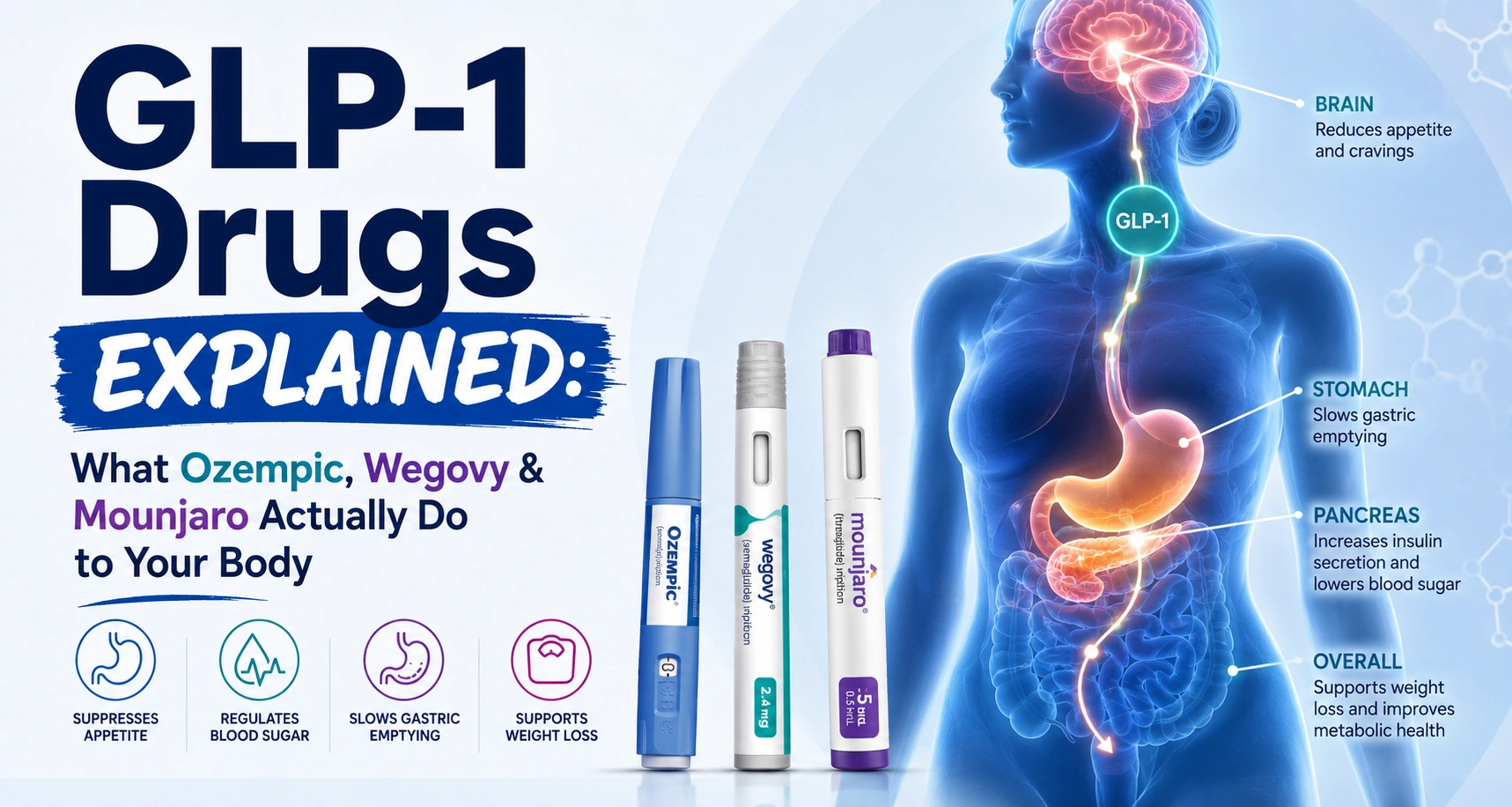
If you’ve been following health news lately, you’ve almost certainly heard the names Ozempic, Wegovy, and Mounjaro. These medications have taken the medical world — and popular culture — by storm. Celebrities, doctors, and everyday people are talking about them. But what exactly are GLP-1 drugs, and what do they actually do inside your body? This article breaks it all down in plain English — no medical degree required.
What Is GLP-1 Medication? The Basics
GLP-1 refers to the naturally occurring hormone that is secreted by your gut after you eat. It essentially serves its purpose to:
- Get insulin to be released by the pancreas (decrease blood sugar)
- Give your liver a break from releasing excess amounts of glucose into your bloodstream
- Eat slowly and allow food to get broken down before taking a bite.
- Communicate informational messages to your brain about “fullness”
GLP-1 receptor agonists — the class of drugs these medications belong to — are designed to mimic and amplify this natural hormone. The result? Better blood sugar control and, as millions of people have discovered, significant weight loss.
The Big Three: Ozempic vs Wegovy vs Mounjaro
These three brand names dominate conversations about GLP-1 weight loss drugs in 2026, but they’re not identical. Here’s how they differ.
Ozempic (Semaglutide) — The Diabetes Drug That Changed Everything
Ozempic was FDA-approved in 2017 to treat type 2 diabetes. Its active ingredient, semaglutide, binds to GLP-1 receptors throughout the body. Ozempic is a weekly injection administered via a pre-filled pen. It’s technically approved for diabetes management, but many physicians began prescribing it off-label for weight loss — a practice that contributed to widespread shortages between 2022 and 2024.
Wegovy (Semaglutide) — Same Molecule, Higher Dose, Weight-Loss Focus
Wegovy uses the exact same active ingredient as Ozempic — semaglutide — but at a higher approved dose (up to 2.4 mg weekly vs. Ozempic’s 1 mg). Wegovy received FDA approval specifically for chronic weight management in 2021.
Mounjaro & Zepbound (Tirzepatide) — The Dual-Action Newcomer
Mounjaro (approved for diabetes) and its weight-loss counterpart Zepbound contain tirzepatide, which works differently from semaglutide. Rather than targeting just the GLP-1 receptor, tirzepatide activates both GLP-1 and GIP receptors — GIP being another gut hormone involved in metabolism and fat storage.
This dual-action mechanism makes tirzepatide vs semaglutide an important comparison. Studies show tirzepatide users losing up to 22.5% of body weight — outperforming semaglutide in head-to-head trials and representing the most effective non-surgical obesity treatment currently available.
What GLP-1 Drugs Actually Do Inside Your Body
Understanding the mechanism helps explain both the impressive results and the side effects. Here’s what happens step by step:
1. They Slow Gastric Emptying
Food stays in your stomach longer, which naturally reduces appetite and helps you feel full on smaller portions. This is also why many users report nausea, especially early in treatment.
2. They Rewire Appetite Signals in the Brain
GLP-1 receptors exist in the hypothalamus — the brain’s appetite control center. These drugs dampen food cravings and reduce what researchers call “food noise,” the constant mental preoccupation with eating that many people with obesity experience.
3. They Improve Insulin Sensitivity
By stimulating insulin release only when blood sugar rises (not constantly), GLP-1 drugs reduce the risk of hypoglycemia while still improving overall glucose control — a major advantage over older diabetes medications.
4. They May Protect the Heart
Emerging research suggests semaglutide in particular reduces cardiovascular risk — including heart attacks and strokes — independent of weight loss. The SELECT trial (2023) showed a 20% reduction in major cardiovascular events among non-diabetic obese patients on Wegovy.
Semaglutide Side Effects: What to Expect
No medication is without trade-offs, and semaglutide is no exception. The most commonly reported side effects include:
- Nausea (the most frequent complaint, particularly when starting treatment or increasing the dose)
- Vomiting and diarrhea
- Constipation
- Fatigue
- Acid reflux or heartburn
For most people, these side effects are temporary, typically peaking during the first few weeks of treatment before gradually subsiding as the body adapts. A slow dose-escalation approach — beginning with a low dose and increasing it gradually — can significantly improve tolerability and reduce discomfort.
Who Are GLP-1 Weight Loss Drugs For?
These medications are generally given to adults who:
- Be 30 or more pounds overweight, or (obesity)
- A BMI of 27 or higher and at least one health condition related to weight (diabetes type 2, hypertension, sleep apnea)
These are no shortcuts or quick fixes. These are best used in combination with lifestyle changes – a healthy diet, exercise and behavioural support.
GLP-1 Drugs in 2026: What’s New?
The GLP-1 landscape continues to evolve rapidly. Key developments in 2026 include:
- Oral semaglutide (Rybelsus and newer formulations) making injectable treatment unnecessary for some patients
- Once-monthly injectable versions of semaglutide in late-stage trials
- Growing research into GLP-1 drugs for conditions beyond obesity and diabetes — including addiction, Alzheimer’s disease, fatty liver disease, and even sleep apnea
- Biosimilar versions entering markets in some regions, with potential to dramatically reduce the high cost of treatment
The Bottom Line
GLP-1 drugs explained simply: they work with your body’s own hormonal system to reduce appetite, improve blood sugar, and — in many cases — deliver meaningful, sustained weight loss that was previously unachievable without surgery. Ozempic, Wegovy, and Mounjaro represent a genuine turning point in how medicine approaches obesity and metabolic disease.
That said, they are prescription medications with real side effects, significant costs, and ongoing questions about long-term use. Anyone considering them should have a thorough conversation with a qualified healthcare provider.
Frequently Asked Questions
1. What are GLP-1 drugs and what do they do?
GLP-1 is a natural gut hormone that is mimicked by a GLP-1 drug. It does this by helping to increase insulin levels, slowing digestion and decreasing the appetite call in the brain, which results in better blood sugar control and weight loss.
2. What’s the difference between Ozempic, Wegovy, and Mounjaro?
Ozempic and Wegovy both contain semaglutide — a GLP-1 receptor agonist — but differ in dose and approved use (diabetes vs. weight management). Mounjaro contains tirzepatide, which targets both GLP-1 and GIP receptors, making it a dual-action medication that often produces greater weight loss.
3. What are the most common semaglutide side effects?
Gastrointestinal effects are most common, such as nausea, vomiting, diarrhea and constipation. These tend to be brief and are most evident at the time of dose escalation. It’s best to begin with a low dose and gradually increase the amount to reduce discomfort.
4. Is tirzepatide better than semaglutide for weight loss?
Clinical trial data suggests tirzepatide (Mounjaro/Zepbound) produces greater average weight loss — up to 22.5% of body weight — compared to around 15% with semaglutide (Wegovy). However, the best medication depends on individual health history, tolerance, and cost considerations.
5. Can you take GLP-1 drugs long term?
Current evidence supports long-term use, and many patients regain weight if they stop. Ongoing trials are studying multi-year safety and efficacy. Most guidelines now classify obesity as a chronic condition, suggesting these medications may be used indefinitely — similar to blood pressure or cholesterol drugs — under medical supervision.
Related Topic
Is Ozempic Worth It? Benefits, Side Effects & What Doctors Say