

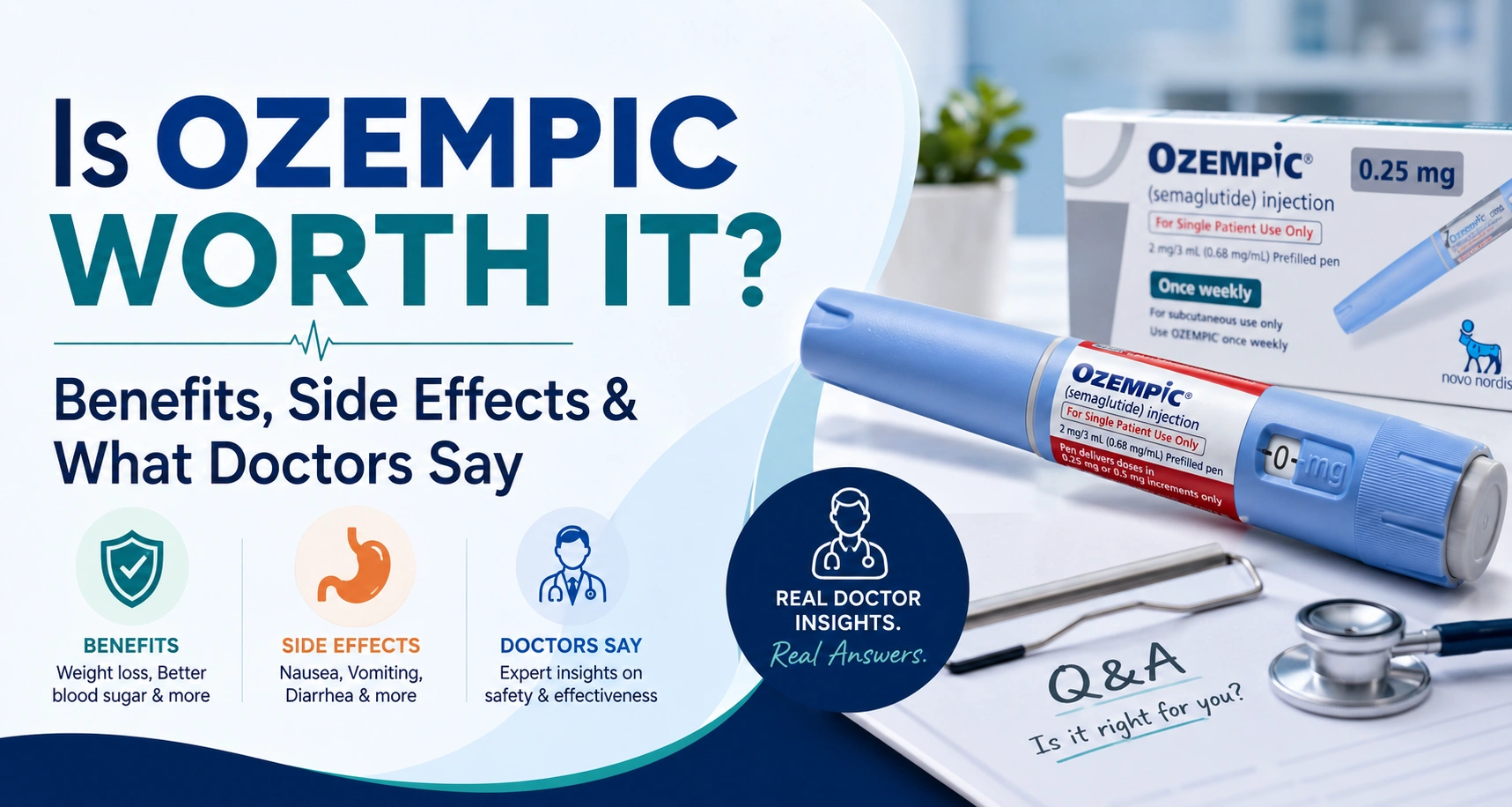
Ozempic is everywhere right now—across social media feeds, in doctors’ offices, on morning news programs, and even in everyday conversations. Since its rise into the mainstream, millions of Americans have been asking the same question: Is Ozempic really worth it?
The answer, as with most medical treatments, isn’t a simple yes or no. For some people, Ozempic has been genuinely life-changing, delivering significant health and weight-loss benefits. For others, it may not be the right fit. While the medication is backed by strong clinical research and an expanding body of real-world evidence, it also comes with potential side effects, a substantial cost, and several long-term questions that researchers are still exploring.
This guide separates fact from hype, providing a balanced look at how Ozempic works, what it costs, what healthcare professionals are saying about it in 2026, and the key factors to consider when deciding whether it’s the right option for you.
What Is Ozempic? (And How Does It Work?)
Semaglutide is the scientific name of the prescription drug known by the brand name Ozempic and is made by Novo Nordisk. Belongs to a group of medications known as GLP-1 receptor agonists (glucagon-like peptide-1 agonists).
It’s FDA approved to:
- Effectively manage blood sugar (glucose) levels in adults who have Type 2 diabetes.
- Prevent major cardiovascular events (heart attack, stroke, or death) in people with type 2 diabetes who have a high risk of cardiovascular disease
- Slow the progression of chronic kidney diseases in some type 2 diabetes patients
It is not FDA-approved for weight loss in people without diabetes — that’s Wegovy, a higher-dose version of the same active ingredient, semaglutide, which is approved specifically for weight management.
That third mechanism — slowing digestion and dramatically reducing appetite — is largely why Ozempic has become famous as a weight-loss tool, even though that’s technically off-label use for non-diabetics.
The Benefits of Ozempic: What the Evidence Actually Shows
1. Significant Weight Loss
One of the most common perks of Ozempic is weight loss, and the results are scientifically proven.
These findings were further supported by additional research presented at the European Congress on Obesity 2026, which found that those who have experienced higher levels of weight loss with GLP-1 drugs like “Ozempic” had a significantly reduced risk of multiple severe obesity-related health issues. On the other hand, people who put on weight when they began treatment had worse health results.
The weight loss timeline typically looks like this:
- Weeks 1–4: Around 2% body weight reduction
- Weeks 8–12: 4–6% body weight reduction
- 6 months: Average 6–8% body weight reduction
- 12–18 months: Up to 14–15% body weight reduction at higher doses
2. Blood Sugar Control
This is what Ozempic was originally designed for, and it does it exceptionally well. By stimulating insulin release and blocking liver glucose output, Ozempic consistently lowers HbA1c (the marker for average blood sugar) in people with type 2 diabetes.
3. Cardiovascular Protection
Multiple large-scale studies have demonstrated that Ozempic meaningfully reduces the risk of heart attack, stroke, and cardiovascular death in people with type 2 diabetes who are at high cardiovascular risk. Research from Harvard Medical School and the Technical University of Munich, published in late 2025, showed that GLP-1 drugs including semaglutide protect the heart — not just through weight loss, but through direct cardiovascular effects.
New 2026 research also suggests Ozempic-like drugs may help the heart recover faster after a heart attack.
4. Kidney Disease Protection
Ozempic has recently received FDA approval to slow kidney disease progression in type 2 diabetes patients with chronic kidney disease — a significant expansion of its approved uses.
5. Possible Brain and Mental Health Benefits
Emerging research is revealing surprising additional benefits. A study of 1.7 million patients from Case Western Reserve University found that people taking semaglutide had a lower risk of developing dementia. A May 2026 study also linked GLP-1 drugs to a lower risk of depression and anxiety.
These findings are preliminary and not yet established as proven benefits, but researchers are actively investigating them.
The Side Effects of Ozempic: What You Need to Know
No medication this effective comes without trade-offs. Here’s an honest breakdown of what side effects you can realistically expect.
Common Side Effects (Affect Many Users)
These are primarily gastrointestinal (GI) in nature and tend to be worst in the first 1–4 weeks as your body adjusts:
- Nausea — the most commonly reported side effect as of May 2026 per the FDA. Usually worst on an empty stomach.
- Diarrhea — affects about 1 in 12 people in clinical trials; typically resolves within a week.
- Constipation — also frequently reported, often alternating with diarrhea.
- Vomiting — more common at higher doses or when doses are increased too quickly.
- Stomach pain, cramping, bloating — affects roughly 1 in 14 people in clinical trials.
- Fatigue and headaches — especially during the first few weeks of treatment.
- Reduced appetite — technically the intended effect, but some users find it too strong.
Less Common but Serious Side Effects
These are rarer but important to know about:
- Gastroparesis (stomach paralysis): There is an association between Ozempic and delayed gastric emptying becoming severe enough to qualify as gastroparesis — a condition where the stomach can’t empty itself properly. This has led to ongoing litigation and the FDA has been monitoring reports closely.
- Pancreatitis: Inflammation of the pancreas has been reported. Seek immediate medical care if you experience severe abdominal pain that doesn’t go away.
- Gallbladder disease: Gallstones and gallbladder inflammation (cholecystitis) are a known risk, particularly with rapid weight loss.
- Thyroid tumors: Ozempic carries a black box warning (the FDA’s most serious warning) about the risk of thyroid C-cell tumors, based on animal studies. While this hasn’t been confirmed in humans at the doses used clinically, it’s why Ozempic should not be used by anyone with a personal or family history of medullary thyroid carcinoma (MTC) or Multiple Endocrine Neoplasia syndrome type 2 (MEN 2).
- Vision changes (NAION): Studies published in JAMA Ophthalmology have linked semaglutide to a higher risk of a rare but serious vision loss condition called non-arteritic anterior ischemic optic neuropathy (NAION), particularly in people with diabetes or who are overweight.
- Low blood sugar (hypoglycemia): More likely when Ozempic is combined with insulin or sulfonylureas.
- Acute kidney injury: Has been reported, often linked to severe dehydration from vomiting or diarrhea.
What Doctors Are Actually Saying in 2026
Medical opinion on Ozempic sits in a nuanced middle ground — genuine enthusiasm about its efficacy, combined with important cautions about long-term use, appropriate candidates, and lifestyle expectations.
The optimistic view:
Endocrinologists and cardiologists who specialize in diabetes and obesity have been largely enthusiastic. The cardiovascular data in particular has been compelling — Ozempic doesn’t just treat symptoms, it reduces mortality risk. Doctors treating patients with obesity-related heart disease, kidney disease, or difficult-to-control blood sugar often see Ozempic as a meaningful step forward.
The cautious view:
Three major reviews commissioned by the World Health Organization, published in February 2026, found that GLP-1 drugs including semaglutide lead to substantial weight loss — but also flagged that most clinical trials were funded by the drug’s manufacturer, that long-term safety data is still limited, and that common side effects like nausea are widespread. Researchers noted the need for more independent, long-term studies.
The weight regain concern:
One issue doctors consistently raise is what happens when patients stop taking Ozempic. Earlier clinical trial data showed that most patients regained more than half their lost weight within a year of stopping. A January 2026 Cleveland Clinic real-world study involving nearly 8,000 patients offered some nuance — suggesting that in everyday clinical practice, outcomes may be better than trials suggested, partly because patients who stop often restart or transition to another obesity treatment.
The bottom line from most physicians: Ozempic is a powerful tool — not a cure. It works best as part of a comprehensive plan that includes dietary changes, exercise, and behavioral support. Used that way, the results can be transformative.
Who Should (and Shouldn’t) Take Ozempic
Ozempic May Be Right For You If:
- You have been diagnosed with type 2 diabetes and struggle to control blood sugar with diet, exercise, or other medications
- You have type 2 diabetes and are at high cardiovascular risk
- Your doctor has determined the benefits outweigh the risks for your specific health profile
- You understand it requires ongoing use and commitment to lifestyle changes
Ozempic Is Not Recommended If You Have:
- A personal or family history of medullary thyroid carcinoma (MTC)
- Multiple Endocrine Neoplasia syndrome type 2 (MEN 2)
- A history of pancreatitis
- Type 1 diabetes (Ozempic is not approved for type 1 and carries risks in this population)
- Pregnancy or breastfeeding (stop Ozempic at least 2 months before a planned pregnancy)
- Diabetic retinopathy that is uncontrolled (Ozempic can worsen it in some cases)
What About Using Ozempic Off-Label for Weight Loss Without Diabetes?
Many people seek Ozempic specifically for weight loss, without having type 2 diabetes. Doctors generally steer these patients toward Wegovy, which is the same active ingredient (semaglutide) at higher doses, FDA-approved specifically for chronic weight management. Insurance coverage, side effect profiles, and dosing protocols are cleaner with Wegovy for this use case.
Ozempic vs. Wegovy: What’s the Difference?
This question comes up constantly, so here’s the short answer:
| Ozempic | Wegovy | |
| Active ingredient | Semaglutide | Semaglutide |
| FDA-approved for | Type 2 diabetes | Chronic weight management |
| Maximum dose | 2 mg weekly | 2.4 mg weekly |
| Insurance coverage | Usually covers for diabetes | Less consistent |
| Primary use | Diabetes + cardiovascular risk | Weight loss |
They are the same drug — the key differences are the approved indication, the maximum dose, and therefore the likely insurance coverage path.
So, Is Ozempic Worth It? The Honest Answer
For people with type 2 diabetes, particularly those with cardiovascular risk or kidney disease: the evidence strongly supports Ozempic as a highly effective treatment. The cardiovascular and kidney protection data alone represents a meaningful advance in diabetes care. For this group, the answer from most doctors is yes — when monitored appropriately.
For people seeking it primarily for weight loss without diabetes: it’s more complicated. The weight loss results are real and significant. But the high cost (often out-of-pocket), the side effect profile, the need for indefinite use to maintain results, and the evolving long-term safety data all warrant serious conversation with a doctor who knows your full medical history. Wegovy is the more appropriate prescription in this scenario.
What Ozempic is not: a magic solution, a short-term fix, or a replacement for sustainable lifestyle habits. Doctors across the board emphasize that the best outcomes happen when Ozempic is one part of a broader health strategy — not the whole strategy.
Frequently Asked Questions
How quickly does Ozempic work?
Most people notice appetite suppression within the first 1–2 weeks. Visible weight loss typically appears by weeks 4–8, with the most significant results at 6–18 months.
Do you have to stay on Ozempic forever?
For type 2 diabetes, yes — it’s typically a long-term medication. For weight loss, stopping usually results in weight regain, though a January 2026 Cleveland Clinic real-world study suggests regain may be less severe than earlier trials indicated, especially for patients who transition to continued treatment.
Can my primary care doctor prescribe Ozempic?
Yes. A primary care physician can evaluate your A1C, weight history, medical conditions, and insurance requirements and prescribe Ozempic if appropriate.
Is there a generic version of Ozempic?
Semaglutide’s patent is set to expire in 2026, which may open the door to generic versions in coming years and significantly reduce costs.
What’s the difference between Ozempic and Mounjaro?
Mounjaro (tirzepatide) is a newer drug that targets two hormones (GLP-1 and GIP) instead of one. It currently produces slightly greater average weight loss than semaglutide. As of early 2026, tirzepatide is considered the most effective GLP-1-class drug for weight loss.
Final Thoughts
Ozempic is not hype and it’s not a miracle. It’s a genuinely powerful medication with solid science behind it, meaningful benefits that extend well beyond the scale, real side effects that matter, and important questions about cost and long-term use that haven’t been fully answered yet.
The best way to know if it’s worth it for you? Talk to your doctor — not TikTok, not Reddit, not a friend who lost 30 pounds on it. Your medical history, your risk factors, and your lifestyle are the only things that determine whether Ozempic is the right choice.
Sources: FDA AEMS Database (May 2026), Drugs.com (May 2026), ScienceDaily/European Congress on Obesity 2026, Cleveland Clinic study (January 2026), JAMA Ophthalmology, WHO-commissioned Cochrane Reviews (February 2026), WebMD, GoodRx, Healthline