

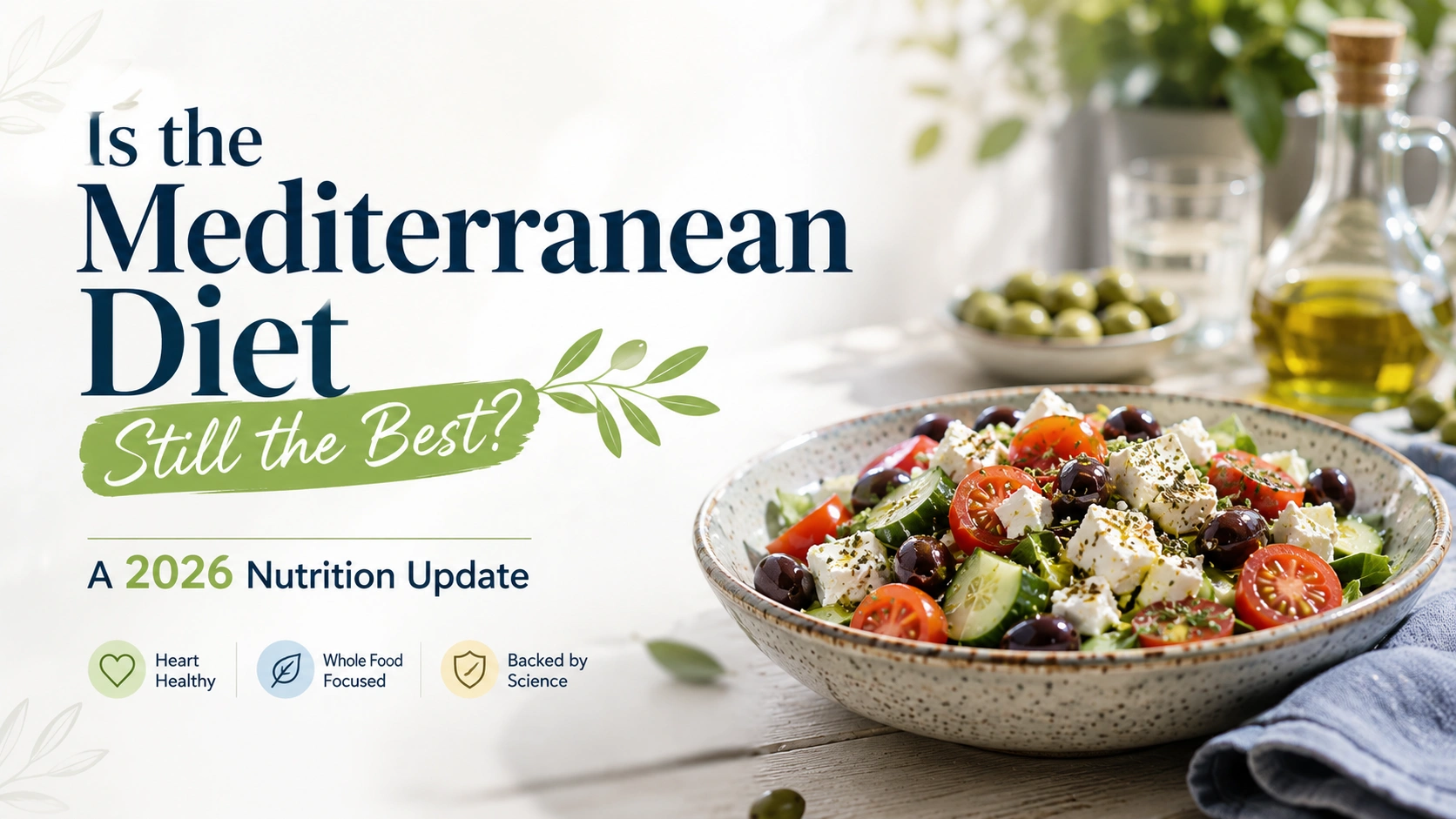
Every year, another diet trend arrives promising faster fat loss, better energy, or some revolutionary metabolic secret. And every year, the Mediterranean diet sits quietly at the top of nearly every credible ranking — because the research supporting it just keeps growing.
The Mediterranean diet 2026 picture is richer than ever. New long-term studies have confirmed benefits beyond heart health, including stronger connections to brain function, gut microbiome diversity, reduced cancer risk, and improved mental health outcomes. Meanwhile, the rise of GLP-1 medications and ultra-processed food awareness has only made the case for whole-food dietary patterns like this one more compelling.
So is it still the healthiest diet in the world? Let’s look at what the evidence actually says in 2026 — and how to put it into practice without overcomplicating it.
FEATURED SNIPPET TARGET The Mediterranean diet is an eating pattern based on the traditional foods of countries bordering the Mediterranean Sea — primarily vegetables, fruits, whole grains, legumes, olive oil, fish, and moderate dairy. It is consistently ranked the healthiest diet in the world by nutrition researchers and has the largest body of clinical evidence supporting its benefits for heart health, longevity, and cognitive function.
What Is the Mediterranean Diet? The Foods That Define It
Unlike diets built on strict rules and elimination, the Mediterranean diet is better understood as an eating pattern — a framework for how to build most of your meals rather than a rigid prescription. It emerged from observational research in the 1960s, when scientists noticed that populations in Greece, southern Italy, and Spain had dramatically lower rates of cardiovascular disease than populations in Northern Europe and the US, despite eating plenty of fat.
The fat, it turned out, was the right kind — olive oil, nuts, and fish. And the rest of the dietary pattern was built around plants, legumes, and minimally processed whole foods. Here’s how the food groups break down in practice:
| Food Group | Frequency | Key Examples | Primary Benefit |
|---|---|---|---|
| Vegetables & Fruit | Every meal | Tomatoes, leafy greens, aubergine, peppers, citrus, berries | Fibre, antioxidants, anti-inflammatory compounds |
| Whole Grains | Daily | Wholegrain bread, oats, brown rice, bulgur wheat, farro | Sustained energy, gut health, cholesterol regulation |
| Legumes | 3–4×/week | Chickpeas, lentils, cannellini beans, black-eyed peas | Plant protein, soluble fibre, blood sugar regulation |
| Extra Virgin Olive Oil | Daily — primary fat | Cold-pressed EVOO as cooking oil and dressing | Oleocanthal (anti-inflammatory), heart-protective monounsaturated fat |
| Nuts & Seeds | Daily handful | Almonds, walnuts, pistachios, flaxseed, sunflower seeds | Omega-3s, vitamin E, satiety |
| Fish & Seafood | 2–3×/week | Salmon, sardines, mackerel, sea bass, prawns, anchovies | Omega-3 fatty acids (EPA/DHA), lean protein |
| Dairy (moderate) | Daily in small amounts | Greek yoghurt, feta, pecorino, kefir | Calcium, probiotics, protein |
| Poultry & Eggs | Weekly (moderate) | Grilled chicken, turkey, eggs | Lean protein, B vitamins |
| Red Meat | Rarely (1–2×/month) | Lamb, beef, pork — small portions | Iron (limit to avoid cardiovascular risk) |
| Sweets & Ultra-Processed | Rarely or never | Pastries, sugary drinks, processed snacks | Minimise — not compatible with core pattern |
Wine — specifically red wine in moderate quantities with meals — is often mentioned in Mediterranean diet discussions. The evidence here is more nuanced than it once appeared; current research suggests alcohol’s risks may outweigh its benefits for many people, and most nutritionists no longer recommend adding wine if you don’t already drink it.
Mediterranean Diet 2026: What the New Research Shows
2026 UPDATE: The PREDIMED-Plus trial — the largest and most rigorous Mediterranean diet trial ever conducted — released updated 5-year data in 2025 showing a 27% reduction in major cardiovascular events in participants following an energy-restricted Mediterranean diet with increased physical activity, compared to control groups.
Beyond cardiovascular health, which has been well established since the original PREDIMED trial in 2013, more recent research has expanded the picture significantly:
- Brain health and dementia prevention: A 2025 analysis of the MIND diet (which overlaps substantially with Mediterranean eating) found that higher adherence was associated with slower cognitive decline equivalent to 7.5 years of younger brain age in older adults.
- Gut microbiome diversity: A 2024 study in Cell found that Mediterranean diet adherence produced the most diverse and beneficial gut microbiome profiles compared to seven other major dietary patterns — including vegan and low-carb diets. Microbiome diversity is increasingly linked to immune function, mood regulation, and metabolic health.
- Mental health outcomes: In the systematic review published in Nutritional Neuroscience (2024), there was a 33% lower risk of depression among people who adhered to the Mediterranean diet, regardless of population type, Europe, Australia and North America.
- Longevity markers: A 2025 Harvard longitudinal study of 110,000 participants found that those with the highest Mediterranean diet adherence scores had 23% lower all-cause mortality over a 25-year follow-up — even after controlling for exercise, smoking, and socioeconomic status.
- Weight management: although it was not initially a weight loss diet, there is a consistent link between increased adherence to the Mediterranean diet and a healthier BMI and waist circumference. There was a slight but statistically significant weight loss in a 2025 meta-analysis of 26 trials, averaging 2.2 kg after 12 months of following the diet versus control diets.
RESEARCH NOTE: The Mediterranean diet now has over 5,000 peer-reviewed studies in its evidence base — more than any other dietary pattern. For context, the ketogenic diet has approximately 300 clinical trials in the literature. Breadth and length of evidence are important signals of a diet’s reliability across diverse populations.
Mediterranean Diet Meal Plan: A Full 7-Day Example
One of the barriers to starting the Mediterranean diet is the vague advice to “eat more olive oil and fish.” A concrete weekly meal plan makes it immediately actionable. Here’s a practical seven-day guide using ingredients readily available across the US, UK, Europe, and Australia:
| Day | Breakfast | Lunch | Dinner |
|---|---|---|---|
| Monday | Greek yoghurt, walnuts, honey, berries | Chickpea and roast vegetable salad with EVOO dressing | Baked salmon, roasted courgette, bulgur wheat |
| Tuesday | Wholegrain toast, avocado, poached egg, tomato | Lentil soup with crusty bread and olive oil drizzle | Grilled sea bass, fennel and orange salad |
| Wednesday | Oats with almond milk, flaxseed, sliced banana | Greek salad with feta, olives, cucumber — add white beans | Lamb kofta (small), tabbouleh, hummus, pitta |
| Thursday | Scrambled eggs, wilted spinach, wholegrain toast | Tuna and white bean salad with lemon and herbs | Vegetable and chickpea stew, brown rice |
| Friday | Smoked salmon, cream cheese, rye bread, dill | Leftover stew + side salad with EVOO | Prawn and tomato linguine with garlic and basil |
| Saturday | Shakshuka (eggs in spiced tomato sauce) | Grilled halloumi, roast peppers, flatbread | Whole roasted chicken with Mediterranean vegetables |
| Sunday | Fruit salad, handful almonds, coffee | Fattoush salad, hummus, vegetable frittata | Baked mackerel with lemon, capers, roast potatoes |
PRO TIP: You don’t need to cook Mediterranean-specific recipes for every meal. The pattern matters more than the cuisine. A stir-fry with olive oil, vegetables, and salmon follows the Mediterranean diet framework perfectly — even if it’s not Greek or Italian in character.
How to Start the Mediterranean Diet: A Step-by-Step Approach
- Change over to extra virgin olive oil for cooking. This is the one most crucial first step. Use EVOO in lieu of butter, vegetable oil, and seed oils, for cooking, dressings and drizzling. Choose cold-pressed EVOO that indicates the harvest date on the label; freshness is a key factor for flavour and polyphenolic content.
- Build at least half of every plate from vegetables or legumes. This doesn’t mean salads only. Roasted vegetables, soups, stews, grain bowls, and pasta heavily loaded with sauce made from tomatoes, peppers, and courgette all qualify. The volume of plant food is the most consistent predictor of Mediterranean diet benefit.
- Replace red meat with fish twice a week. Choose fatty fish like salmon, mackerel, sardines, or anchovies — these provide the omega-3s (EPA and DHA) with the strongest cardiovascular and brain benefits. Canned sardines and mackerel are among the most affordable ways to hit this target.
- Add a daily handful of nuts. Almonds, walnuts, and pistachios are the most studied. Unsalted, unflavoured, and unroasted is ideal. Pre-portioning into daily snack bags prevents overconsumption.
- Switch refined grains to whole grains. Replace white bread with wholegrain or sourdough, white rice with brown rice or farro, regular pasta with wholegrain. This doesn’t need to be all-or-nothing — even 60–70% whole grain replacement produces meaningful improvements in fibre intake and blood sugar response.
- Make legumes a regular meal component. Aim for three to four servings of chickpeas, lentils, cannellini beans, or black-eyed peas per week. They can be added to salads, used as a main protein source, blended into soups, or served as sides. Tinned legumes are fully nutritious and save significant preparation time.
- Reduce ultra-processed food as the default, not as a forbidden item. The Mediterranean diet doesn’t require perfection. It asks that the majority of what you eat is whole, minimally processed, and plant-forward. A packet of biscuits once a week doesn’t break the pattern. A daily processed snack as your default does.
Common Mistakes to Avoid on the Mediterranean Diet
COMMON MISTAKE: “I’m eating Mediterranean food already as I had a chicken Caesar salad.” The actual food pattern is not often the same and restaurant ‘Mediterranean’ dishes are often high in refined grains and low in legumes (beans) and prepared with seed oils instead of olive oil.
- Using low-quality olive oil. Many ‘extra virgin’ olive oils on supermarket shelves in the US, UK, and Australia are diluted or mislabelled. Look for DOP/PDO certified oils, single-origin bottles with a harvest date, or brands with third-party quality verification. The polyphenols that provide the diet’s anti-inflammatory benefits degrade quickly in poor-quality or old oil.
- Eating too much pasta and bread, not enough vegetables. The Mediterranean diet is often misunderstood as a pasta-heavy diet. In reality, vegetables and legumes dominate — pasta appears occasionally as a side dish or modest main, not as a daily staple in large portions.
- Skipping the social and lifestyle elements. Traditional Mediterranean eating involves meals eaten slowly, with others, and without screens. Research suggests the stress-reducing and mindfulness effects of the eating environment contribute independently to health outcomes. Eating a chickpea salad alone at your desk in five minutes is better than a burger, but it’s not the full picture.
- Lumping together all fats. Contrary to popular belief, the Mediterranean diet does not focus on a low-fat approach, but on monounsaturated fats and omega-3 fats found in olive oil, nuts and fish. Low in saturated fat (fat on the meat) and very low in trans fat. It’s not the amount of fat that’s the issue, it’s the kind.
- Expecting rapid weight loss. The Mediterranean diet is not optimised for fast weight loss — it is optimised for long-term health, sustainable eating, and disease prevention. Weight loss occurs gradually and consistently in most adherents, but people expecting keto-speed results in week one will be disappointed. The benefits compound over months and years.
🔗 READ MORE: What Is Cortisol Belly? The Science Behind Stress Weight Gain
Expert Tips and Best Practices for Mediterranean Diet 2026
- Adopt the PREDIMED-Plus model if weight loss is a specific goal. The most recent and robust Mediterranean diet trial combined the traditional eating pattern with a modest calorie reduction (not severe restriction) and increased physical activity. This combination produced the strongest outcomes for both weight and cardiovascular risk — significantly outperforming the diet alone or exercise alone.
- Use the Mediterranean diet as a framework for eating out. In most cities across the US, UK, Europe, and Australia, you can approximate Mediterranean eating in almost any restaurant: choose fish or legume-based dishes over red meat, ask for olive oil instead of butter, prioritise vegetable-forward mains, and skip the bread basket if it’s white refined bread.
- Don’t let perfect be the enemy of consistent. The Mediterranean diet’s health benefits are dose-dependent — the more closely you adhere, the greater the effect. But even partial adherence (three to five Mediterranean-style meals per week) produces measurable improvements in blood markers compared to a standard Western diet. Start where you are.
- Batch cook legumes and grains on weekends. Chickpeas, lentils, brown rice, and farro store well in the fridge for four to five days and form the base of multiple quick weekday meals. Twenty minutes of weekend prep enables five days of Mediterranean-pattern lunches and dinners without daily cooking effort.
- Pair the diet with regular movement. The traditional populations that inspired the Mediterranean diet were also physically active — farming, walking, and manual labour were part of daily life. The health outcomes are strongest when dietary pattern and regular moderate exercise are combined. Zone 2 cardio three to four times per week is a natural complement.
🔗 READ MORE: Zone 2 Training: Why Every Fitness Influencer Is Obsessed With ‘Slow’ Cardio
Final Thoughts
In 2026, the Mediterranean diet isn’t just holding its ground — its evidence base is stronger than ever, its reach extends further into cognitive health, gut health, and mental wellbeing, and the updated PREDIMED-Plus data makes it the most robustly validated dietary pattern in clinical literature.
Is it still the healthiest diet in the world for most people? Based on the totality of evidence, yes — but the “diet” framing undersells it. It’s less a set of rules and more a relationship with food: seasonal, plant-forward, oil-rich rather than fat-phobic, unhurried, and genuinely enjoyable. The Mediterranean diet 2026 isn’t a trend waiting to be replaced. It’s a template that has outlasted every trend that claimed it was about to be.
Frequently Asked Questions (FAQs)
Q1. Is the Mediterranean diet still considered the healthiest diet in 2026?
Yes. The Mediterranean diet remains the top-ranked diet in the majority of expert assessments in 2026, including US News & World Report’s annual Best Diets rankings and multiple meta-analyses in nutrition journals. Its advantages include the largest evidence base of any dietary pattern, benefits across cardiovascular health, cognitive function, gut microbiome diversity, and longevity, and high long-term adherence rates compared to more restrictive diets.
Q2. Can the Mediterranean diet help with weight loss in 2026?
Yes, but the mechanism is different to the fast-loss diets. In controlled studies, the Mediterranean diet has been shown to result in moderate, steady weight loss of 2-3kg over 12 months, without counting calories or restricting foods. The PREDIMED-Plus model (Mediterranean diet plus moderate calorie restriction and moderate exercise) shows better fat loss. It works best for long term weight management and not for short term weight loss.
Q3. What is a simple Mediterranean diet meal plan for beginners?
A simple starting point: breakfast of Greek yoghurt with nuts and fruit; lunch of a large salad with chickpeas, feta, and olive oil dressing; dinner of baked salmon or white fish with roasted vegetables and a small portion of whole grain. Snacks: a handful of almonds or fresh fruit. This pattern alone delivers the core Mediterranean diet benefits and requires minimal cooking skill.
Q4. Is the Mediterranean diet good for heart health?
Yes — it is the most well-established dietary pattern of cardiovascular risk reduction. The initial PREDIMED study (2013) reported a 30% decrease in major cardiovascular events. The new PREDIMED-Plus (2025) demonstrated a 27% decrease when the calorie control and exercise components were added. These include anti-oxidation of LDL, decreased inflammation, enhanced endothelial function, and improved blood pressure control.
Q5. How is the Mediterranean diet different from a regular healthy diet?
The key distinguishing features of the Mediterranean diet compared to generic “healthy eating” advice are: olive oil as the primary fat source (not a supplement to other fats), a high weekly emphasis on legumes and fish specifically, the inclusion of moderate full-fat dairy (yoghurt, aged cheese) rather than low-fat substitutes, and the cultural element of eating slowly and socially. The specificity of the pattern is what produces the measurable outcomes.