

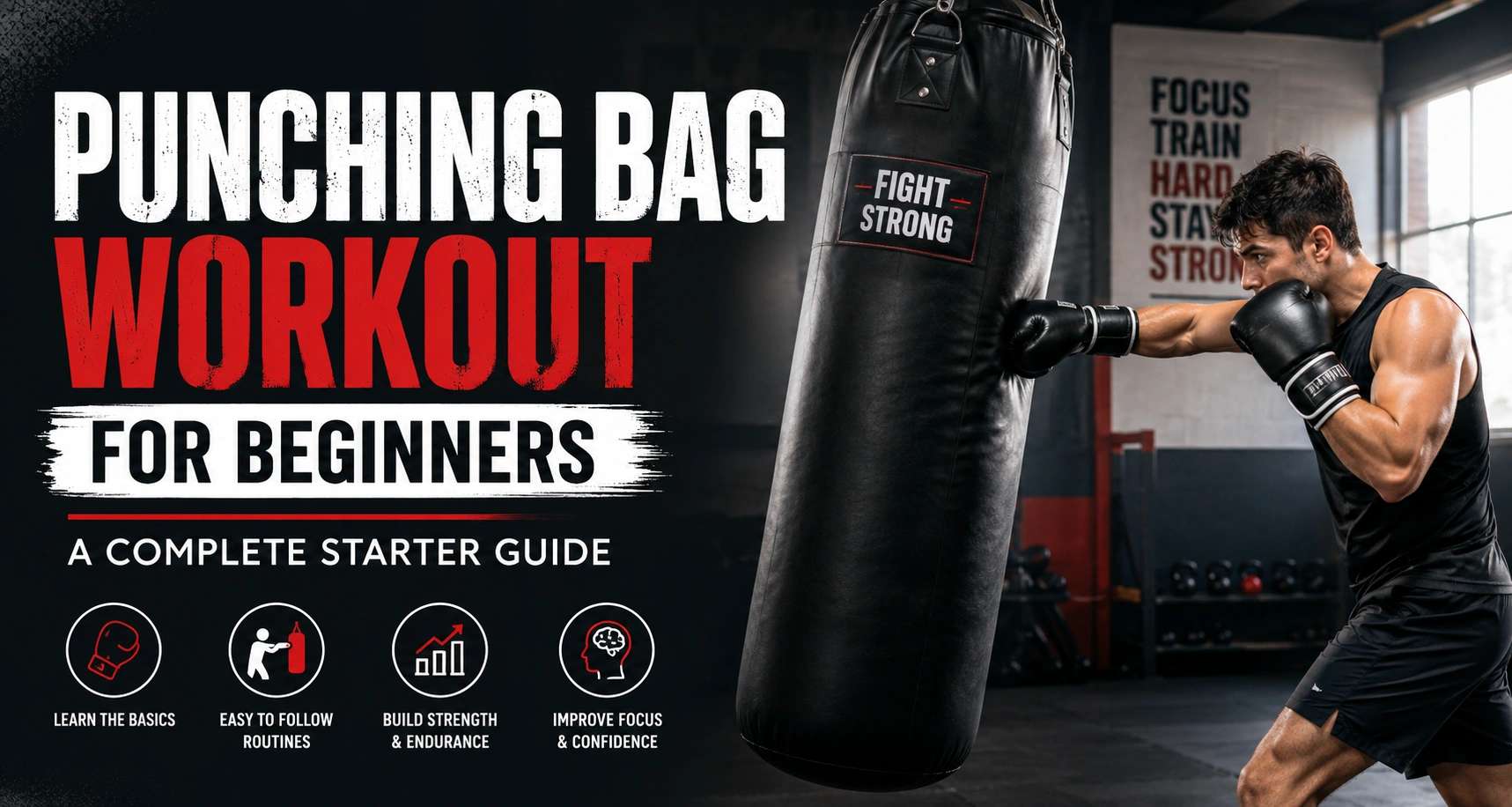
There’s something incredibly satisfying about throwing your first real punch at a heavy bag. It’s loud, it’s physical, and within minutes you’re sweating in a way that treadmills rarely deliver. If you’ve been curious about starting a Punching Bag Workout for Beginners but felt intimidated walking into a boxing gym or unsure where to even begin at home, you’re not alone.
This guide breaks everything down step by step — from proper stance and basic punches to a full beginner-friendly routine — so you can start training with confidence, avoid common mistakes, and actually enjoy the process.
Why Punching Bag Workouts Are Great for Beginners
Before diving into technique, it helps to understand why this workout style has become so popular across gyms and home fitness setups alike.
- Full-body engagement — punching bag training works your shoulders, core, legs, and back, not just your arms
- Excellent cardio benefits — a few rounds can elevate your heart rate as effectively as running or cycling
- Stress relief — there’s a genuine mental release that comes with hitting something with intention
- Improves coordination and reflexes — even basic combinations sharpen hand-eye coordination over time
- Scalable intensity — you control the pace, making it beginner-friendly while still challenging for advanced fitness levels
Unlike many workout trends, punching bag training has stood the test of time because it delivers real results without requiring expensive equipment or a large space.
What You Need Before You Start
You don’t need a full boxing gym setup to begin, but a few basics will make your first sessions safer and more effective.
Essential Equipment
- A heavy bag (freestanding bags work well for home use since they don’t require ceiling mounting)
- Hand wraps to support your wrists and knuckles
- Boxing gloves (bag gloves or training gloves, ideally 12–16 oz for beginners)
- Comfortable athletic shoes with good lateral support
Optional but Helpful
- A mirror to check your form
- A timer or interval app to structure rounds
- A journal or app to track workouts and progress
Investing in proper hand wraps and gloves isn’t optional if you’re serious about avoiding injury — bare-knuckle bag work, even at low intensity, puts unnecessary strain on your wrists and joints.
Getting Your Stance Right
Before you throw a single punch, your stance forms the foundation of everything else. A poor stance leads to poor balance, weak punches, and increased injury risk.
Basic Boxing Stance (For Right-Handed Beginners)
- Stand with feet shoulder-width apart
- Place your left foot slightly forward, right foot back at a slight angle
- Keep knees slightly bent, weight balanced on the balls of your feet
- Raise your hands to chin height, elbows tucked close to your body
- Keep your chin slightly tucked down, eyes forward
Left-handed beginners (orthodox vs. southpaw) should mirror this stance, leading with the right foot instead.
Basic Punches Every Beginner Should Learn
You don’t need a huge arsenal of techniques to get a great workout. Mastering these fundamental punches will take you a long way.
1. Jab (Lead Hand)
A quick, straight punch thrown with your lead hand. It’s fast, used for distance control, and forms the base of most combinations.
2. Cross (Rear Hand)
A powerful straight punch thrown with your rear hand, rotating your hips and shoulders into the movement for added power.
3. Hook
A semi-circular punch aimed at the side of the bag, thrown with either hand, engaging your core and hip rotation.
4. Uppercut
An upward punch aimed at close range, generated by bending your knees slightly and driving upward through your legs and core.
Focusing on clean form with these four punches before adding speed or complex combinations will build a much stronger foundation.
Sample Punching Bag Workout for Beginners
Here’s a simple, structured session to get started. As a beginner, aim for 3 rounds initially, gradually increasing as your stamina improves.
Warm-Up (5 Minutes)
- Light jogging in place or jumping jacks
- Arm circles and shoulder rolls
- Dynamic stretches for hips and legs
Round 1: Technique Focus (3 Minutes)
- Practice jabs and crosses slowly, focusing on form over speed
- 1-minute rest
Round 2: Combination Practice (3 Minutes)
- Jab-cross combinations
- Add hooks once comfortable
- 1-minute rest
Round 3: Light Conditioning (3 Minutes)
- Mix in footwork between punches
- Throw combinations at a steady, moderate pace
- Focus on breathing consistently throughout
Cool Down (5 Minutes)
- Slow-paced shadow boxing
- Static stretching, focusing on shoulders, forearms, and hips
This routine totals around 20–25 minutes — ideal for beginners easing into a new training rhythm without overexertion.
Common Mistakes Beginners Make
Avoiding these early mistakes can save you from frustration and unnecessary injury.
- Punching with locked elbows — this reduces power and increases joint strain
- Dropping hands after each punch — always return to guard position
- Overextending punches — leaning too far forward affects balance and defense
- Ignoring footwork — standing flat-footed limits power generation and mobility
- Skipping wrist support — wrapping hands properly prevents unnecessary wrist injuries
Building good habits early makes progressing to more advanced combinations much smoother down the line.
How Often Should Beginners Train?
For most beginners, 2 to 3 sessions per week is a sustainable starting point. This allows enough recovery time while still building consistency and technique memory.
As stamina and comfort improve, you can:
- Increase round duration gradually (from 2-minute rounds to 3-minute rounds)
- Add more rounds per session
- Incorporate footwork drills and defensive movement between punching sequences
Progress should feel gradual — rushing intensity too quickly often leads to burnout or injury rather than faster results.
Benefits Beyond Physical Fitness
While the physical benefits of a punching bag workout for beginners are well known, many people find unexpected mental benefits as well.
- Improved focus and discipline, as proper technique requires concentration
- A healthy outlet for stress and frustration, particularly after demanding days
- Increased confidence, as visible progress builds over just a few weeks
- A sense of accomplishment, especially for those new to structured fitness routines
This combination of physical and mental benefits is a big reason boxing-based training has remained popular across such a wide range of fitness levels.
Tips for Staying Safe and Injury-Free
- Always warm up properly before hitting the bag at full intensity.
- Start with lighter bags if you’re a smaller beginner, as overly heavy bags can strain wrists and shoulders.
- Don’t rush your form — speed should come after technique, not before.
- Stay hydrated throughout your session, especially during longer rounds.
- Listen to your body — mild muscle fatigue is normal, but sharp joint pain is a sign to stop and reassess technique.
Conclusion
Starting a punching bag workout for beginners doesn’t require years of martial arts experience or expensive gym memberships. With the right stance, a few fundamental punches, and a structured beginner routine, you can build strength, improve cardiovascular fitness, and relieve stress — all while learning a skill that continues to challenge you as you improve.
Start slow, focus on form over power, and stay consistent. Within just a few weeks, you’ll likely notice improved stamina, sharper coordination, and a newfound confidence every time you step up to the bag.
Also Read:- The Complete Fitness & Workout Guide (2026)
Frequently Asked Questions (FAQs)
Q.1 How long should a beginner punching bag workout last?
A beginner punching bag workout typically lasts 20–25 minutes, including warm-up, 2–3 rounds of practice, and a cool-down period, gradually increasing duration as stamina improves.
Q.2 Do I need boxing gloves for a punching bag workout?
Yes, boxing gloves and hand wraps are essential for beginners to protect your wrists and knuckles from injury, even during lower-intensity bag training sessions.
Q.3 How many times a week should beginners do punching bag workouts?
Most beginners should start with 2 to 3 sessions per week, allowing adequate recovery time while still building consistency, technique, and overall stamina.
Q.4 Can a punching bag workout help with weight loss?
Yes, punching bag workouts provide an effective cardiovascular workout that burns calories while also building strength, making them a useful addition to a weight loss or fitness routine.
Q.5 What’s the best punching bag for beginners at home?
Freestanding heavy bags are often recommended for beginners since they don’t require ceiling mounting, offer stability, and work well in home gym setups with limited space.