

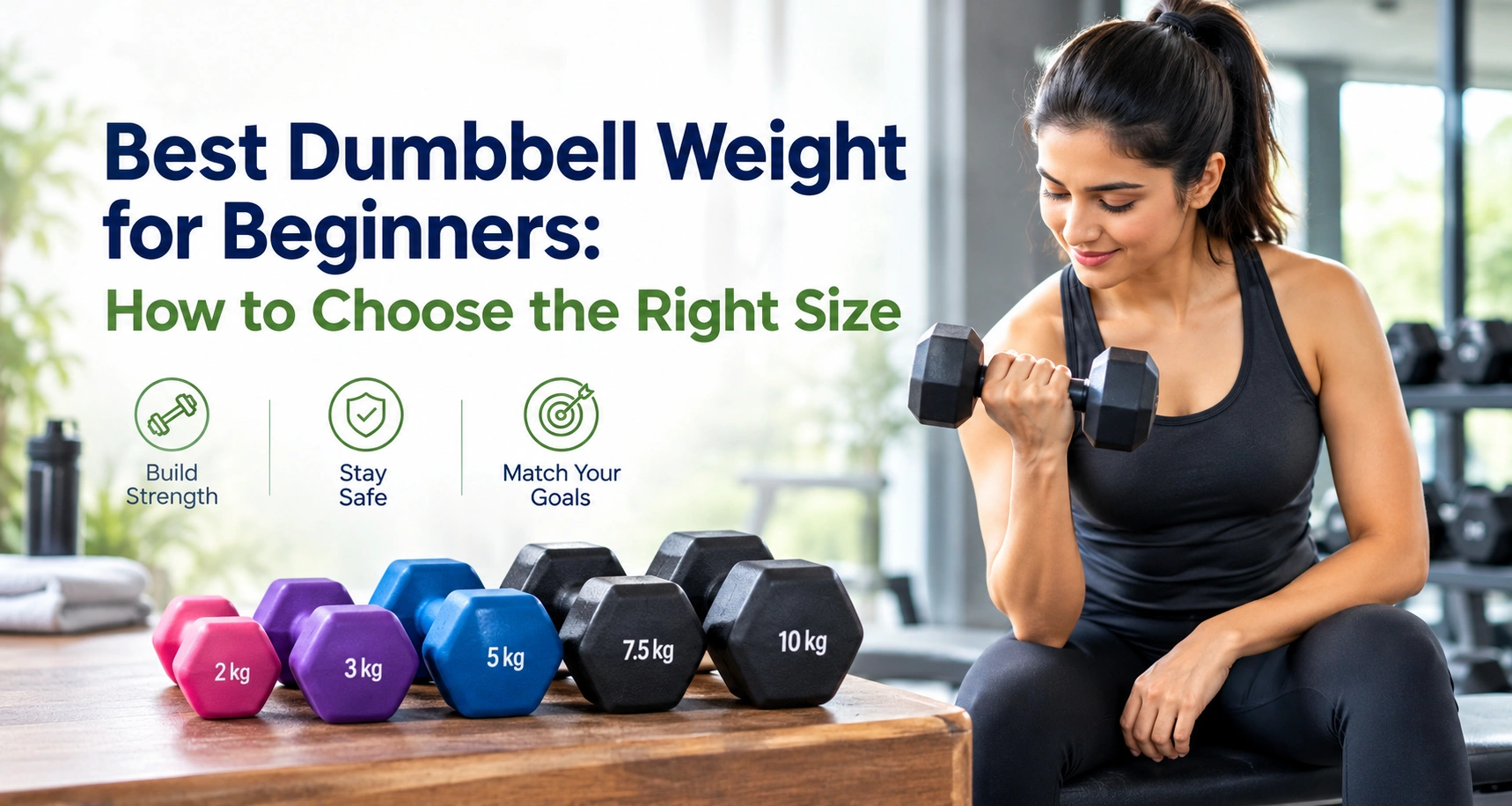
When you go to any gym, you will find rows of dumbbells of various weights. For those new to weight training, that wall of weights can be more of a daunting obstacle than a motivational force. If it is too light, you may not be able to gain the necessary resistance to make progress. If it’s too heavy, you might find that you cannot keep good form or run a greater risk of injury.
So, which is the Best Dumbbell Weight for Beginners? The truth is it depends on your body, fitness, objectives and the exercise you are doing. The bright side of the situation is that picking the correct starting weight doesn’t have to be difficult. This guide explains it simply, so that you can begin lifting safely and confidently.
Why Choosing the Right Dumbbell Weight Matters
Before jumping into numbers, it helps to understand why weight selection is so important in the first place.
Using the wrong dumbbell weight can lead to:
- Poor form, which increases the risk of strains and joint pain
- Slow progress, if the weight is too light to challenge your muscles
- Loss of motivation, when workouts feel either too easy or too exhausting
- Muscle imbalances, especially if one side compensates for the other
Getting the weight right from day one sets the foundation for safe, consistent progress — which is really the whole game in strength training.
Best Dumbbell Weight for Beginners: General Guidelines
There’s no single “magic number” that works for everyone, but fitness trainers commonly recommend the following starting ranges for beginners.
For Women
- Upper body exercises (shoulder press, bicep curls): 2 to 8 pounds (1 to 4 kg)
- Lower body exercises (squats, lunges): 5 to 15 pounds (2 to 7 kg)
For Men
- Upper body exercises: 5 to 15 pounds (2 to 7 kg)
- Lower body exercises: 10 to 25 pounds (4 to 11 kg)
These numbers vary based on natural strength, body weight, and prior activity level. Someone who plays sports regularly may handle heavier dumbbells right away, while someone returning after a long break might need to start lighter.
How to Test If a Dumbbell Weight Is Right for You
Instead of relying only on charts, use this simple test to find your ideal starting weight.
The 12-15 Rep Rule
Pick a dumbbell weight and perform the exercise for 12 to 15 repetitions.
- If you can comfortably perform more than 15 reps with proper form, the weight may be too light and you may benefit from increasing it slightly.
- If you struggle to complete 8 reps or your form breaks down, the weight is too heavy.
- If you feel challenged by the last 2-3 reps but can still maintain good form, you’ve found the right weight.
This simple method works for almost every dumbbell exercise, from bicep curls to shoulder presses to goblet squats.
Different Weights for Different Muscle Groups
One common mistake beginners make is using the same dumbbell weight for every exercise. In reality, your muscle groups have different strength levels.
- Larger muscles (legs, back, chest) can typically handle heavier weights.
- Smaller muscles (shoulders, biceps, triceps) need lighter weights to avoid strain.
For example, you might comfortably squat with 15-pound dumbbells but only manage 8-pound dumbbells for shoulder presses. This is completely normal and expected.
Should Beginners Start Light or Heavy?
There’s an ongoing debate in fitness circles, but for beginners, the safer and smarter approach is to start light and focus on form.
Here’s why:
- Your muscles need time to learn new movement patterns.
- Your joints and connective tissues need to gradually adapt to resistance.
- Good habits formed early prevent bad habits from becoming permanent.
Once your form feels natural and the weight starts feeling too easy, that’s your cue to increase it gradually — usually by 2 to 5 pounds at a time.
Signs You Need to Increase Your Dumbbell Weight
Progression is the key to results in strength training. Watch for these signs that it’s time to size up:
- You can complete your reps with little to no effort
- Your muscles no longer feel sore after workouts
- You’re bored or unchallenged during your sets
- You’ve been using the same weight for more than 3-4 weeks
This concept, known as progressive overload, is essential for continued muscle growth and strength gains.
Best Types of Dumbbells for Beginners
If you’re building a home gym or just starting out, here are a few practical options:
- Adjustable dumbbells: Great for beginners since they let you change weights without buying multiple sets.
- Fixed-weight dumbbells: Simple and durable, ideal if you already know your comfortable weight range.
- Neoprene-coated dumbbells: Good grip and comfortable for lighter workouts, especially popular among beginners in the USA and India.
Common Mistakes Beginners Make with Dumbbell Weights
Avoid these common pitfalls:
- Choosing weight based on what others are lifting, not your own fitness level
- Ignoring form just to lift heavier
- Sticking with the same weight for too long out of comfort
- Skipping warm-up sets before heavier lifts
Remember, strength training is a personal journey — comparing your dumbbell weight to someone else’s is rarely useful.
Final Thoughts
Finding the best dumbbell weight for beginners isn’t about picking a random number off a chart — it’s about listening to your body, respecting proper form, and progressing gradually. Start light, master your technique, and increase the weight only when your current set feels too easy. Over time, this simple, consistent approach will help you build strength safely and effectively, whether you’re working out at a gym in New York or training at home in Mumbai.
The right dumbbell weight today might not be the right one next month — and that’s exactly the point. Progress is the goal, not perfection.
Frequently Asked Questions (FAQs)
Q.1 Which is the best dumbbell weight for beginners to start?
For upper-body exercises, most beginners can begin with 2 to 8 pounds and for lower-body exercises, 5 to 15 pounds. Select a weight that is challenging but not overwhelming and will enable you to perform the exercises with good form.
Q.2 How do I know if my dumbbell weight is too heavy?
If you can’t complete at least 8 clean repetitions, or if your form breaks down during the exercise, the weight is likely too heavy for you right now.
Q.3 Beginners can use the same weight of dumbbells for every exercise?
Not necessarily. Generally, bigger muscle groups like legs and back can bear heavier dumbbells, and smaller muscle groups like the shoulders and biceps will benefit from lighter dumbbells.
Q.4 How often should beginners increase their dumbbell weight?
A good rule of thumb is to increase weight every 3 to 4 weeks, or whenever your current weight starts feeling too easy to lift.
Q.5 Are adjustable dumbbells good for beginners?
Yes, adjustable dumbbells are ideal for beginners because they allow you to change the weight as your strength improves, without needing to buy multiple sets.