

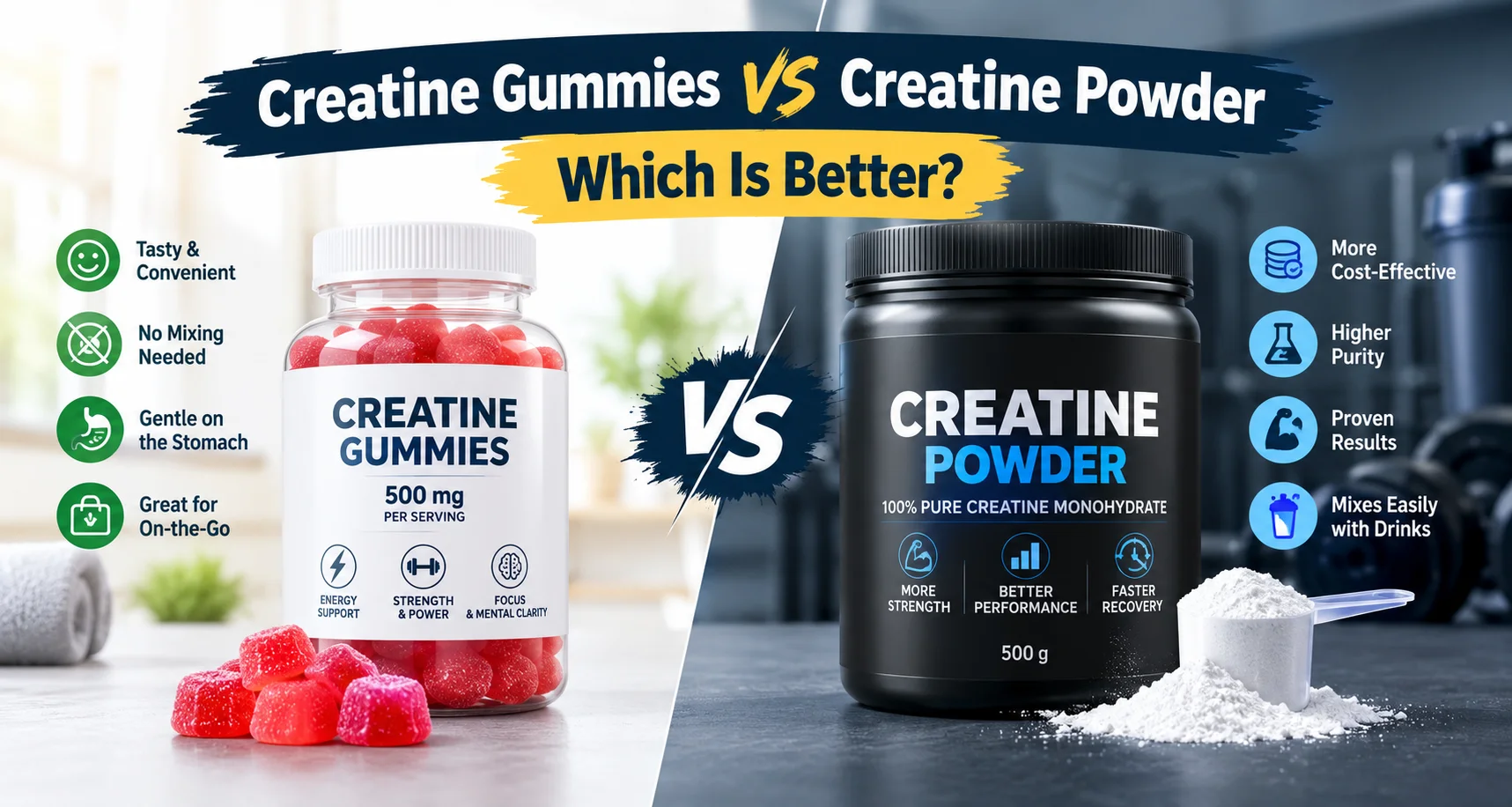
Creatine is one of the most researched supplements in sports nutrition. Lately, a new contender has shown up on store shelves and social media feeds: the creatine gummy. It looks like candy, tastes like candy, and promises the same results as the gritty powder in your gym bag.
So how do creatine gummies vs creatine powder really compare? Is the convenience worth the price, or are you paying extra for a sugary snack? Let’s break it down.
What Is Creatine, and Why Do People Take It?
Creatine is a compound your body makes naturally and stores mostly in your muscles. It helps produce quick bursts of energy during short, intense efforts like lifting weights or sprinting.
Taking extra creatine can help:
- Increase strength and power output
- Support lean muscle growth when paired with training
- Improve performance in repeated high-intensity sets
- Support recovery between workouts
Creatine monohydrate is the most studied form, and major sports nutrition organizations consider it both effective and safe for healthy adults. Most research points to 3 to 5 grams per day as the effective range.
That number matters a lot in the creatine gummies vs creatine powder debate, as you’ll see below.
Creatine Powder: The Tried-and-True Option
Powder has been the standard for decades. You scoop it into water, juice, or a shake and drink it.
Pros of Creatine Powder
- Accurate dosing: One level scoop typically delivers 3 to 5 grams of creatine monohydrate.
- Budget-friendly: Powder usually costs just cents per serving.
- Backed by research: Nearly all of the clinical studies used creatine monohydrate powder.
- Few extras: A good powder contains one ingredient, with no added sugar or fillers.
- Flexible: Mix it with a protein shake, smoothie, or even coffee.
Cons of Creatine Powder
- Texture: Cheaper powders can feel gritty.
- Less convenient: You need a scoop, a glass, and a few seconds to mix it.
- Messy on the go: Travel and gym bags don’t always play well with loose powder.
Creatine Gummies: Convenient, But With Catches
Gummies are chewable, pre-portioned, and easy to take anywhere. For people who dislike mixing drinks, that appeal is obvious.
Pros of Creatine Gummies
- Zero prep: Chew and go.
- Portable: No shaker bottle needed.
- Pleasant taste: Great for people who can’t stand powder texture.
- Easy habit: A gummy feels more like a treat than a supplement, which helps consistency.
Cons of Creatine Gummies
- Lower creatine per piece: Many brands pack only 1 to 2 grams of creatine per gummy, so hitting 3 to 5 grams may mean taking several.
- Higher cost: Per gram of creatine, gummies are often significantly more expensive.
- Added sugar and fillers: Many contain sweeteners, gelatin or pectin, and flavorings.
- Label accuracy concerns: Some independent tests of gummy supplements have found creatine amounts that don’t match the label.
- Stability questions: Creatine can break down into creatinine when it sits in moisture, and gummies are a moist product.
Creatine Gummies vs Creatine Powder: Side-by-Side Comparison
| Factor | Creatine Powder | Creatine Gummies |
| Typical dose per serving | 3–5 g | 1–2 g per gummy (varies) |
| Cost per serving | Low | Moderate to high |
| Convenience | Needs mixing | Grab and chew |
| Taste | Neutral or flavored | Sweet, candy-like |
| Added sugar | Rarely | Often |
| Research backing | Extensive | Limited |
Dosage: The Biggest Difference
Dosage is where the creatine gummies vs creatine powder question gets practical. If one serving of powder gives you 5 grams, but a gummy gives you 1.5 grams, you’d need roughly three gummies to match it. That also means more sugar, more calories, and a faster-emptying bottle.
Always check the supplement facts panel, not just the front label. Look for the amount of creatine per serving and how many gummies make up that serving.
Absorption and Effectiveness
Here’s what most people want to know: do gummies work as well?
In theory, creatine is creatine. If a gummy delivers a real, stable dose of creatine monohydrate, your body can use it. The problem is that most of the research is on powder, and gummies haven’t been studied nearly as much. Your muscles also build up creatine over time, so consistent daily intake matters more than the format you choose.
The honest answer: powder is the safer bet for proven results, while a high-quality gummy can work if the dose is real.
Cost Comparison: What Will You Actually Spend?
A tub of creatine powder can last one to two months and often costs less than a few fancy coffees. Gummies, by contrast, can cost several times more for the same amount of creatine. If you’re training seriously and taking it daily for months, that gap adds up quickly.
Who Should Choose Creatine Powder?
Powder is a better fit if you:
- Want the best value for your money
- Prefer a proven, research-backed format
- Need an exact 3–5 gram dose
- Avoid added sugar
Who Should Choose Creatine Gummies?
Gummies may suit you if you:
- Hate the texture or taste of powder
- Travel often and want zero mess
- Struggle to stay consistent with supplements
- Are willing to pay more for convenience
How to Choose a Quality Creatine Product
Whichever side of the creatine gummies vs creatine powder debate you land on, use this checklist:
- Look for creatine monohydrate (or clearly labeled creatine content)
- Check third-party testing, such as NSF Certified for Sport or Informed Choice
- Compare grams per serving, not just price per bottle
- Read the sugar content if you choose gummies
- Avoid proprietary blends that hide the actual creatine amount
For more fitness, health, and lifestyle reads, explore MagzillaTrends.
Safety and Side Effects
Creatine is generally well tolerated in healthy adults. Some people notice mild bloating or water retention early on. Staying hydrated helps. If you have kidney concerns, take medication, or are under 18, talk to a healthcare professional before starting any creatine supplement.
Final Verdict: Creatine Gummies vs Creatine Powder
If you want the most reliable dose, the best price, and the strongest scientific backing, creatine powder wins. If convenience is what keeps you consistent, and you pick a well-tested brand with a clear dose, creatine gummies can be a decent alternative.
The best creatine is the one you’ll actually take every day. Start with your budget, your goals, and your habits, then choose the format that fits.
Frequently Asked Questions
1. Are creatine gummies as effective as creatine powder?
They can be if they contain a full, accurate dose of creatine monohydrate. However, powder has far more research behind it, and some gummies contain less creatine than you’d need.
2. How many creatine gummies should I take per day?
It depends on the brand. Most people aim for 3 to 5 grams of creatine daily, so check how much each gummy contains and follow the serving size on the label.
3. Is creatine powder cheaper than gummies?
Yes, in most cases. Powder usually costs much less per gram of creatine.
4. Do creatine gummies have sugar?
Many do, though some use sugar-free sweeteners. Always check the nutrition label if you’re watching sugar or calories.
5. Is it safe to take creatine every day?
For most healthy adults, daily creatine at recommended doses is considered safe. Check with a doctor first if you have a medical condition or take medication.