

You pull on a fitted T-shirt and notice it again: a soft swelling under the nipple that wasn’t there a few years ago. Maybe you’ve skipped the beach, avoided the gym locker room, or started wearing loose layers to hide it.
If that sounds familiar, you’re far from alone. Puffy nipples affect millions of men in the USA, India, and everywhere else. The good news is that the problem is usually treatable. This guide explains how to get rid of puffy nipples men struggle with, what causes them, and which solutions work, so you can stop guessing and start fixing it.
What Are Puffy Nipples in Men?
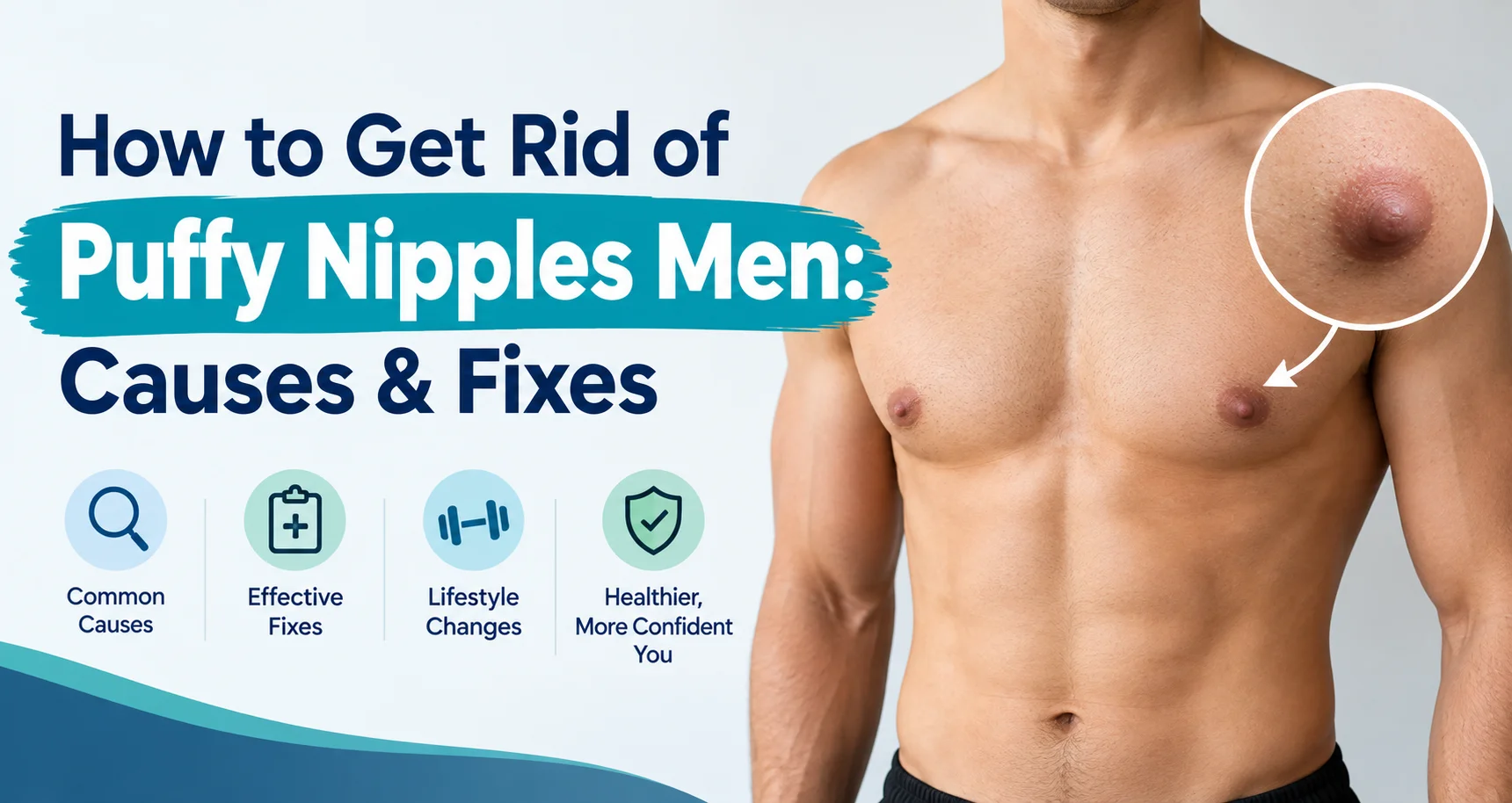
Puffy nipples describe a nipple and areola that swell outward and look rounded or cone-shaped instead of flat. In most cases, the cause is one of two things:
- Gynecomastia: an overgrowth of glandular breast tissue, usually from a hormonal imbalance.
- Pseudogynecomastia: extra fat in the chest area, without real gland growth.
Many men have a mix of both. Telling them apart matters because the treatment differs. A doctor can usually check by touch: glandular tissue feels firm and rubbery, while fat feels soft.
Common Causes of Puffy Nipples in Men
Understanding the cause is the first step in learning how to get rid of puffy nipples men notice in the mirror.
Hormonal Changes
Men produce both testosterone and a small amount of estrogen. When the balance tilts toward estrogen, breast tissue can grow. This happens naturally at three stages:
- Infancy, due to hormones passed on from the mother
- Puberty, when hormone levels swing (often settles within 6 to 24 months)
- Older age, as testosterone gradually falls
Weight Gain
Extra body fat can make the chest look fuller, and fat cells also convert testosterone into estrogen. That’s why weight gain and puffy nipples often go together.
Medications and Substances
Certain drugs are linked to breast tissue growth, including:
- Anabolic steroids and some bodybuilding supplements
- Finasteride, spironolactone, and some anti-androgen drugs
- Certain antidepressants, anti-anxiety medicines, and ulcer drugs
- Heavy alcohol use and marijuana
Never stop a prescribed medicine on your own. Talk to your doctor first.
Medical Conditions
Liver disease, kidney problems, thyroid disorders, low testosterone, and, rarely, tumors can all play a role.
How to Get Rid of Puffy Nipples Men Can Try at Home
If your doctor has ruled out a medical cause, these lifestyle steps are a sensible starting point.
1. Lose Excess Body Fat
If fat is the main issue, this helps most. Aim for slow, steady loss through a mix of cardio and strength training. You can’t “spot reduce” the chest, but overall fat loss often shrinks it.
2. Clean Up Your Diet
You don’t need a crash diet. Small, consistent changes work better:
- Eat more lean protein such as eggs, paneer, dal, chicken, or fish
- Add fiber-rich vegetables, fruits, and whole grains
- Cut back on sugary drinks, deep-fried snacks, and processed foods
- Limit alcohol, which can raise estrogen and affect the liver
3. Strengthen Your Chest Muscles
Exercise won’t remove glandular tissue, but building the pectoral muscles can improve the overall shape of your chest. Good options include:
- Push-ups and incline push-ups
- Dumbbell or barbell bench press
- Chest flys and cable crossovers
Three strength sessions a week, along with regular cardio, is a realistic target.
4. Review What You Put in Your Body
Steroids, certain supplements, and recreational substances are frequent culprits. If you use any, stopping may allow the tissue to shrink. Share your full medication and supplement list with a doctor so they can check for links.
5. Manage Sleep and Stress
Poor sleep and chronic stress can disturb hormone balance. Seven to eight hours of sleep and some daily movement, like walking or yoga, support healthier hormone levels.
Medical Treatments for Stubborn Cases
When lifestyle changes aren’t enough, a doctor may suggest one of these options.
Medication
Doctors sometimes prescribe hormone-modulating drugs such as tamoxifen, mostly for cases with pain or tenderness. This use is typically off-label, and it works best when the condition is recent.
Liposuction
If the swelling is mostly fat, liposuction removes it through small incisions. Recovery is usually quick.
Gland Excision Surgery
When firm glandular tissue is the problem, a surgeon removes it, often through a small cut around the areola. This is the most reliable fix for long-standing gynecomastia, and it can be combined with liposuction.
Costs vary widely between the USA and India, and insurance often treats the procedure as cosmetic, so ask for a clear quote and choose a board-certified plastic surgeon.
Quick Comparison of Options
| Approach | Best For | Results |
| Weight loss and exercise | Fat-related puffiness | Gradual |
| Medication | Recent, tender swelling | Varies |
| Liposuction | Fatty chest tissue | Fast |
| Gland excision | Firm glandular tissue | Most reliable |
When Should You See a Doctor?
Most puffy nipples are harmless, but get checked promptly if you notice:
- A hard, fixed lump or swelling on only one side
- Nipple discharge or skin changes
- Pain that doesn’t settle
- Swelling that appeared suddenly
- Symptoms along with fatigue, weight loss, or other unexplained changes
A quick exam, and sometimes blood tests or imaging, can rule out anything serious and point you to the right treatment.
Mistakes to Avoid
- Using “gynecomastia pills” or creams from unverified sellers. They rarely work and may contain unlisted ingredients.
- Wearing chest binders or compression for hours every day. They hide the problem but don’t fix it and can irritate the skin.
- Crash dieting. Rapid weight changes can disrupt hormones further.
- Ignoring the issue for years. Early treatment generally works better than waiting until tissue becomes dense.
Final Thoughts
Learning how to get rid of puffy nipples men face starts with identifying the cause. If extra fat is the culprit, weight loss, a cleaner diet, and chest workouts can make a visible difference. If glandular tissue is involved, medical treatment or surgery offers a lasting solution. Either way, you don’t have to live with the embarrassment, and a short consultation with a doctor can save you months of trial and error.
Be patient, stay consistent, and don’t rely on quick-fix products. For more practical lifestyle and wellness reads, visit Magzilla Trends.
Frequently Asked Questions
1. Can puffy nipples in men go away on their own?
Yes, especially when caused by puberty. Most teenage cases settle within a couple of years. In adults, it may improve if the trigger, such as a medication or weight gain, is removed.
2. Do chest exercises help with puffy nipples?
They help build the muscle under the tissue and improve chest shape, but exercise can’t remove glandular tissue. They work best alongside fat loss.
3. Are puffy nipples a sign of low testosterone?
Sometimes. Low testosterone or a high estrogen ratio can contribute, but so can weight, medicines, and other health conditions. A blood test can clarify.
4. What is the best treatment for puffy nipples in men?
It depends on the cause. Fat-related cases respond to weight loss or liposuction, while glandular cases usually need medication or surgical excision.
5. Is gynecomastia dangerous?
Generally, no. It’s a benign condition. However, a hard lump, discharge, or one-sided swelling should be checked promptly to rule out other problems.