

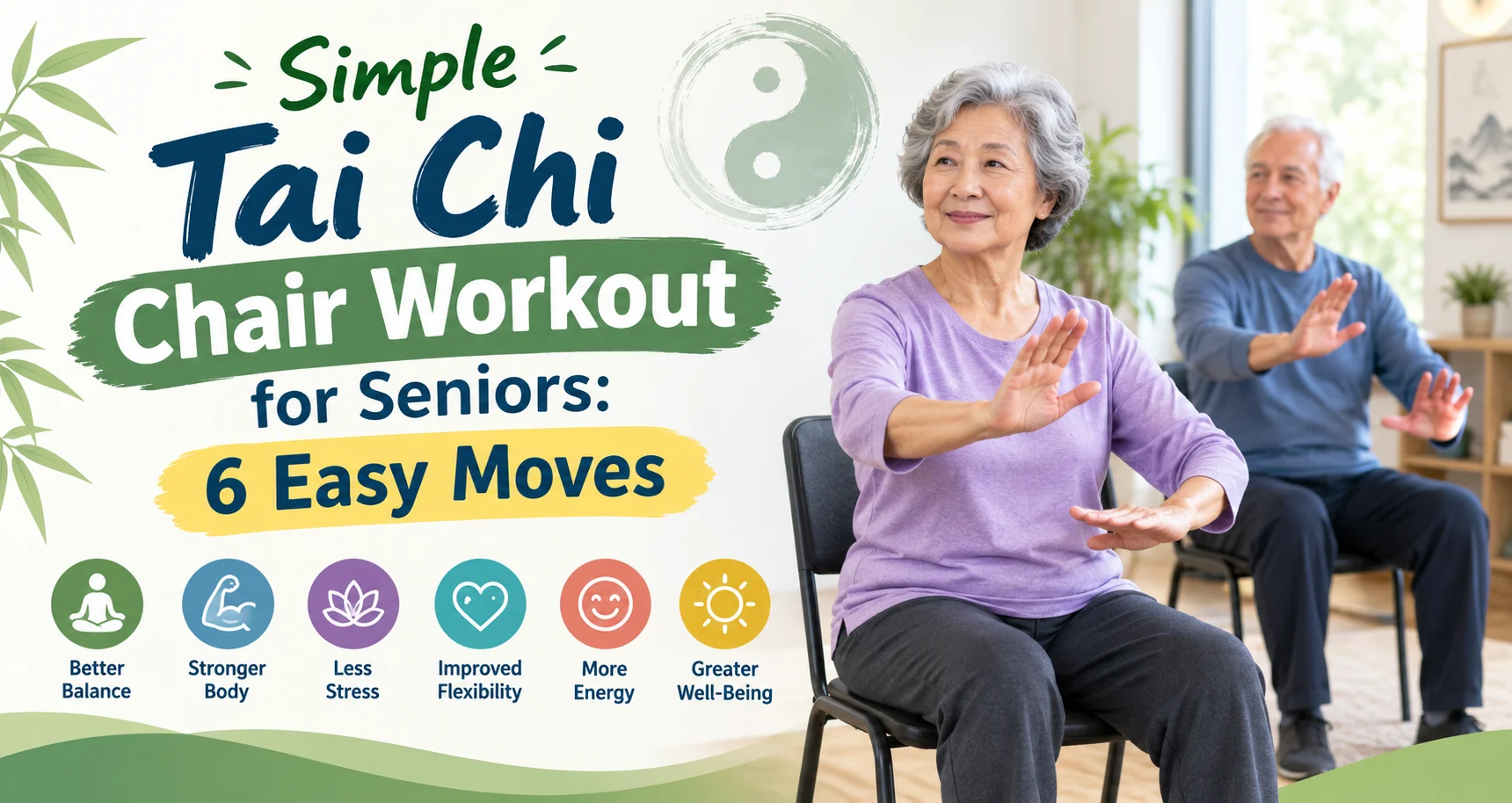
Picture this: it’s a quiet morning, the chai is still warm, and your father or grandmother is sitting comfortably in a chair, moving their arms in slow, flowing circles. No gym, no heavy equipment, no strain on tired knees. This is the beauty of a tai chi chair workout for seniors.
Many older adults in India want to stay active but worry about joint pain, dizziness or the fear of falling. Long walks may feel risky during summer heat or monsoon rains. Seated tai chi solves this problem. It keeps the body moving, the mind relaxed and the spirit lifted, all without leaving your chair.
In this guide, you’ll learn what chair tai chi is, why it suits older adults, and how to start safely at home.
What Is a Tai Chi Chair Workout?
Tai chi is an ancient Chinese practice built on slow, controlled movements, deep breathing and mental focus. Often described as “meditation in motion,” it has been practised for centuries.
A chair-based version keeps the same graceful flow but adapts the movements so you can do them while seated. You use your arms, shoulders, spine, hands and sometimes your legs, while the chair gives you steady support.
This makes seated tai chi a good fit for:
- People with arthritis or stiff joints
- Seniors recovering from illness or surgery
- Those with balance problems or low stamina
- Anyone who finds standing exercise tiring
Benefits of Tai Chi Chair Exercises for Seniors
Gentle, low-impact movement can make a real difference to daily life. Research on tai chi in general has linked it with better balance, flexibility and mood in older adults. Here’s what regular seated practice can offer.
Better Balance and Fewer Fall Fears
Even when seated, you train your core and learn to shift your weight smoothly. Over time, this builds body awareness that carries over to standing and walking.
Improved Flexibility and Joint Comfort
Slow, circular motions keep shoulders, wrists, elbows and the spine moving. Many seniors find stiffness eases, especially in the morning.
Stress Relief and Better Sleep
The focus on breathing calms the nervous system. Practising in the evening can help you wind down, which many older adults find useful for restful sleep.
Social and Emotional Wellbeing
Loneliness is common in later life. Practising with a neighbour, a family member or a community group in your society park adds companionship and routine.
Simple Tai Chi Chair Workout for Seniors: 6 Easy Moves
Do each movement slowly. Think of moving through water. Breathe in through the nose and out gently through the mouth.
1. Seated Deep Breathing (1–2 minutes)
Rest your hands on your lap. Inhale slowly as you lift your arms forward to shoulder height, then exhale as your palms float back down. Repeat 8 to 10 times. This warms up the body and settles the mind.
2. Cloud Hands (2 minutes)
Hold your hands as if gently holding a large ball in front of your belly. Slowly move them to your right, then to your left, letting your upper body turn slightly with them. Keep your hips facing forward. This improves shoulder and spine mobility.
3. Wave Arms Like Water (2 minutes)
Raise both arms to chest level and move them in soft, wave-like motions, as if stroking the surface of a lake. This loosens wrists and elbows.
4. Gentle Spinal Twist (1–2 minutes)
Place your right hand on your left knee and turn your upper body slowly to the left. Hold for a breath, then switch sides. Stop if you feel any sharp discomfort.
5. Seated Marching (1–2 minutes)
Lift one knee slightly, lower it, then lift the other, keeping the pace slow and steady. This wakes up your hip flexors and improves circulation in the legs.
6. Closing Hands to Heart (1 minute)
Bring your palms together at your chest, close your eyes if comfortable, and take three slow breaths. This is a calm finish to your practice.
A full session of about 10 to 15 minutes is enough to start. You can slowly increase to 20 or 30 minutes as your confidence grows.
Safety Tips for Seniors in India
Safety always comes first. Keep these points in mind:
- Talk to your doctor first, especially if you have heart disease, high blood pressure, osteoporosis, vertigo or recent surgery.
- Never force a movement. Tai chi should feel soothing, not painful.
- Avoid practising right after a heavy meal. Wait at least an hour or two.
- Use a non-slip surface under the chair and keep the chair against a wall if balance is a concern.
- Keep a family member nearby for the first few sessions.
- Skip practice on days you feel unwell or very dizzy.
How to Build a Habit That Lasts
Consistency matters more than intensity. Try these simple ideas:
- Practise at the same time daily, such as after your morning tea or before dinner.
- Play soft instrumental music or a calming bhajan to set the mood.
- Track your sessions on a wall calendar and tick off each day.
- Invite a friend or spouse to join you.
- Start small and celebrate progress, like turning your spine a little further or feeling calmer by week two.
For more lifestyle and wellness reading, you can explore the latest articles at Magzilla Trends.
Frequently Asked Questions
1. Is a tai chi chair workout for seniors safe for beginners?
Yes, it is generally considered safe because you stay seated and the movements are slow and low-impact. Still, check with your doctor before starting, particularly if you have a chronic health condition.
2. How often should seniors do chair tai chi?
Three to five days a week is a good target. Even 10 minutes a day can help build flexibility and relaxation over time.
3. Can chair tai chi help with arthritis and joint stiffness?
Many people with arthritis find that gentle, flowing movements ease stiffness and keep joints mobile. It isn’t a cure, but it can be a helpful part of a doctor-approved routine.
4. Do I need a trainer or special equipment?
No special equipment is needed, only a sturdy chair. Beginners may benefit from a few guided sessions with a certified instructor or a trusted video class to learn proper form.
5. How long before I notice results?
Some people feel calmer right away. Improvements in balance, flexibility and energy usually appear after several weeks of regular practice, though everyone progresses differently.
Conclusion
A tai chi chair workout for seniors proves that staying active doesn’t have to be hard, expensive or risky. With just a chair, a few quiet minutes and a willingness to move slowly, older adults can support their balance, ease stiffness and find a calmer state of mind.
Start with the six simple moves above, listen to your body, and build a routine that feels pleasant. Share it with your parents, grandparents or neighbours. A few gentle minutes each day can go a long way toward healthier, happier years.