

Nearly one in two people deals with dandruff at some point, and nearly every article on the topic recommends the same rotating cast of kitchen ingredients — coconut oil, lemon juice, apple cider vinegar — without saying which ones actually have evidence behind them. Some do. Some are mostly anecdotal. Knowing the difference matters if you want results instead of just a routine.
Quick answer: The best anti dandruff home remedies with the strongest evidence behind them are tea tree oil (clinically shown to reduce dandruff-causing fungus at a 5% concentration), coconut oil (shown in research to reduce Malassezia, the yeast linked to most dandruff), and neem (a traditional antimicrobial with a long history of use). Apple cider vinegar is popular and widely recommended, but the evidence specifically for dandruff is more anecdotal than clinical — it’s worth trying, just not over-relying on. If nothing improves within 3 weeks of consistent use, that’s the signal to see a dermatologist.
What Actually Causes Dandruff
Most dandruff is linked to Malassezia, a yeast that lives naturally on everyone’s scalp but overgrows in some people, triggering irritation, excess skin cell turnover, and the flaking most people recognize as dandruff. Dry scalp, oily scalp, and product buildup can all worsen the same underlying pattern, and more persistent, red, or greasy flaking can sometimes point to seborrheic dermatitis — a related but more stubborn condition that often needs a dermatologist’s input rather than home treatment alone.
This matters because it explains why remedies that target the yeast (tea tree oil, coconut oil, neem) tend to have stronger evidence behind them than remedies that mainly moisturize or exfoliate without any antifungal action.
Home Remedies for Dandruff, Ranked by Evidence
| Remedy | Evidence Strength | How It Works | Best For |
|---|---|---|---|
| Tea tree oil (diluted) | Strong — clinically studied | Antifungal; reduces Malassezia at 5% concentration | Most dandruff types |
| Coconut oil | Strong — research-supported | Lauric acid disrupts fungal activity; also moisturizes | Dry, flaky scalp |
| Neem | Moderate — traditional antimicrobial, less clinical data | Broad antimicrobial and antifungal properties | Itchy, irritated scalp |
| Aloe vera | Moderate — anti-inflammatory evidence | Soothes irritation and reduces flaking | Sensitive, itchy scalp |
| Apple cider vinegar | Weak-to-anecdotal for dandruff specifically | Mildly acidic; may help restore scalp pH | Oily scalp (use cautiously) |
| Fenugreek paste | Anecdotal, traditional Indian remedy | Believed to soothe dryness and reduce flaking | Dry scalp |
| Yogurt and honey mask | Anecdotal | Moisturizing; may support scalp microbiome balance | Dry, undernourished scalp |
How to Use the Strongest Options Safely
Tea Tree Oil
Tea Tree Oil Treatment: Do not put the tea tree oil directly on your scalp because it can trigger irritation or contact dermatitis. Rather, dilute 10-15 drops in a bottle of unscented shampoo, or add a few drops to a carrier oil (coconut oil is great) before use. Massage into the scalp and allow to remain for 3-5 minutes, before rinsing completely. Many people see some results after 2–4 weeks of regular usage several times a week.
Coconut Oil
Heat a tablespoon of virgin coconut oil in your palms then massage it straight into the scalp. Keep it on for at least 30 minutes (or longer, if you put it under your pillow with a towel), then thoroughly wash it out. Two to three times a week is fine, and can be combined with a medicated or tea-tree infused shampoo on alternate wash days instead of using just one shampoo.
Neem
Neem Scalp Treatment: Boil a few neem leaves in water, pour the water off and apply it to your scalp as a final rinse after your shampoo. The other option is to take the leaves after boiling and make a paste and apply it to the scalp for 20-30 mins before rinsing it. While the benefits of neem in hair care have been known and trusted for centuries in traditional Indian remedies, there is still less scientific evidence on its efficacy in comparison to other ingredients like tea tree oil.
Apple Cider Vinegar (Use With Caution)
If you want to try ACV, dilute it — one part vinegar to three parts water is a reasonable starting ratio — and apply after shampooing, leaving it on for a few minutes before rinsing thoroughly. Don’t use it undiluted or daily; some research on ACV applied to skin has actually shown increased irritation in certain cases, so this is one to patch-test carefully and discontinue if your scalp reacts badly, rather than a remedy to lean on heavily.
Homemade Hair Masks for Dandruff
Fenugreek (Methi) Paste: Fenugreek Paste (Methi): Overnight soak 2-3 tablespoons of fenugreek seeds and then grind into a smooth paste. Apply it on the scalp for 30-45 minutes before rinsing off. It’s a common home remedy in India to relieve a dry and flaky scalp.
Yogurt and Honey Mask: Rub 2 tbsp of plain yogurt with 1 tbsp of honey onto the scalp and leave on for 30 minutes before shampooing once a week. Both ingredients also help to moisten the scalp to promote better moisture balance, and the yogurt may help to create a more healthy scalp environment, although this isn’t backed by much scientific evidence.
Always Patch Test First
Before applying any new oil or remedy to your full scalp, apply a small amount to your inner forearm and wait 24 hours to check for irritation. This is especially important for tea tree oil and apple cider vinegar, both of which are more likely than the others on this list to cause a reaction in sensitive skin.
A Simple Weekly Routine
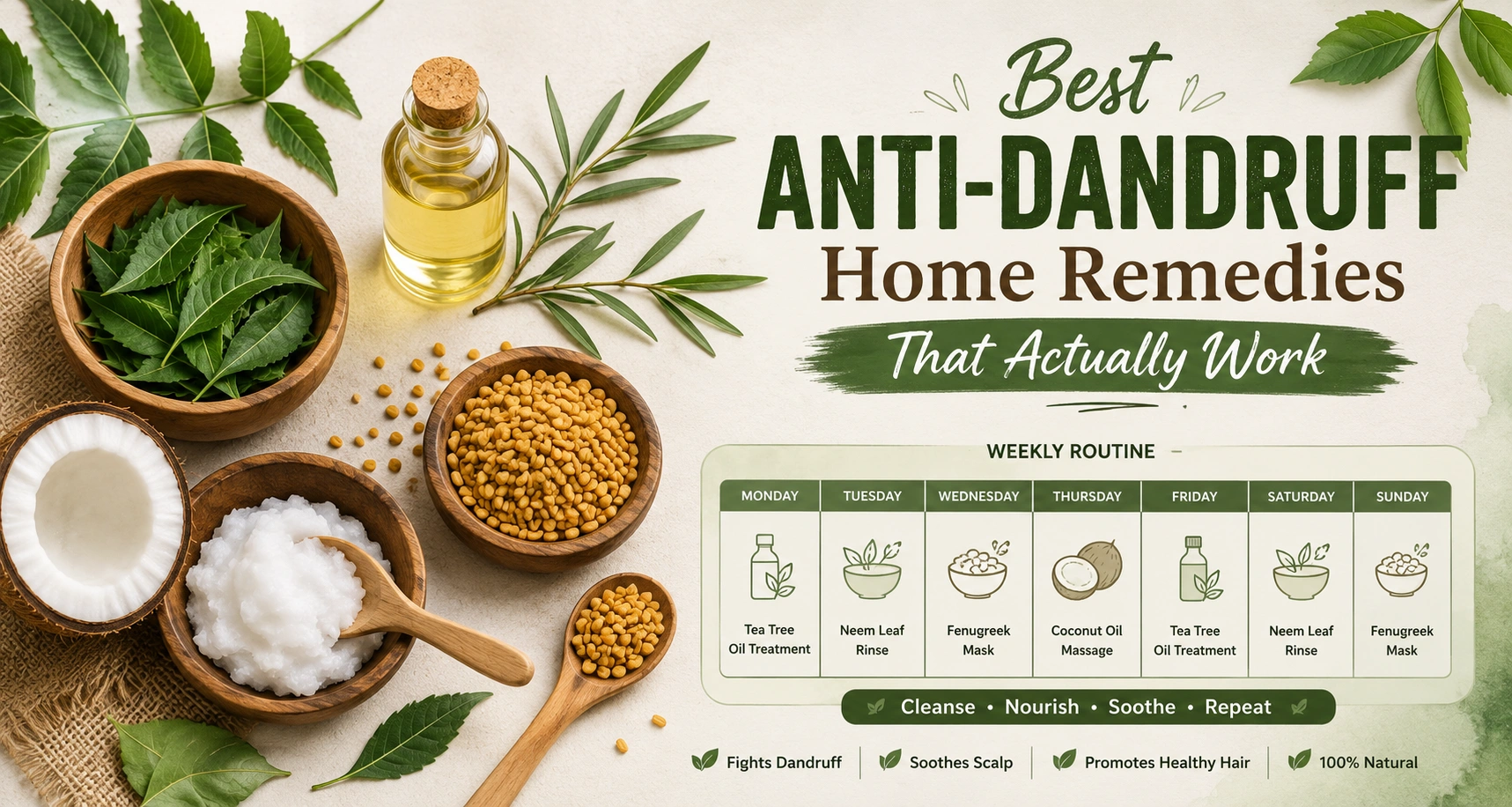
- Wash day 1: Tea tree oil massage (diluted in shampoo or a carrier oil), leave 3–5 minutes, rinse.
- Mid-week: Coconut oil scalp massage, left on for at least 30 minutes before your next wash.
- Once weekly: A hair mask — fenugreek paste, yogurt and honey, or neem rinse, rotating based on what your scalp responds to best.
- Every wash: Lukewarm water rather than hot, gentle massage rather than harsh scrubbing, and shampoo left on the scalp for 3–5 minutes before rinsing to give active ingredients time to work.
Common Mistakes That Make Dandruff Worse
- Applying tea tree oil or lemon juice undiluted. Both can irritate the scalp at full strength, which worsens flaking rather than improving it.
- Washing hair too often, or not often enough. Over-washing can dry out and irritate the scalp; under-washing allows oil and product buildup that feeds the yeast linked to dandruff. Most people do best somewhere in the middle — every 2–3 days is a reasonable starting point to adjust from.
- Scrubbing aggressively to “remove” flakes. This irritates the scalp further and can worsen inflammation rather than solving the underlying cause.
- Giving up on a remedy after one use. Most of these need 2–4 weeks of consistent use before you can fairly judge whether they’re working.
- Ignoring persistent redness or greasy, thick flaking. This can indicate seborrheic dermatitis, which often responds poorly to home remedies alone and benefits from a dermatologist’s evaluation.
When to See a Dermatologist
Home remedies work well for mild, ordinary dandruff, but it’s worth seeing a dermatologist if flaking persists beyond 3 weeks of consistent treatment, if your scalp is red, greasy, or significantly inflamed rather than just flaky, or if over-the-counter medicated shampoos (containing zinc pyrithione, ketoconazole, or salicylic acid) haven’t helped either. These patterns can point to seborrheic dermatitis, psoriasis, or another underlying condition that benefits from a proper diagnosis rather than continued home treatment.
Frequently Asked Questions
Q.1 What is the fastest home remedy for dandruff?
Diluted tea tree oil tends to show results fastest among natural options, with many people noticing improvement within 2–4 weeks of consistent use, a few times a week.
Q.2 Does apple cider vinegar really work for dandruff?
It’s widely recommended and mildly acidic, which may help restore scalp pH, but the clinical evidence specifically for dandruff is weaker than for tea tree oil or coconut oil — it’s reasonable to try cautiously, but shouldn’t be your primary strategy.
Q.3 May I apply tea tree oil undiluted to my hair/skin?
No — always mix it in a carrier oil or put it in shampoo! Many people can be irritated or experience contact dermatitis from undiluted tea tree oil.
Q.4 How long should I try home remedies before seeing a doctor?
About 3 weeks of consistent use is a reasonable trial period. If flaking hasn’t meaningfully improved by then, or if your scalp looks red or greasy rather than simply flaky, a dermatologist visit is the next step.
Q.5 Is dandruff caused by a dry scalp or an oily scalp?
Both can trigger it, though through different mechanisms — dry scalp causes flaking from irritation and dryness, while oily scalp can feed the yeast (Malassezia) linked to most dandruff. Identifying which pattern fits your scalp helps you choose the more effective remedy.
Conclusion
Not every dandruff remedy on the internet is backed by the same level of evidence — tea tree oil, coconut oil, and neem have the strongest support, while apple cider vinegar and most hair masks work better as a helpful addition than a primary treatment. Patch test anything new, give a remedy 2–4 weeks before judging it, and see a dermatologist if nothing improves. For more haircare and skincare guidance, explore the full Skincare & Haircare Guide.