

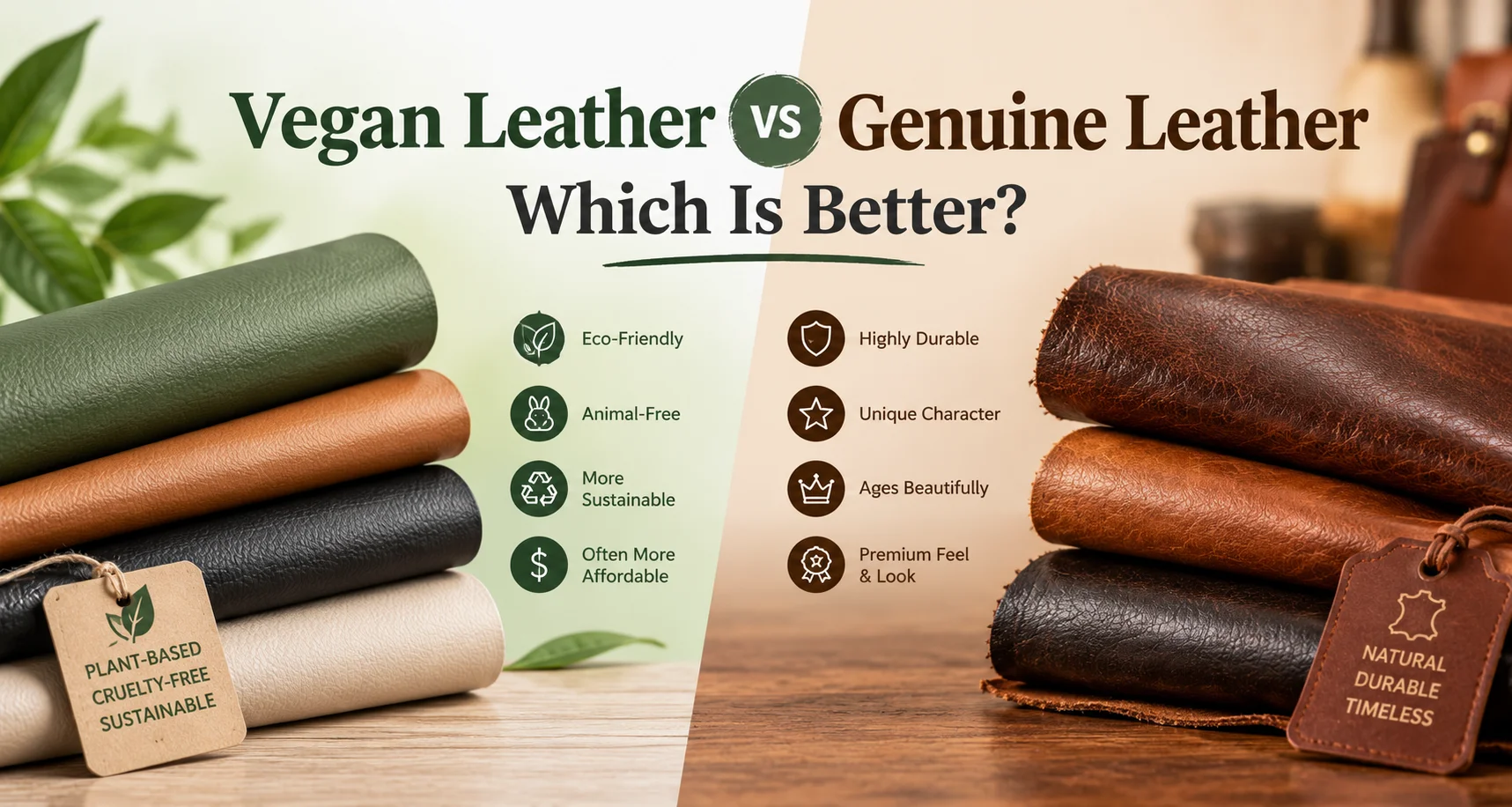
You’re standing in a store, holding two jackets that look almost identical. One costs twice as much as the other. The tag on the cheaper one says “vegan leather,” and you wonder: is it just as good, or will it peel in a year?
This is the question behind the vegan leather vs genuine leather debate, and it matters more than ever. Shoppers in the USA and India are paying closer attention to ethics, budgets, and long-term value. In this guide, we break down how each material is made, how it performs, and which one suits your lifestyle. For more fashion and lifestyle reads, explore Magzilla Trends.
What Is Genuine Leather?
Genuine leather is made from animal hide, most often cowhide, but also goat, sheep, and buffalo. The hide is cleaned and tanned, either with chromium salts or with plant-based tannins, so it doesn’t rot and stays flexible.
Not all real leather is equal. The main grades are:
- Full-grain leather: The top layer of the hide, left natural. It is the strongest and develops a rich patina over time.
- Top-grain leather: Lightly sanded for a smoother finish. Slightly less durable, but still high quality.
- Split and bonded leather: Lower layers or scraps pressed together. Cheaper, but they wear out faster.
A label that simply says “genuine leather” often means a lower grade, so always check the fine print.
What Is Vegan Leather?
Vegan leather, also called faux leather, synthetic leather, or leatherette, contains no animal products. Most of it is made from a fabric base coated with plastic, usually:
- PU (polyurethane): Softer and more breathable. The most common choice today.
- PVC (polyvinyl chloride): Cheaper and stiffer, but harder to recycle.
Newer plant-based options are also entering the market, made from pineapple leaves, cactus, apple waste, mushroom roots, and cork. These are still pricier, but they are growing fast among eco-conscious brands.
Vegan Leather vs Genuine Leather: Key Differences
Let’s compare the two across the things buyers care about most.
Durability and Lifespan
This is where real leather wins. Well-made full-grain leather can last 20 years or more, and often looks better with age. Vegan leather typically lasts 2 to 5 years with regular use before the coating starts to crack, flake, or peel, especially in hot, humid weather.
Plant-based alternatives are improving, but long-term performance data is still limited.
Look and Feel
Genuine leather has natural grain, small imperfections, and that unmistakable smell. It softens and molds to your body over time. Vegan leather looks uniform and consistent, which some people prefer. Cheaper versions can feel plasticky and trap heat, so you may sweat more in a faux leather jacket.
Price and Value
Vegan leather is the budget-friendly pick. A faux leather bag might cost a third of a real one. But think in cost per use. A $300 leather bag used for ten years costs less per year than a $60 faux bag replaced every two.
In India, where affordable fashion is a priority for many buyers, faux leather is hugely popular for trendy, short-cycle items. In the USA, shoppers often split their spending: faux for fast-fashion pieces, real leather for staples.
Environmental Impact
This is not a simple win for either side.
- Genuine leather: Linked to livestock farming, which creates greenhouse gases and land use pressure. Chrome tanning can pollute water if not managed properly. On the plus side, leather is often a by-product of the meat industry, and it lasts for decades.
- Vegan leather: Avoids animal farming, but PU and PVC are petroleum-based plastics. They shed microplastics, are hard to recycle, and often end up in landfills after a short life.
Plant-based vegan leather is the most promising option, though many products still blend in plastic coatings, so check what the label actually says.
Care and Maintenance
Real leather needs occasional conditioning to prevent drying and cracking, and it dislikes soaking water. Vegan leather is easier to wipe clean and is often more water-resistant, but it can’t be repaired easily once it peels.
Pros and Cons at a Glance
Genuine leather
- Pros: Long-lasting, repairable, ages beautifully, breathable
- Cons: Expensive, needs care, raises animal welfare concerns
Vegan leather
- Pros: Affordable, animal-free, easy to clean, many colors and finishes
- Cons: Shorter lifespan, less breathable, plastic-based in most cases, hard to repair
Which One Should You Choose?
There is no single right answer. It depends on what you value.
- Choose genuine leather if you want a durable, long-term piece like a wallet, belt, boots, or a classic jacket, and you’re willing to invest upfront.
- Choose vegan leather if you avoid animal products, are on a tight budget, or want a trendy piece you may not wear for years.
- Consider plant-based leather if sustainability is your top priority and you can afford a premium.
A smart middle path: buy fewer, better things. Whichever material you choose, quality construction matters more than the label.
How to Tell Vegan Leather From Real Leather
Not sure what you’re holding? Try these quick checks:
- Look at the edges. Real leather has a rough, fibrous edge. Faux leather often shows a fabric backing.
- Check the surface. Natural grain is irregular. A perfectly repeating pattern suggests synthetic.
- Press with your finger. Real leather wrinkles naturally. Faux leather tends to stay smooth or bounce back.
- Smell it. Real leather has an earthy scent. Faux leather often smells chemical.
- Read the label. Look for terms like “full-grain,” “PU,” or “man-made material.”
Frequently Asked Questions
1. Is vegan leather better than genuine leather?
It depends on your priorities. Vegan leather is cruelty-free and cheaper, while genuine leather is far more durable. Neither is better in every situation.
2. Is vegan leather really eco-friendly?
Not always. Most vegan leather is made from plastic, which can harm the environment. Plant-based options are greener, but they’re less common and cost more.
3. Which lasts longer, vegan leather or real leather?
Genuine leather lasts much longer, often decades with proper care. Vegan leather usually lasts a few years before peeling or cracking.
4. Is vegan leather waterproof?
Many vegan leathers are water-resistant, but they aren’t fully waterproof. Real leather can be treated to resist water too, though it needs more care.
5. Is faux leather a good choice for hot climates like India?
It can be less comfortable, since synthetic coatings trap heat and moisture. For hot, humid weather, breathable real leather or lightweight plant-based materials often feel better.
Conclusion
The vegan leather vs genuine leather question comes down to values, budget, and how long you want your purchase to last. Genuine leather offers unmatched durability and character, while vegan leather offers affordability and an animal-free option. Neither is perfectly sustainable, so the most responsible choice is to buy thoughtfully, care for your items, and keep them as long as possible.
Whichever you pick, check the material label, look at the stitching, and ask yourself whether you’ll still love it in five years. For more style guides and buying advice, keep exploring Magzilla Trends.