

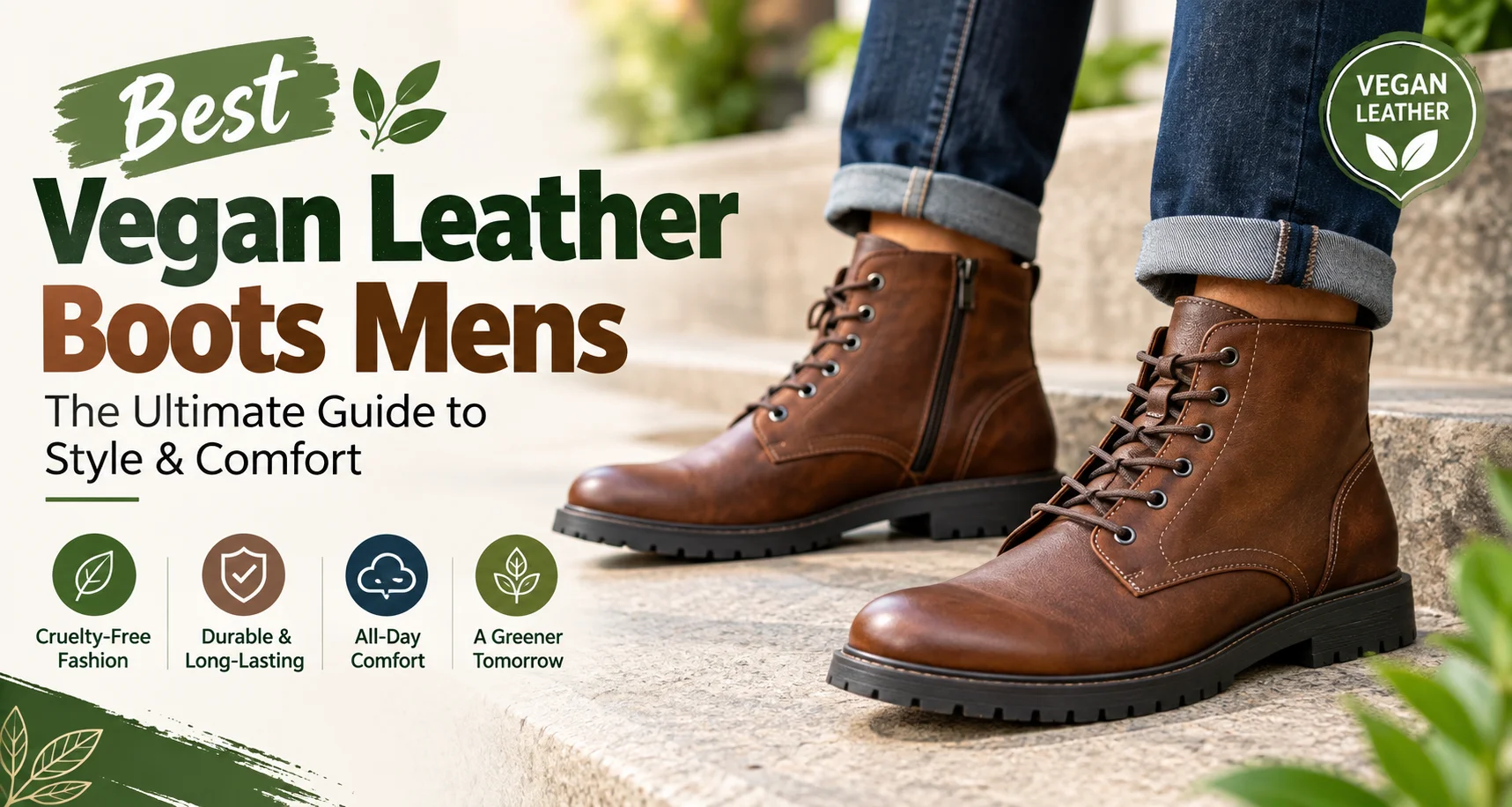
Great boots should look sharp on Monday, survive a rainy commute on Wednesday, and still feel good at Saturday’s barbecue. For years, people assumed you needed animal leather to get that kind of performance. That is no longer true.
Today, the best vegan leather boots mens shoppers can find are well built, stylish, and often easier to care for than traditional leather. Whether you avoid animal products for ethical reasons, care about the environment, or just want a lower-maintenance boot, this guide will help you choose with confidence.
What Are Vegan Leather Boots?
Vegan leather boots are made without animal hides. Instead of cowhide, manufacturers use synthetic or plant-based materials designed to look and feel like leather. You will also see them sold as faux leather, synthetic leather, or cruelty-free boots.
The quality gap between cheap and premium options is huge, which is why knowing what your boots are made of matters.
Common Vegan Leather Materials
- Polyurethane (PU): The most common material. It is soft, flexible, and affordable, and it usually breathes better than PVC.
- Microfiber: A dense, tightly woven synthetic that resists scuffs and often lasts longer than basic PU.
- PVC: Very tough and water-resistant, but stiffer and less breathable. Best for work or rain boots.
- Plant-based alternatives: Materials made from apple waste, cactus, pineapple leaf fibers, or mushroom-derived compounds. They are exciting and eco-conscious, though still less common in men’s boots.
- Recycled synthetics: Fabrics made from recycled plastic bottles or textile waste.
Why Men Are Switching to Vegan Leather Boots
The shift is not just a trend. There are practical reasons behind it.
- Ethical appeal: No animal hides are used.
- Lower maintenance: Most synthetic boots need only a wipe-down, not conditioners and creams.
- Water resistance: Many vegan options handle wet weather better than untreated leather.
- Consistent look: No natural blemishes, so every pair looks uniform.
- Budget-friendly: You can get a stylish pair without spending a fortune.
To be fair, animal leather still wins on long-term durability and the way it ages. A well-made vegan boot can last a good while, but it will not develop the same patina. Knowing that upfront helps you set realistic expectations.
How to Choose the Best Vegan Leather Boots Mens
Not every faux leather boot is worth your money. Here is what to look at before you buy.
1. Check the Material Quality
Look for terms like “microfiber” or “high-grade PU.” If the description is vague, that is a warning sign. Better boots feel flexible, not plasticky, and the surface should have a natural grain.
2. Look at Construction
Sole construction tells you a lot about how long a boot will last. Stitched soles (Goodyear-welted or Blake-stitched) can be resoled. Glued soles are cheaper but harder to repair. Also check the stitching around stress points like the toe and ankle.
3. Get the Fit Right
Synthetic materials stretch less than real leather, so a boot that feels tight in the store will probably stay tight. Try boots on in the afternoon when your feet are slightly swollen, and wear the socks you plan to use.
4. Match the Boot to Your Lifestyle
Ask yourself where you will wear them most: the office, the city, hiking trails, or a night out. The answer narrows your choices quickly.
Best Styles of Vegan Leather Boots for Mens
Chelsea Boots
Sleek, slip-on, and versatile, Chelsea boots are probably the easiest vegan boot to dress up or down. They pair well with slim jeans, chinos, and even a casual suit.
Combat Boots
Lace-up, rugged, and hard-wearing, combat boots are a classic pick for anyone who wants an edgier look. Many popular vegan boot makers, including Dr. Martens, offer vegan versions of their signature styles.
Chukka and Desert Boots
Low-profile and relaxed, chukkas work beautifully with everyday outfits. They are a smart first vegan boot because they are comfortable and forgiving on fit.
Work and Utility Boots
If you need something tougher, look for reinforced toes, slip-resistant soles, and water-resistant uppers. Microfiber and PVC blends usually perform well here.
Dress Boots
Polished, structured, and formal enough for the office, vegan dress boots have improved a lot. Look for clean lines and a smooth, matte finish, which tends to look more convincing than a glossy one.
How to Care for Your Vegan Leather Boots
Good care can noticeably extend the life of your boots. Keep it simple:
- Clean them regularly with a wet cloth to get rid of dust and dirt.
- If stains are still stubborn, use mild soaps or avoid any harsh chemicals or solvents which can harm the material.
- Let the air dry naturally, away from heaters or direct sun.
- Use a synthetic-safe protector spray to guard against water and stains.
- Rotate pairs so each one can dry out between wears.
- Store them with shoe trees or paper to hold their shape.
Skip traditional leather conditioners, since they can leave synthetic surfaces sticky or cloudy.
Are Vegan Leather Boots Really Sustainable?
This is worth being honest about. Vegan leather avoids animal agriculture, but many versions are made from petroleum-based plastics. That is not automatically greener than leather.
If sustainability matters to you, look for boots made with recycled materials, plant-based alternatives, or brands that publish details about their manufacturing. Buying one durable pair instead of replacing cheap ones every year is often the most eco-friendly choice of all. For more style and lifestyle ideas, you can explore the guides on Magzilla Trends.
Frequently Asked Questions
1. Are vegan leather boots durable?
Quality matters. Well-made microfiber or high-grade PU boots can last several years with proper care. Cheap options may crack or peel sooner, especially with heavy daily wear.
2. Are vegan leather boots waterproof?
Many are water-resistant, and some are fully waterproof, but this depends on the material and construction. Check the product description, and use a protector spray for added defense.
3. Do vegan leather boots stretch over time?
Only slightly. Synthetic materials do not mold to your foot the way real leather can, so choosing the correct size from the start is important.
4. How do I know if a boot is truly vegan?
Look for a “vegan” label or certification on the product page. Also check that glues and linings are animal-free, since some brands overlook these details.
5. Are vegan leather boots good for winter?
Yes, if you choose insulated or lined styles with grippy soles. Synthetic uppers resist moisture well, but they can feel colder than thick leather, so pair them with warm socks.
Final Thoughts
Choosing the best vegan leather boots mens options offer comes down to three things: material quality, honest construction, and a style that fits your daily life. Skip the bargain pairs that look good online but fall apart in months, and invest in a well-made boot you will actually reach for.
Start with one versatile style, like a Chelsea or chukka, look after it properly, and you will likely wonder why you waited so long to try vegan leather.