

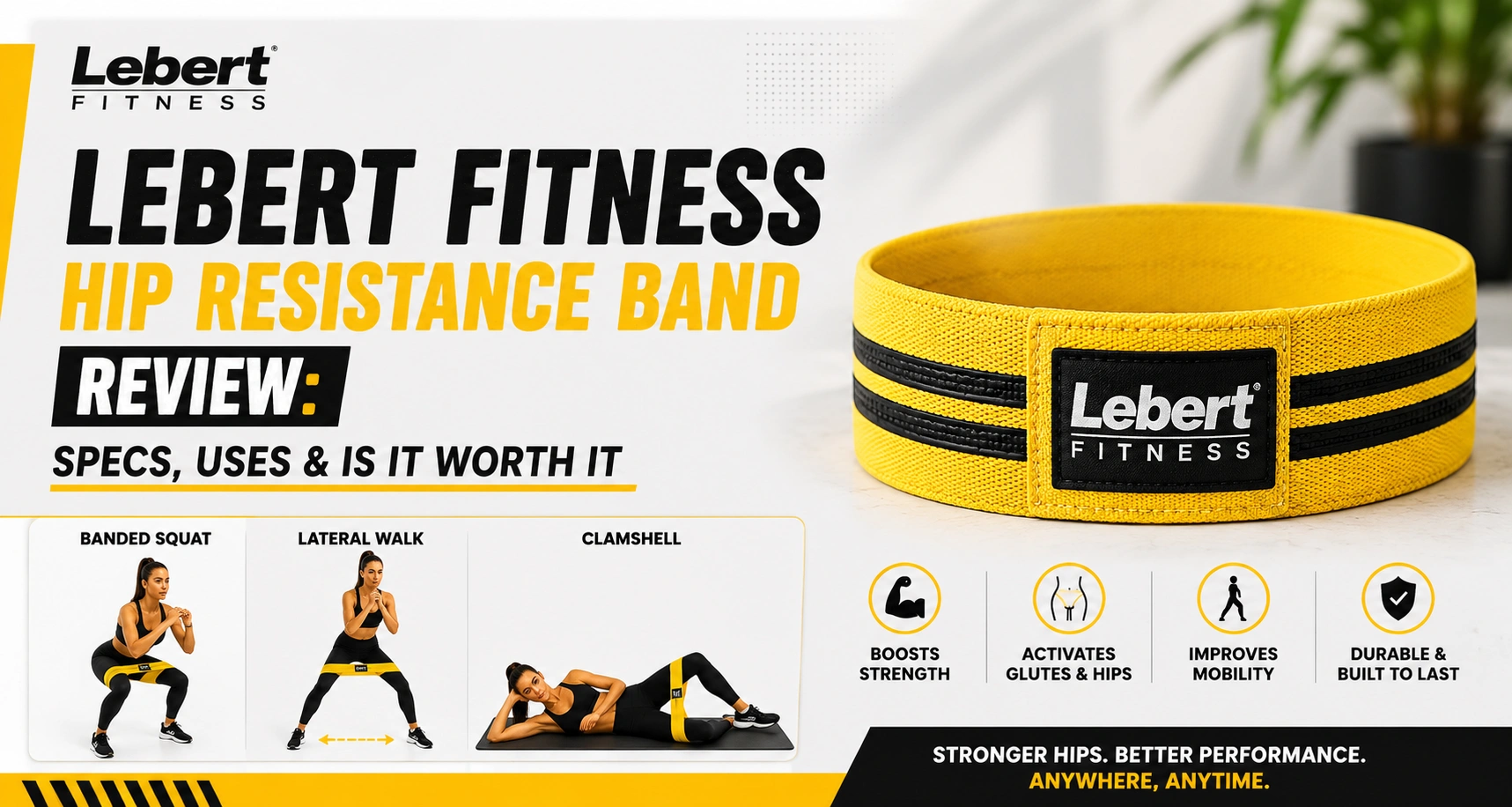
A resistance band seems like the last piece of gym equipment worth overthinking — until you’ve tried one that rolls up mid-set or snaps after three workouts. That’s the actual gap the Lebert Fitness Hip Resistance Band is built to close: a single, wide fabric loop designed specifically to stay put during glute and hip work, rather than a generic elastic loop repurposed for the job.
Quick answer: The Lebert Fitness Hip Resistance Training Band is a wide, non-slip fabric resistance loop (14″ x 3.5″) made from a cotton/polyester blend with a latex interior, designed primarily for glute and hip activation exercises like squats, lateral walks, and bridges. It’s machine washable, comes from a fitness brand with roughly two decades in the bodyweight-training equipment space, and is best suited to anyone who wants a durable, non-rolling alternative to thin rubber loop bands — not necessarily the cheapest option on the market.
What Is the Lebert Fitness Hip Resistance Training Band?
Lebert Fitness is a bodyweight and resistance training equipment brand best known for the Lebert EQualizer, a popular dip-bar/parallette-style tool used widely in gyms and home workouts. The Hip Resistance Band extends that same “built for real training, not just novelty” positioning into fabric resistance bands — a single loop made from a cotton/polyester blend with a latex interior, intended to grip skin and clothing better than smooth rubber bands typically do, which is the main complaint most people have with cheaper loop bands during lateral or squat-based movements.
Key Specs and Features
| Spec | Detail |
|---|---|
| Material | Cotton/polyester blend exterior, latex interior |
| Size | 14″ x 3.5″ |
| Washability | Fully machine washable |
| Primary use | Glute and hip activation; lower-body strength and warm-up work |
| Secondary use | Can be used around the wrists for shoulder activation/warm-up |
| Brand background | Lebert Fitness, roughly 20 years in bodyweight/resistance training equipment |
How to Use It: Real Exercises
The band is designed around lower-body activation, but it’s genuinely versatile within that category:
- Banded squat — place the band above the knees, squat down while actively pressing knees outward against the band’s resistance throughout the movement.
- Lateral band walk — band above the knees or ankles, take controlled side steps while staying in a slight squat, keeping tension on the band throughout.
- Glute bridge with band — band above the knees, press knees outward as you lift your hips, squeezing glutes at the top.
- Clamshell — lying on your side with knees bent and the band above the knees, open and close your top knee against the band’s resistance.
- Monster walk — band around the ankles or above the knees, take small forward and backward steps while maintaining outward tension.
- Bonus: shoulder warm-up. Place the band around your wrists and slowly walk your hands up and down, or side to side, against the resistance — a genuinely useful pre-workout shoulder activation move that most people wouldn’t think to use a hip band for.
Does This Type of Training Actually Work?
Independent research on elastic resistance training generally supports the underlying method, not just this specific product: studies comparing elastic band training to conventional resistance training have found comparable strength gains in the majority of trials reviewed, and separate research on band-based glute activation work has shown it can meaningfully improve muscle engagement, particularly useful as a warm-up before heavier compound lifts like squats and deadlifts. None of this is unique to Lebert’s specific product — it applies to the training method broadly — but it does mean the exercise style this band is built around has real evidence behind it, not just marketing.
Lebert Hip Band vs. Standard Fabric Booty Bands
| Factor | Lebert Hip Resistance Band | Typical Generic Fabric Loop Band |
|---|---|---|
| Material | Cotton/polyester blend with latex interior | Varies widely; often thinner cotton or synthetic blends |
| Grip/anti-roll | Designed specifically to resist rolling during lateral movement | Inconsistent — cheaper bands are more prone to rolling |
| Durability | Backed by an established equipment brand with a multi-decade track record | Highly variable by manufacturer |
| Washability | Fully machine washable | Usually washable, but quality varies |
| Price point | Mid-range, generally above budget generic bands | Wide range, often cheaper at the low end |
Exact current pricing wasn’t independently verified for this draft — confirm current pricing directly on Lebert Fitness’s official site or an authorized retailer before publishing a specific figure.
Who This Band Is Actually Best For
- Beginners building a home glute/hip warm-up routine who want a single, reliable band rather than experimenting with multiple cheap ones that roll or wear out quickly.
- People combining bodyweight training with band work — Lebert’s broader product ecosystem (EQualizers, mini bands, resistance bars) suggests this band is designed to fit into a more complete home training setup, not just as a standalone item.
- Anyone who’s been frustrated by rolling or snapping bands in the past and wants a fabric-based alternative built specifically to address that complaint.
Probably not necessary for: someone who just wants the cheapest possible entry point into resistance band training and doesn’t mind occasionally replacing a lower-cost band — a basic rubber loop band will technically work for the same exercises, just with more inconsistency in comfort and durability.
Building a Simple Routine Around This Band
A single hip band is most effective as part of a short, dedicated activation routine rather than used randomly mid-workout. A reasonable structure: before your main lower-body session, spend 5–8 minutes running through 3–4 of the exercises above (a lateral walk, a banded squat, and a glute bridge covers most of the major hip-stabilizing muscles), using light-to-moderate tension and focusing on maintaining constant resistance throughout each rep rather than rushing the count. This kind of pre-activation work is commonly used by trainers specifically to “wake up” glute muscles that tend to be underactive from long periods of sitting, which in turn can improve form and muscle engagement during heavier compound lifts like squats and deadlifts later in the same session.
Because the band is a single resistance level, most people get the most consistent long-term use out of it by pairing it with a second, slightly stronger band once the current one starts to feel too easy for full sets of 15–20 reps — rather than trying to make one band serve as both a warm-up tool and a genuine strength-building implement indefinitely.
Lebert Fitness’s Broader Product Context
It’s worth understanding this band within Lebert Fitness’s wider catalog, since it isn’t an isolated product. The company built its reputation primarily around the Lebert EQualizer, a dip-bar-style bodyweight training tool that became a fixture in many home gyms and fitness studios, and has since expanded into parallettes, resistance bars, mini bands, and this hip band line. That broader context matters for anyone considering the purchase: the hip band is positioned as one piece of a more complete bodyweight-and-resistance training system rather than a standalone novelty item, which is part of why it costs more than the cheapest generic alternatives on marketplaces — the brand’s positioning leans toward durability and integration with a full training approach rather than being the lowest-cost option in the category.
Pros and Cons
Pros:
- Wide, fabric construction reduces the rolling/pinching common with thin rubber loop bands
- Machine washable, which matters more than it sounds for a piece of equipment that sits directly against skin
- Backed by an established fitness equipment brand rather than an unknown generic seller
- Doubles for upper-body (shoulder) activation, not just lower-body work
Cons:
- Single resistance level per band — you may need multiple bands (or a multi-pack) for progressive overload over time
- Positioned as a mid-range product, so it costs more than the cheapest generic alternatives
- Less versatile than long resistance tubes for full-body exercises like rows or presses — it’s specifically built for the hip/glute category, not general strength training
Frequently Asked Questions
Q.1 What is the Lebert Hip Resistance Band used for?
Primarily glute and hip activation exercises — squats, lateral walks, glute bridges, clamshells, and monster walks — though it can also be used around the wrists for shoulder warm-up work.
Q.2 What size is the Lebert Hip Resistance Band?
It measures 14 inches by 3.5 inches, made from a cotton/polyester blend exterior with a latex interior.
Q.3 Is the Lebert Hip Resistance Band machine washable?
Yes, it’s fully machine washable, which is a genuine practical advantage for a band that sits directly against skin during sweaty workouts.
Q.4 How is this different from a cheap rubber loop band?
The main difference is the fabric construction, which is designed to resist rolling and pinching during lateral movements — a common complaint with thinner rubber loop bands, especially during high-rep glute and hip exercises.
Q.5 Do I need more than one resistance level?
Likely yes, over time — like most single-band products, this offers one resistance level per band, so progressing your training may eventually require a multi-pack or a range of resistance levels as you get stronger.
Conclusion
The Lebert Fitness Hip Resistance Training Band is a solid, purpose-built option if you’ve been frustrated by cheap loop bands rolling or wearing out during glute and hip work — the fabric construction and brand track record are genuine differentiators, even if it sits at a higher price point than the most basic alternatives. For a broader beginner routine that puts a band like this to use, check out our guide to Best Resistance Band Exercises for Beginners at Home, or explore the full Fitness & Workout Guide.