

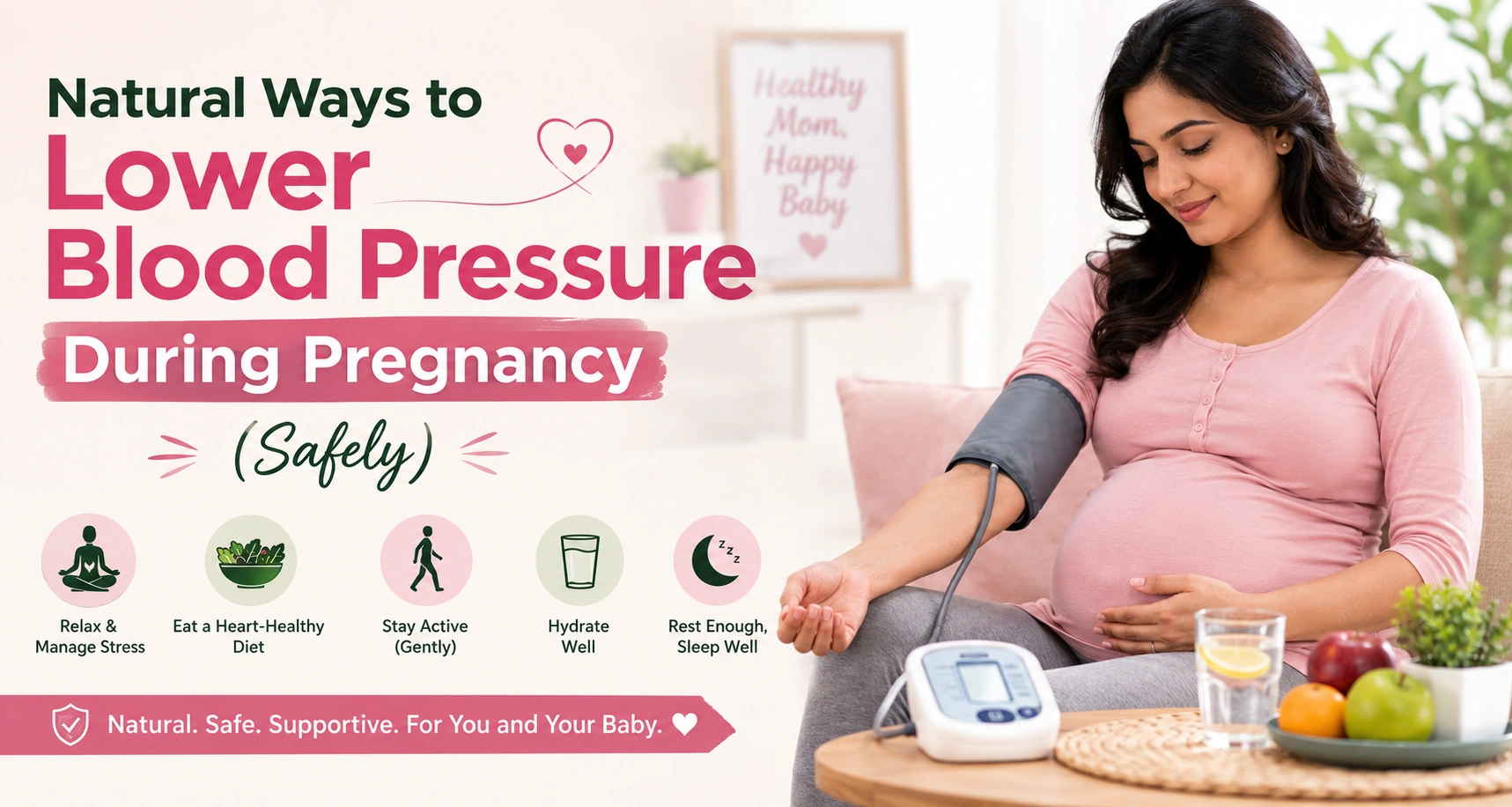
High blood pressure during pregnancy isn’t something to manage quietly at home with lifestyle tweaks alone. It’s a condition that needs a doctor tracking it closely, because in some cases it can progress into preeclampsia — a genuinely dangerous complication for both mother and baby. This article covers the lifestyle habits with real evidence behind them, but the most important information here is the warning signs section: read it even if you skip everything else.
Quick answer: There is no proven natural ways to lower blood pressure during pregnancy or replaces medical treatment. What does have evidence behind it, as a complement to regular prenatal care: doctor-approved moderate exercise, a balanced diet with moderate sodium intake, staying well hydrated, adequate rest, and managing stress. Calcium supplementation has shown some promise in research, particularly for women with low dietary calcium, but should only be started with your doctor’s guidance. If you experience severe headache, vision changes, upper abdominal pain, sudden swelling, or decreased urination, contact your doctor or go to an emergency room immediately — these can be signs of preeclampsia, which requires urgent medical treatment.
This article is for general informational purposes and is not a substitute for medical advice. Blood pressure changes during pregnancy always require monitoring and management by an OB-GYN or qualified healthcare provider — never attempt to manage elevated blood pressure in pregnancy through lifestyle changes alone, and never start a supplement or medication, including low-dose aspirin, without your doctor’s direction.
Understanding Blood Pressure Changes in Pregnancy
Blood pressure conditions in pregnancy fall into a few distinct categories, and knowing the difference matters:
- Gestational hypertension – high blood pressure that occurs after 20 weeks of pregnancy with no protein in the urine and no involvement of other organs.
- Preeclampsia – is a severe pregnancy disorder that involves high blood pressure, which may also be accompanied by the presence of protein in the urine and/or damage to other organs, such as the liver, kidneys or blood-clotting system. When left untreated, it can result in serious complications, such as seizures, stroke and serious harm to both mother and baby.
- Chronic hypertension with superimposed preeclampsia — when a woman enters pregnancy with pre-existing high blood pressure and then develops preeclampsia on top of it, carrying the same risks as preeclampsia alone.
Hypertensive disorders affect roughly 5–10% of pregnancies and are among the leading causes of serious pregnancy complications, which is exactly why regular prenatal blood pressure monitoring isn’t optional — it’s one of the primary things prenatal visits are designed to catch early.
Why “Natural” Doesn’t Mean “Instead of Medical Care”
This is worth saying plainly: no lifestyle change or home remedy reliably prevents or treats preeclampsia. According to the American College of Obstetricians and Gynecologists, there is currently no proven way to fully prevent preeclampsia, though certain measures — like doctor-prescribed low-dose aspirin for women with specific risk factors — can meaningfully reduce risk in some cases. The lifestyle habits below are genuinely worth adopting as part of a healthy pregnancy, but they work alongside medical monitoring and treatment, never as a replacement for it.
Evidence-Based Lifestyle Habits That May Support Healthy Blood Pressure
| Habit | What the Evidence Shows |
|---|---|
| Doctor-approved moderate exercise | Observational studies link regular physical activity before and during pregnancy to lower rates of preeclampsia and gestational hypertension; always confirm your specific exercise plan with your doctor first |
| Balanced diet with moderate sodium | Reducing excessive salt intake is a standard general recommendation, though it isn’t a proven preeclampsia treatment on its own |
| Adequate calcium intake | Calcium supplementation has shown some promise in research for women with low dietary calcium, though evidence is mixed — discuss appropriate intake with your doctor rather than self-supplementing |
| Staying well hydrated | Supports healthy blood volume and circulation; a standard part of general prenatal health guidance |
| Stress management | Chronic stress is associated with cardiovascular strain generally; gentle practices like prenatal yoga or breathing exercises may help, with your doctor’s approval |
| Adequate rest, including side-lying positions | Resting on your left side is commonly recommended in later pregnancy to support blood flow to the uterus and kidneys |
| Healthy, gradual weight gain (not weight loss) | Staying within your doctor’s recommended weight gain range is associated with lower complication risk — deliberate weight loss is not a goal during pregnancy |
Important: low-dose aspirin (typically 81mg/day) is recommended by ACOG for pregnant women with specific risk factors for preeclampsia, but this must be started under a doctor’s direction, generally after 12 weeks of pregnancy — never begin aspirin therapy on your own during pregnancy.
What to Be Cautious About
A few things worth flagging specifically, since they show up often in casual “natural remedies” content but don’t hold up well under scrutiny:
- Apple cider vinegar is sometimes claimed to help balance blood pressure or cholesterol during pregnancy. This isn’t supported by solid evidence specific to pregnancy-related hypertension, and undiluted vinegar can also irritate the esophagus and stomach — it’s not a remedy worth relying on here.
- Vitamin C and E supplementation have been studied for preeclampsia prevention, but larger, more rigorous trials have generally failed to confirm meaningful benefit — this isn’t an established preventive strategy despite appearing in some informal guides.
- Magnesium has shown effectiveness for managing severe preeclampsia and eclampsia specifically when administered by injection in a medical setting — this is a hospital-based treatment, not something to replicate with an oral supplement at home.
- Any supplement or herbal remedy not specifically approved by your OB-GYN. Several substances that are fine outside pregnancy carry different, sometimes serious risks during pregnancy — always check before starting anything new, however “natural” it’s marketed as.
Warning Signs That Need Immediate Medical Attention
This is the most crucial part of this article. If you have any of these symptoms during pregnancy, please see your doctor right away or get to the emergency room:
- A severe headache which does not improve with rest or with usual pain relief.
- Vision changes such as blurred vision, spots or sensitivity to light or temporary vision loss
- Pain in the upper right abdomen, sometimes described as pain under the ribs
- Sudden or severe swelling, particularly in the face or hands (some swelling in the feet/ankles is common in pregnancy, but sudden or severe swelling elsewhere is different)
- Gaining weight quickly over a short time frame
- Decreased urination
- Shortness of breath
- Nausea or vomiting which is new or worsening, particularly in the second half of pregnancy
All of these symptoms are not something to be ignored or treated at home as they may represent a progression towards a medical crisis which would be preeclampsia; early treatment increases the chances for mum and baby.
Home Blood Pressure Monitoring: Only If Your Doctor Recommends It
Some doctors do recommend home blood pressure monitoring for pregnant patients, particularly those with risk factors or an existing hypertension diagnosis. If your doctor recommends this, use a properly validated upper-arm cuff (not a wrist monitor, which tends to be less accurate), follow their instructions on timing and frequency, and report readings as directed — this is meant to support your doctor’s monitoring, not replace your scheduled prenatal visits.
FAQs
Q.1 Can I lower my blood pressure naturally during pregnancy instead of taking medication?
Not reliably, and this isn’t a safe approach to rely on alone. Lifestyle habits like doctor-approved exercise, a balanced diet, and stress management support overall health, but they don’t replace medical monitoring or prescribed treatment if your doctor determines medication is needed.
Q.2 What foods should I avoid if I have high blood pressure during pregnancy?
General guidance typically points toward moderating high-sodium processed foods, though your doctor or a registered dietitian can give you guidance specific to your situation, particularly if you have other risk factors like gestational diabetes.
Q.3 Is it safe to take aspirin for blood pressure during pregnancy?
Only under a doctor’s direction. Low-dose aspirin is recommended for some women with specific preeclampsia risk factors, typically starting after 12 weeks, but self-directed aspirin use during pregnancy isn’t safe or appropriate.
Q.4 What’s the difference between normal pregnancy swelling and a warning sign?
Mild swelling in the feet and ankles is common in pregnancy, especially later on. Sudden, severe swelling — particularly in the face or hands — combined with other symptoms like headache or vision changes is different and needs prompt medical evaluation.
Q.5 Can exercise really help prevent high blood pressure in pregnancy?
Observational research links regular physical activity to lower rates of preeclampsia and gestational hypertension, though this isn’t a guarantee for any individual. Always get your specific exercise plan approved by your doctor first, especially if you have any pregnancy complications.
Conclusion
There’s no home remedy that safely replaces medical monitoring for blood pressure during pregnancy — but a handful of doctor-approved lifestyle habits genuinely do support a healthier pregnancy alongside your prenatal care. Keep every scheduled appointment, ask your doctor before starting any supplement (including calcium or aspirin), and treat the warning signs above as a reason to call immediately, not a reason to wait and see. If something feels wrong, trust that instinct and reach out to your care team — pregnancy hypertension is one of the areas where early medical attention makes a real, measurable difference in outcomes.