

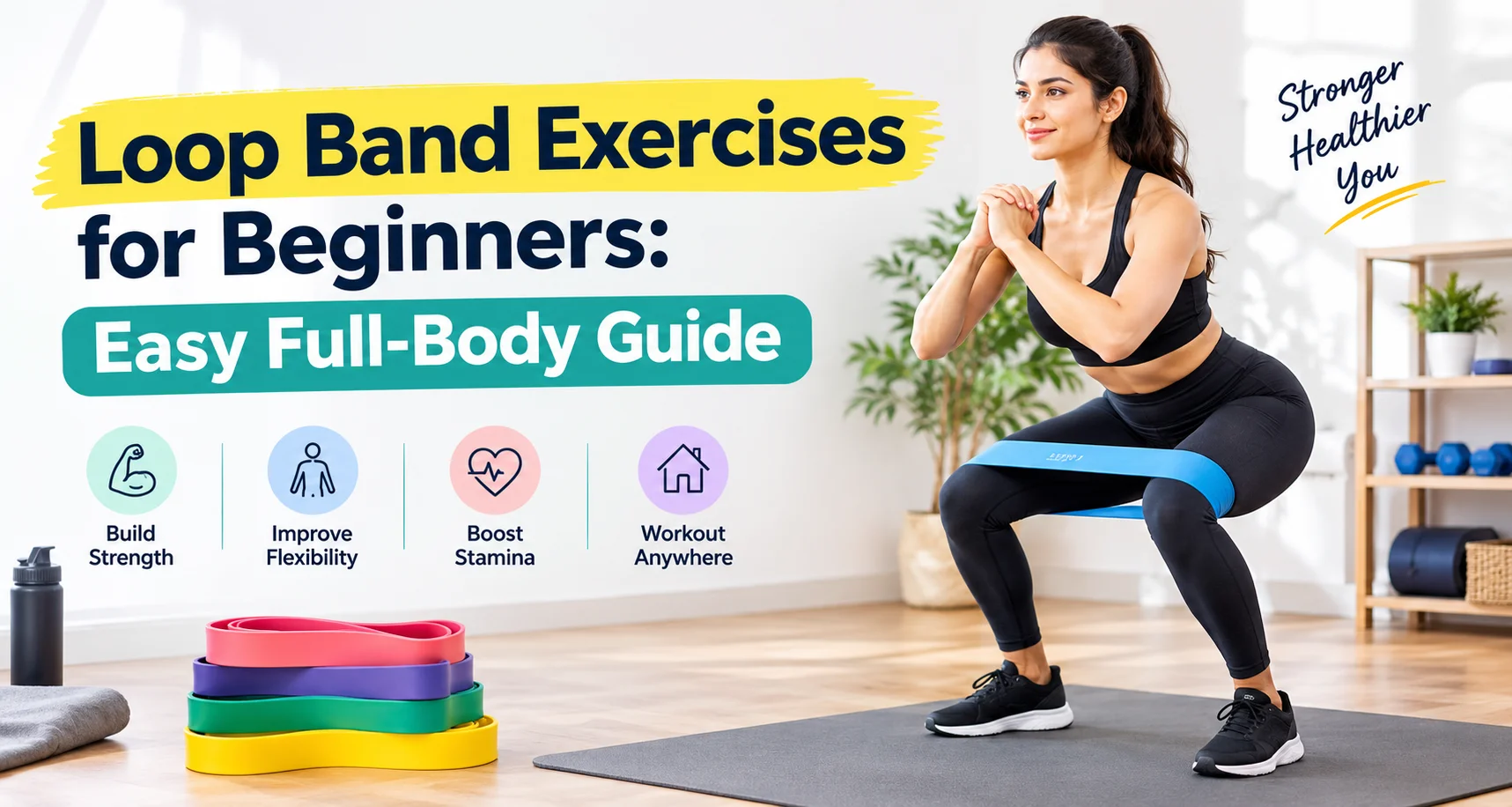
You don’t need a gym membership, a garage full of dumbbells, or an hour of free time to get stronger. Sometimes all it takes is a stretchy circle of rubber that fits in your pocket.
Loop bands are one of the most beginner-friendly fitness tools around. They’re cheap, light, and gentle on your joints. If you’ve been searching for loop band exercises for beginners, this guide covers what to buy, how to stay safe, and which moves to start with.
What Is a Loop Band, and Why Should Beginners Use One?
A loop band, also called a mini band or resistance loop, is a closed circle of latex or fabric. You place it around your legs, ankles, or arms, and the stretch creates resistance as you move.
Here’s why beginners tend to love them:
- Low cost: A set of bands usually costs less than a single gym visit.
- Portable: Toss them in a bag and work out at home, in a hotel, or at the park.
- Joint-friendly: The resistance builds gradually, which is easier on knees, hips, and shoulders than heavy weights.
- Adjustable: Bands come in light, medium, and heavy strengths, so you can progress at your own pace.
- Great for muscle activation: They wake up smaller stabilizing muscles that often get ignored.
How to Choose the Right Resistance Band
Picking the wrong band is the fastest way to get discouraged. Too heavy, and your form falls apart. Too light, and you feel nothing.
Most sets include five levels. As a beginner, start with light or medium. If you can do 15 slow, controlled reps without struggling, move up to the next level.
Look for fabric bands if you plan to work your lower body. They don’t roll up your legs or pinch the skin the way thin latex can. Latex bands work well for arm and upper-body exercises.
Before You Start: Quick Safety Tips
A few simple habits will keep your workouts safe and productive:
- Warm up for five minutes. March in place, roll your shoulders, and do a few bodyweight squats.
- Check your band. Look for small tears or cracks before each session.
- Move slowly. Control the band on the way out and on the way back.
- Keep your core gently engaged. This protects your lower back.
- Stop if something hurts. Muscle burn is normal. Sharp or joint pain is not.
7 Beginner-Friendly Loop Band Exercises
Here are seven moves that cover your legs, glutes, core, and upper body. Aim for 2 sets of 10 to 12 reps for each.
1. Banded Squats
Place the band just above your knees. Stand with your feet shoulder-width apart, then lower into a squat as if sitting in a chair. Push your knees gently out against the band, then stand back up.
Why it works: It strengthens your quads, glutes, and hips while teaching your knees to track properly.
2. Glute Bridges
Lie on your back with your knees bent and the band above your knees. Press through your heels and lift your hips until your body forms a straight line from shoulders to knees. Hold for one second, then lower slowly.
Why it works: It fires up your glutes and hamstrings, which helps if you sit at a desk all day.
3. Lateral Band Walks
With the band around your thighs or ankles, drop into a slight squat. Step sideways for 10 steps, then return the other way. Keep tension on the band the whole time.
Why it works: It targets the hip abductors, which support balance and knee stability.
4. Clamshells
Lie on your side with your knees bent and the band above your knees. Keep your feet together and open the top knee like a clamshell, then close it slowly.
Why it works: It strengthens the outer hip and glute muscles, and it’s very gentle on the body.
5. Standing Kickbacks
Place the band around your ankles and hold onto a chair or wall for balance. Extend one leg straight back, squeeze your glute, and return with control. Switch legs.
Why it works: It isolates the glutes without loading your spine.
6. Banded Pull-Aparts
Hold the band in front of you at chest height with your arms straight. Pull your hands apart until your arms form a “T,” squeezing your shoulder blades together.
Why it works: It strengthens the upper back and improves posture, which many of us need after hours on phones and laptops.
7. Banded Dead Bug
Lie on your back with your arms and legs in the air. Hold the band across your hands and press outward as you slowly lower the opposite arm and leg. Alternate sides.
Why it works: It builds core stability without straining your neck or back.
A Simple 3-Day Weekly Plan for Beginners
Consistency matters more than intensity. Try this starter schedule:
- Day 1: Squats, glute bridges, and clamshells
- Day 2: Rest or a 20-minute walk
- Day 3: Lateral walks, kickbacks, and dead bugs
- Day 4: Rest
- Day 5: Pull-aparts, squats, and glute bridges
- Weekends: Light stretching or an easy walk
Do this for four weeks, and you’ll likely notice better stability, stronger legs, and more confidence with every move. After that, add a set or switch to a heavier band.
Common Mistakes Beginners Make
Avoid these to get more out of every session:
- Rushing reps. Snapping the band back robs you of half the benefit.
- Letting knees collapse inward. Keep gentle outward pressure on the band.
- Holding your breath. Exhale as you push, inhale as you return.
- Skipping rest days. Muscles grow stronger while recovering, not during the workout.
- Progressing too fast. Master the light band before moving on.
Final Thoughts
It can be daunting to begin a fitness routine, but it doesn’t have to be. You don’t need to leave your home to enjoy a low-stress, strength-building, balance-enhancing and movement-habit formation Loop band workout.
Start small, focus on form, and be patient with yourself. A few minutes, three times a week, adds up faster than you’d expect. Grab a band, press play on your favorite playlist, and take that first step.
For more wellness and lifestyle reads, visit Magzilla Trends.
Frequently Asked Questions
1. Are loop band exercises good for beginners?
Yes. Loop bands provide adjustable, low-impact resistance, which makes them one of the safest ways for beginners to build strength and learn proper form.
2. How often should beginners do loop band workouts?
Two to three sessions per week is plenty. Leave at least one rest day between workouts so your muscles can recover.
3. Can loop bands help me lose weight?
Loop bands build muscle and support an active lifestyle, which can contribute to weight loss when combined with regular movement and balanced eating. They aren’t a standalone fix.
4. What resistance level should I start with?
Start with a light or medium band. You should be able to complete 12 to 15 controlled reps with good form. If it feels too easy, move up one level.
5. Do I need any other equipment?
No. A loop band and a bit of floor space are enough. A mat and a sturdy chair for balance can make things more comfortable.