

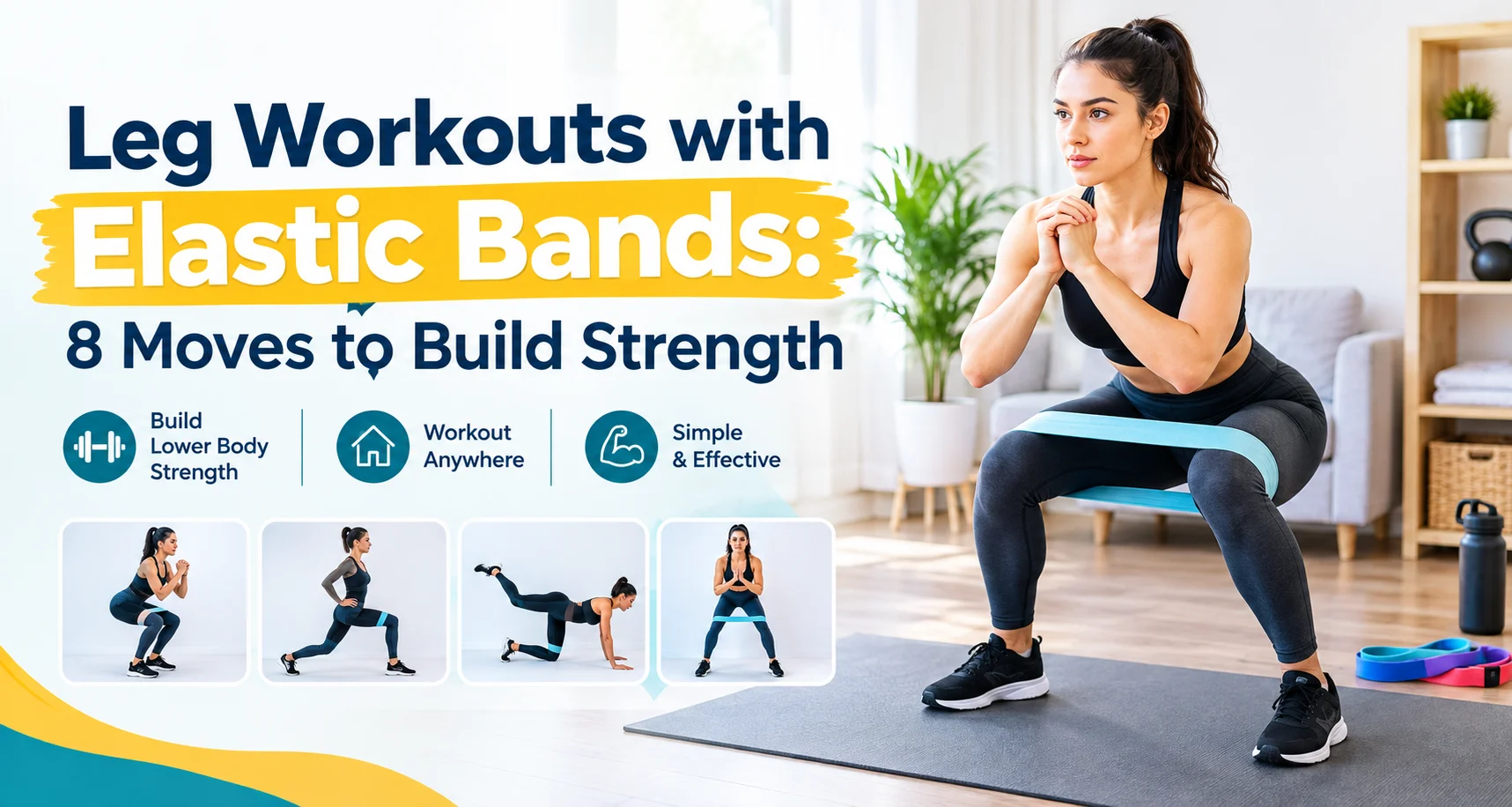
Think you need a gym membership and a rack of heavy plates to build strong legs? Not even close. A stretchy loop of rubber that fits in your gym bag can challenge your quads, hamstrings, glutes, and calves in ways that surprise most beginners.
Leg workouts with elastic bands have become a go-to for busy Americans who want results without the commute, the crowds, or the cost. Whether you’re working out in a small apartment, a hotel room, or your backyard, this guide walks you through why bands work, which exercises to try, and how to put it all together.
Why Leg Workouts with Elastic Bands Actually Work
Elastic bands create resistance that increases as you stretch them. That means the hardest part of each rep comes at the top of the movement, when your muscles are working to hold tension. This is different from free weights, where gravity does most of the work at the bottom of a lift.
Here’s what that means for you:
- Constant tension: Your muscles stay engaged through the entire rep, not just part of it.
- Joint-friendly resistance: Bands are gentler on knees and hips than heavy barbells, which is great for beginners and people returning from injury.
- Better muscle activation: Bands often make your glutes and hip stabilizers fire harder, especially during lateral movements.
- Portable and affordable: Most sets cost less than a single month at a gym.
If your goal is toning, general fitness, or building a base of lower body strength, resistance band leg exercises are a practical choice.
Choosing the Right Elastic Band
Not all bands are the same, and picking the wrong type can make workouts frustrating.
Loop Bands (Mini Bands)
These are short, continuous loops that sit around your thighs or ankles. They’re perfect for glute bridges, lateral walks, and clamshells.
Long Loop or Power Bands
Thicker and longer, these work well for squats, deadlifts, and leg presses. You can step on them or anchor them under your feet.
Tube Bands with Handles
These resemble gym cables and are useful for standing kickbacks and rows, though they’re less common for lower body work.
Quick tip: Start with light or medium resistance. You should be able to complete 12 to 15 controlled reps with good form. If your knees cave inward or your back rounds, size down.
8 Effective Leg Workouts with Elastic Bands
1. Banded Squats
Place a loop band just above your knees and stand with feet shoulder-width apart. Sit your hips back and down, pushing your knees gently outward against the band. Stand tall and squeeze your glutes at the top.
Targets: Quads, glutes, hip abductors
2. Banded Glute Bridges
Lie on your back with knees bent and a band above your knees. Drive through your heels to lift your hips, pressing your knees apart. Pause for a second at the top.
Targets: Glutes, hamstrings
3. Lateral Band Walks
With the band around your thighs or ankles, drop into a quarter squat. Step sideways slowly, keeping tension on the band the whole time. Take 10 to 15 steps each direction.
Targets: Glute medius, outer thighs
4. Banded Romanian Deadlifts
Stand on the middle of a long band and hold the ends in each hand. Hinge at your hips with a flat back, lowering your hands toward your shins. Then squeeze your glutes to stand.
Targets: Hamstrings, glutes, lower back
5. Banded Reverse Lunges
Place the band around your thighs or under your front foot. Step back into a lunge, lower your back knee toward the floor, then push through your front heel to return.
Targets: Quads, glutes, balance muscles
6. Standing Banded Kickbacks
Loop the band around your ankles. Shift your weight onto one leg and extend the other straight back, keeping your core tight. Avoid arching your back.
Targets: Glutes, hamstrings
7. Banded Calf Raises
Sit on the floor with legs extended and loop a band around the ball of one foot, holding the ends. Point your toes against the resistance, then slowly return.
Targets: Calves
8. Banded Clamshells
Lie on your side with knees bent and the band above your knees. Keep your feet together and lift your top knee. This move is small but powerful for hip stability.
Targets: Glute medius, hip rotators
A Sample 20-Minute Leg Routine
Ready to put these moves together? Try this beginner-friendly circuit two to three times per week.
- Banded squats: 3 sets of 15
- Glute bridges: 3 sets of 15
- Reverse lunges: 3 sets of 10 per leg
- Lateral band walks: 2 sets of 12 steps each way
- Calf raises: 2 sets of 15
Rest 30 to 45 seconds between sets. As you get stronger, use a thicker band, slow down your reps, or add a two-second pause at the hardest point.
Tips to Get More From Every Rep
Small adjustments make a big difference with elastic band training.
- Slow down the return. Letting the band snap back wastes half the exercise. Take two to three seconds on the way back.
- Watch your knees. Push them outward against the band rather than letting them collapse in.
- Warm up first. Five minutes of walking, leg swings, or bodyweight squats prepares your joints.
- Progress gradually. Add reps or resistance every one to two weeks.
- Check your gear. Inspect bands for small tears or cracks before each session, since worn bands can snap.
Who Can Benefit From Band Leg Training?
Almost everyone. Beginners appreciate the low learning curve. Runners and cyclists use bands to strengthen the glutes and hips, which can help reduce common overuse issues. Older adults often use them to improve balance and stability, and people recovering from injury can work in a controlled, low-impact range. If you have a medical condition or ongoing pain, it’s smart to check with a doctor or physical therapist first.
Frequently Asked Questions
Q.1 Can you build muscle with leg workouts using elastic bands?
Yes. Muscle grows when you challenge it close to fatigue, and bands can do that. Use heavier resistance, slow tempos, and higher reps, and your legs will respond, especially if you’re newer to strength training.
Q.2 How often should I do resistance band leg exercises?
Two to three sessions per week works well for most people, with at least one rest day between them so muscles can recover.
Q.3 Are elastic bands good for glutes?
They’re excellent for glutes. Bands add outward tension that forces your glute medius and maximus to work harder during squats, bridges, and walks.
Q.4 What’s the best band resistance for beginners?
Start with light to medium. If you can finish 12 to 15 reps with steady form, the resistance is right. Move up once it feels easy.
Q.5 Can bands replace weights for leg day?
For general strength, toning, and home fitness, yes. If you’re chasing maximum strength or heavy muscle gain, you may eventually want to combine bands with weights.
Final Thoughts
Leg workouts with elastic bands prove that effective training doesn’t have to be complicated or expensive. With a few bands, some floor space, and 20 minutes, you can build stronger, more stable legs while keeping stress off your joints.
Start light, focus on form, and stay consistent. The results tend to show up in everyday life first: climbing stairs feels easier, and your balance and confidence improve. For more health, fitness, and lifestyle reads, explore Magzilla Trends.