

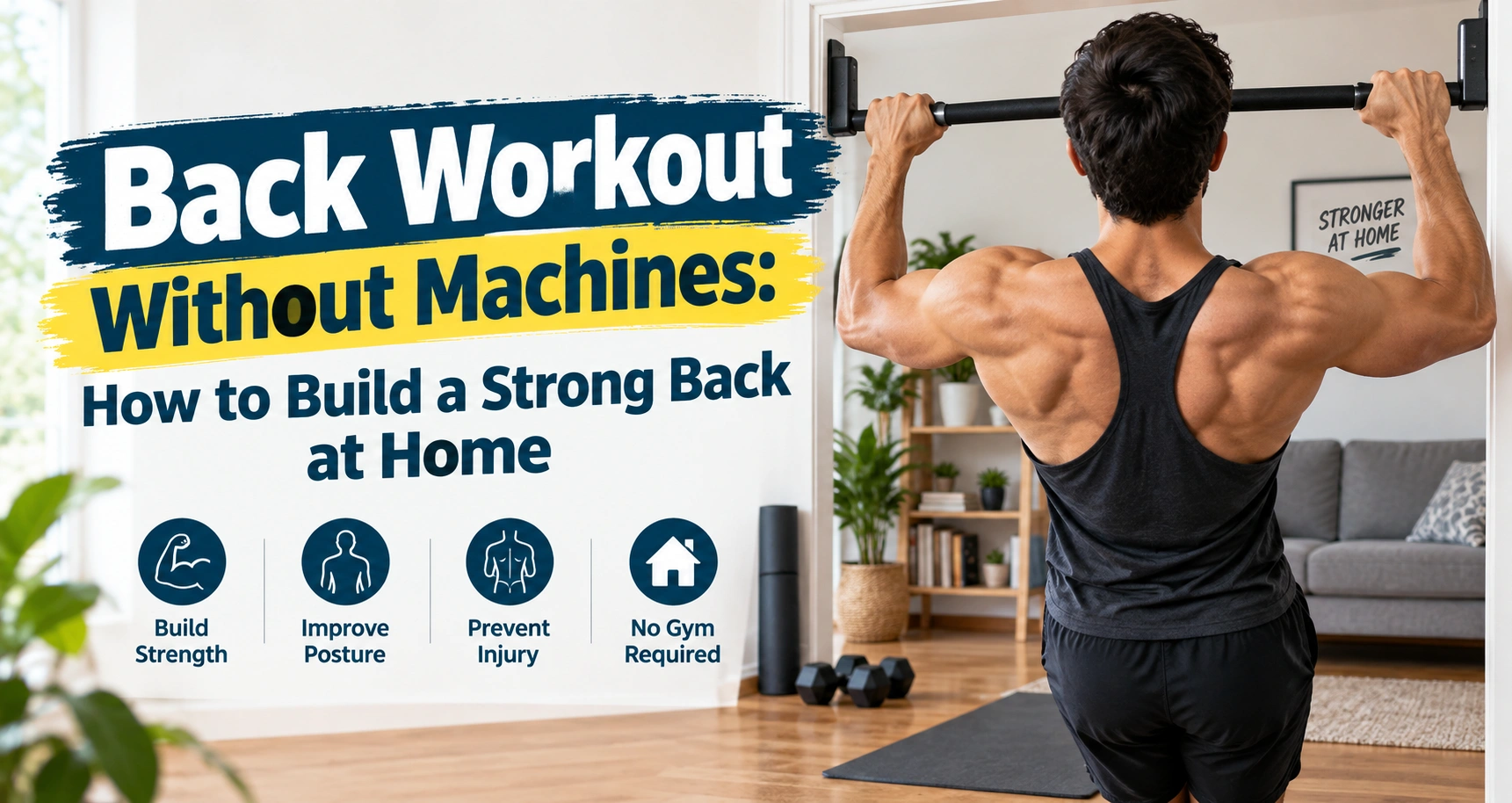
Think you need a gym full of cables and machines to build a strong back? Think again. Some of the best back-strengthening exercises rely on nothing more than your own bodyweight, gravity, and a little determination. Whether you’re traveling, working out at home, or simply prefer training without heavy equipment, a back workout without machines can deliver real, noticeable results.
This guide breaks down why bodyweight back training works, which exercises actually make a difference, and how to structure a routine that builds strength, improves posture, and protects your spine—all without stepping near a lat pulldown machine.
Why Train Your Back Without Machines?
Machines are convenient, but they’re not the only path to a strong, sculpted back. In fact, many fitness experts argue that bodyweight and free-form training offer unique advantages.
Benefits of Machine-Free Back Training
- Builds functional strength — Movements mimic real-life pulling and pushing patterns
- Improves stabilizer muscles — Without a machine guiding the motion, your body works harder to stay balanced
- Convenient and accessible — No gym membership or equipment required
- Saves time and money — Perfect for home workouts or travel
- Reduces injury risk — Bodyweight movements often have a more natural range of motion
A strong back isn’t just about aesthetics. It supports better posture, reduces lower back pain, and enhances performance in everyday activities like lifting, carrying, and even sitting at a desk for long hours.
Key Back Muscles You’re Targeting
Before diving into exercises, it helps to understand what you’re actually working:
- Latissimus dorsi (lats) — The large muscles giving your back its width
- Trapezius (traps) — Upper back muscles supporting neck and shoulder movement
- Rhomboids — Muscles between your shoulder blades that improve posture
- Erector spinae — Lower back muscles that stabilize your spine
A well-rounded back workout without machines should hit all of these areas for balanced strength and development.
The Best Back Exercises Without Machines
1. Pull-Ups (or Assisted Variations)
Pull-ups are arguably the gold standard for back training. All you need is a sturdy bar.
- Grip the bar slightly wider than shoulder-width
- Pull your chest toward the bar, squeezing your shoulder blades together
- Lower slowly with control
Beginner tip: Can’t do a full pull-up yet? Try negative reps (jump up, lower down slowly) or resistance band-assisted pull-ups.
2. Superman Hold
This simple floor exercise strengthens your lower back and core without any equipment.
- Lie face down, arms extended forward
- Lift your arms, chest, and legs off the ground simultaneously
- Hold for 2–3 seconds, then lower
Aim for 3 sets of 10–12 reps.
3. Bodyweight Rows (Inverted Rows)
Using a sturdy table, low bar, or even playground equipment, inverted rows are excellent for targeting the mid-back.
- Lie beneath the bar, grip it with hands shoulder-width apart
- Keep your body straight and pull your chest toward the bar
- Lower slowly
This move builds the same muscles as a seated row machine—minus the machine.
4. Resistance Band Pull-Aparts
A resistance band is inexpensive, portable, and incredibly effective for back activation.
- Hold the band with both hands in front of you
- Pull it apart by squeezing your shoulder blades
- Slowly return to start
This is great for improving posture and warming up before heavier movements.
5. Single-Arm Dumbbell Row
If you have access to a dumbbell (or even a filled water jug), this exercise isolates each side of your back individually.
- Place one knee and hand on a bench for support
- Pull the dumbbell up toward your hip, elbow close to your body
- Lower with control
6. Reverse Snow Angels
An underrated bodyweight move that targets the traps and rear shoulders.
- Lie face down, arms at your sides
- Sweep your arms up overhead like making a snow angel
- Squeeze shoulder blades at the top
Sample Back Workout Without Machines
Here’s a simple, effective routine you can do 2–3 times per week:
- Pull-Ups (or assisted version) – 3 sets of 6–10 reps
- Bodyweight Rows – 3 sets of 10–12 reps
- Superman Hold – 3 sets of 10 reps
- Resistance Band Pull-Aparts – 3 sets of 15 reps
- Reverse Snow Angels – 2 sets of 12 reps
Rest 45–60 seconds between sets. As you get stronger, increase reps or slow down your tempo for added intensity.
Tips for Maximizing Your Machine-Free Back Workout
- Focus on form over speed — Controlled movements activate muscles better than rushed reps
- Engage your mind-muscle connection — Actually feel your back muscles working
- Progress gradually — Add reps, sets, or resistance bands as you improve
- Warm up properly — Loosen your shoulders and spine before training
- Stay consistent — Results come from regular training, not occasional effort
Common Mistakes to Avoid
- Using momentum instead of controlled muscle engagement
- Rounding your back during rows or pull-ups
- Skipping the lower back (erector spinae) in your routine
- Neglecting rest and recovery between sessions
Frequently Asked Questions
1. Can I really build a strong back without machines?
Yes. Bodyweight exercises like pull-ups, rows, and resistance band movements effectively target all major back muscles and can build significant strength over time.
2. How often should I do a back workout without machines?
Two to three sessions per week is ideal, allowing 48 hours of recovery between sessions for muscle repair and growth.
3. Do I need any equipment at all?
Not necessarily. Many exercises like Superman holds and reverse snow angels require zero equipment. A pull-up bar or resistance band can enhance results but isn’t mandatory.
4. Is bodyweight back training as effective as using machines?
Bodyweight training builds functional strength and engages stabilizer muscles more than machines, though machines offer more controlled resistance. Both have unique benefits.
5. Can beginners do a back workout without machines?
Absolutely. Start with easier variations like assisted pull-ups, band pull-aparts, and Superman holds, then progress as strength improves.
Final Thoughts
You don’t need a fully equipped gym to build a powerful, well-defined back. With the right bodyweight exercises, consistency, and proper form, a back workout without machines can be just as effective—if not more functional—than traditional machine-based training. Start with the exercises above, stay consistent, and watch your strength, posture, and confidence grow.