

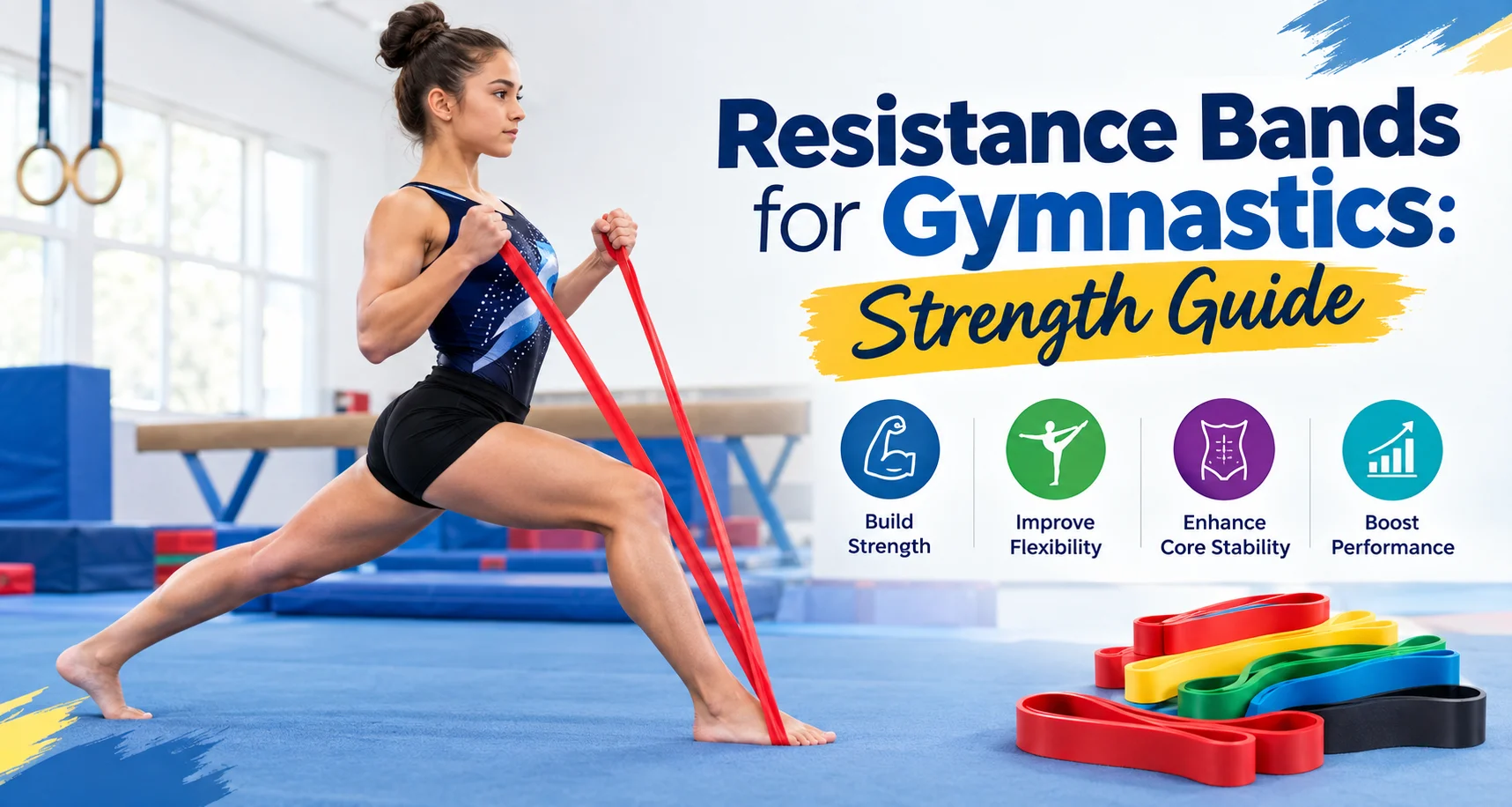
Ask any gymnast what separates a good routine from a great one, and you’ll hear about hours in the gym, sore shoulders, and a lot of repetition. What you may not hear about is a simple piece of equipment that fits in a gym bag and costs less than a pair of grips.
Resistance bands for gymnastics have moved from the physical therapy room to the center of many training programs. They help athletes build strength, improve flexibility, and protect their joints without adding bulk or complicated equipment. This guide covers why they work, which type to choose, and how to use them.
Why Resistance Bands Belong in Every Gymnast’s Routine
Gymnastics demands strength, control, and mobility at the same time. Most gym equipment builds one of these qualities at a time. Bands can train all three.
Unlike a dumbbell, a resistance band gets harder as it stretches. That means the tension is highest at the end of a movement, which is exactly where gymnasts need control. Think of the top of a handstand or the finish of a pull-up.
Here are the main benefits:
- Joint-friendly strength. Bands load muscles without the harsh impact of heavy weights.
- Better shoulder stability. Strong rotator cuffs support handstands, giants, and vaults.
- Improved flexibility. Bands provide gentle assistance during stretches for splits and backbends.
- Portability. You can train at home, at meets, or while traveling.
- Scalable difficulty. Beginners and elite athletes can both find the right tension.
Types of Resistance Bands for Gymnastics
Not every band does the same job. Choosing the right style makes training much more effective.
Loop Bands (Mini Bands)
These small, continuous circles are ideal for hips, glutes, and legs. Wrapped around the thighs or ankles, they teach the body to keep proper alignment during squats, leg lifts, and jumps.
Long Loop Bands (Pull-Up Bands)
Long, thick bands are popular for assisted pull-ups, muscle-up progressions, and shoulder mobility. They’re one of the most useful tools for gymnasts working on bar skills.
Flat Therapy Bands
Wide, flat bands are softer and gentler. Coaches often use them for rehabilitation, wrist and ankle work, and light stretching.
Tube Bands with Handles
These resemble cable machine handles and work well for rows, presses, and rotator cuff exercises.
Stretch Bands for Flexibility
Long, thin bands are designed for passive stretching. They help gymnasts improve pike, straddle, and shoulder flexibility safely and gradually.
Best Resistance Band Exercises for Gymnasts
You don’t need a huge exercise list. A handful of well-chosen movements, done with good form, delivers real results.
Upper Body and Shoulders
- Band pull-aparts. Hold the band at chest height and pull it apart to strengthen the upper back and rear shoulders.
- Overhead band dislocates. Slowly move a long band from front to back to improve shoulder mobility.
- Banded external rotations. These build rotator cuff strength, which protects against common shoulder injuries.
- Assisted pull-ups. Loop a band over the bar and under your knee or foot for extra support while you build strength.
Core and Handstand Strength
- Banded hollow holds. Add gentle resistance to the classic hollow body position.
- Banded handstand shoulder shrugs. Practice pushing tall through the shoulders with light support.
- Anti-rotation presses. Anchor a band and press outward to build a stable, controlled midsection.
Legs and Hips
- Banded squats. A mini band above the knees prevents knees from collapsing inward during landings.
- Lateral band walks. These strengthen the glutes, which support jumping and tumbling.
- Banded leg lifts. They build hip flexor strength for straight-leg skills and leaps.
- Ankle inversion and eversion. Small, controlled ankle movements help protect against sprains.
How Resistance Bands Improve Flexibility and Mobility
Flexibility is not limited to the range of motion. It’s all about your ability to manage that range. Gymnastics resistance bands support both.
For example, a band looped around the foot during a hamstring stretch lets you ease into position at your own pace. For shoulder flexibility, a light band gives you feedback and guidance, so you don’t force the joint.
Try holding each stretch for 20 to 30 seconds, breathing steadily, and stopping at mild tension rather than pain. Consistency matters far more than intensity.
How to Choose the Right Resistance Level
Picking the wrong band is a common mistake. Too light and you won’t progress. Too heavy and your form suffers.
Use this quick guide:
- Light bands: Best for beginners, rehab work, and small joints like wrists and ankles.
- Medium bands: Suit most strength and stability exercises for intermediate athletes.
- Heavy bands: Designed for advanced athletes and assisted pull-up progressions.
A good rule: you should complete 10 to 15 controlled repetitions with steady form. If your body swings, shakes, or compensates, drop down a level.
Safety Tips for Using Resistance Bands
Bands are safe when used properly, but a few habits keep training smooth:
- Inspect bands regularly for nicks, cracks, or thin spots.
- Anchor them to secure points only.
- Avoid overstretching beyond the manufacturer’s recommendation.
- Keep bands away from sharp edges and direct sunlight.
- Warm up before every session.
Young gymnasts should always train under a qualified coach, and anyone with an existing injury should talk to a doctor or physical therapist first.
Sample Weekly Plan
Here’s a simple structure that fits around regular practice:
- Monday: Shoulder stability and core work
- Wednesday: Hip, glute, and leg strength
- Friday: Flexibility and mobility sessions
- Weekends: Light recovery stretching
Twenty to thirty minutes per session is enough. Small, steady efforts add up over a season.
For more fitness gear guides and training ideas, explore the latest articles at Magzilla Trends.
Frequently Asked Questions
1. Are resistance bands good for gymnastics training?
Yes. They build strength, improve joint stability, and support flexibility without heavy equipment. Many coaches use them for both conditioning and injury prevention.
2. What type of resistance band is best for gymnasts?
It depends on your goal. Long loop bands suit pull-up progressions, mini bands work well for legs and hips, and flat stretch bands are great for flexibility.
3. How often should gymnasts use resistance bands?
Two to three sessions per week is a good starting point. Adjust based on your practice schedule, recovery, and your coach’s advice.
4. Can resistance bands help prevent gymnastics injuries?
They can help. Strengthening the shoulders, hips, and ankles improves stability and control, which lowers strain on vulnerable joints. They don’t remove all risk, so proper coaching still matters.
5. Are resistance bands safe for young gymnasts?
Generally, yes, when used with light resistance and supervision. Children and teens should focus on technique first and follow guidance from a qualified coach.
Final Thoughts
Resistance bands for gymnastics offer a practical, affordable way to build the strength, control, and mobility that the sport demands. They’re gentle on joints, easy to carry, and flexible enough to grow with an athlete from beginner drills to advanced skills.
Start with one or two bands, focus on clean form, and stay consistent. Over time, you’ll likely notice steadier handstands, stronger landings, and a body that feels ready for whatever the next routine throws at it.