

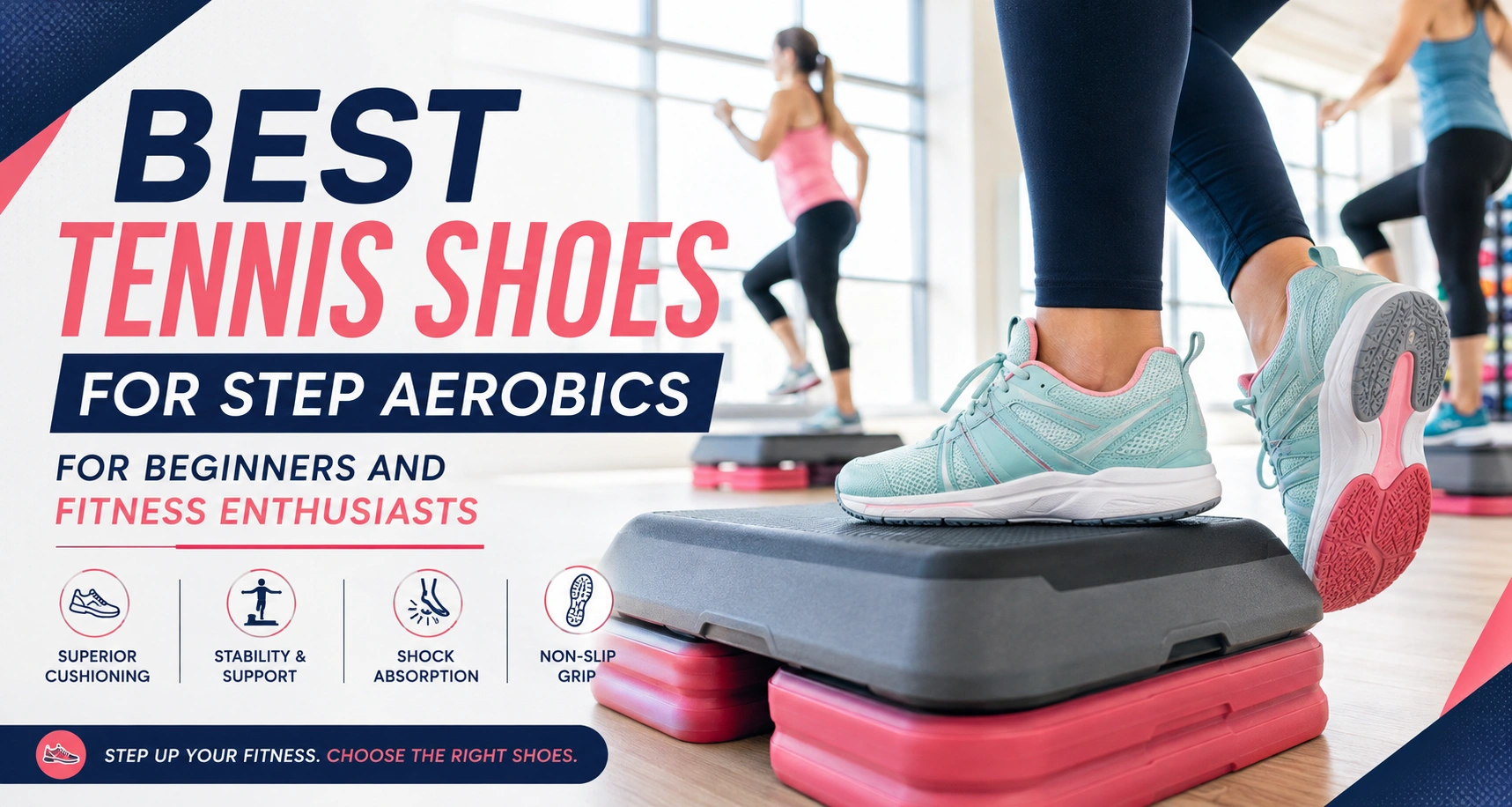
Ever finished a step aerobics class with sore knees or aching ankles and wondered if it was your shoes, not your form? You’re not alone. Thousands of fitness enthusiasts across the USA and India make the same mistake every year — wearing the wrong footwear for high-impact, multi-directional workouts like step aerobics.
Selecting the optimal best tennis shoes for step aerobics is not as much based on appearances or even brand names. It’s to keep your joints safe, develop your equilibrium and keep you on track with your exercise schedule. Here, we’ll dissect what to look for, what is most important and how to choose a pair that helps you keep moving easily class after class.
Why Your Shoe Choice Matters in Step Aerobics
Step aerobics involves repeated stepping, jumping, and lateral movement on a raised platform. This puts unique stress on your feet compared to running or walking. Unlike running shoes, which are built for forward motion, tennis shoes offer the lateral stability and flexibility needed for the quick side-to-side movements common in step workouts.
Wearing the wrong shoes can lead to:
- Ankle rolls or sprains from poor lateral support
- Shin splints caused by inadequate cushioning
- Reduced balance on the step platform
- Long-term joint strain from repetitive impact
That’s why fitness trainers consistently recommend cross-training or tennis-style shoes for step aerobics rather than standard running shoes.
Key Features to Look For
1. Lateral Stability
Because step aerobics involves constant side-to-side motion, your shoes need reinforced side support. Look for shoes with a wider base and structured overlays that prevent your foot from sliding during quick direction changes.
2. Cushioning Without Bulk
Good cushioning absorbs shock from repeated stepping and jumping, but too much padding can make you feel unstable on the platform. The best tennis shoes for step aerobics strike a balance — enough cushioning to protect your joints while keeping you grounded and responsive.
3. Flexible Yet Supportive Sole
Your shoe should bend naturally with your foot’s movement but still offer arch support. A stiff sole restricts motion, while an overly flexible one fails to protect against overuse injuries.
4. Breathable Upper Material
Step aerobics is intense. Mesh or breathable synthetic uppers keep your feet cool and reduce sweat buildup, which also helps prevent blisters during longer sessions.
5. Secure, Non-Slip Outsole
A durable rubber outsole with a good grip pattern is essential, especially if you’re stepping on both the platform and studio floor. Slippery soles are a leading cause of falls during aerobic workouts.
6. Lightweight Design
Heavier shoes slow down your footwork and tire your legs faster. Look for lightweight construction that still delivers structural support.
Top Shoe Types Recommended by Trainers
While there are many brands and models available, here are the categories that consistently perform well for step aerobics:
- Cross-training shoes – Designed for multi-directional movement, offering the best all-around balance of support and flexibility.
- Low-top tennis shoes – Provide ankle mobility while maintaining lateral stability.
- Aerobic-specific dance sneakers – Built with pivot points on the sole for smoother turns and steps.
Avoid running shoes or basketball shoes for this activity. Running shoes lack lateral support, and basketball shoes are often too heavy and high-cut, restricting the quick footwork step aerobics demands.
How to Choose the Right Fit
Even the best tennis shoes for step aerobics won’t help if they don’t fit properly. Keep these tips in mind:
- Shop in the afternoon or evening, when your feet are slightly swollen, similar to how they’ll feel mid-workout.
- Leave about half an inch of space between your longest toe and the shoe’s front.
- Try shoes with the socks you’ll actually wear during workouts.
- Walk, jump, and simulate side steps in-store before buying.
- Replace shoes every 300–500 hours of use, or sooner if you notice sole wear or reduced cushioning.
Budget Considerations for USA and India Buyers
Pricing can vary significantly depending on your region and brand preference.
- In the USA, quality cross-training shoes typically range from $60 to $150, with premium options going higher.
- In India, similar performance-level shoes are often available between ₹2,500 and ₹8,000, depending on the brand and technology used.
Regardless of budget, prioritize function over flashy design. A mid-range shoe with proper lateral support will always outperform an expensive shoe lacking the right structure for step aerobics.
Common Mistakes to Avoid
- Reusing old running shoes – Worn-out cushioning increases injury risk.
- Choosing style over support – Trendy sneakers often skip the reinforced sides needed for stepping.
- Ignoring shoe lifespan – Even durable shoes lose shock absorption over time.
- Skipping proper sizing – A shoe that’s too tight or loose affects balance and performance.
Final Thoughts
Finding the best tennis shoes for step aerobics comes down to understanding your workout’s unique demands: lateral movement, repeated impact, and the need for quick, confident footwork. By prioritizing stability, cushioning, breathability, and proper fit, you’ll not only perform better during your sessions but also protect your body from unnecessary strain.
From fitness newbies to step aerobics fanatics, every person can benefit from wearing the right shoes.
Frequently Asked Questions (FAQs)
Q.1 What kind of shoes can I use for Step Aerobics?
It’s not recommended. Step aerobics requires lateral support, which is not available in running shoes, and can cause ankle injuries.
Q.2 How often should I replace my step aerobics shoes?
Most trainers suggest replacing shoes every 300–500 hours of use, or every 6–12 months for regular users, depending on wear and cushioning breakdown.
Q.3 Are cross-training shoes better than tennis shoes for step aerobics?
Cross-training shoes are often considered ideal because they’re specifically designed for multi-directional movement, offering a strong balance of support, flexibility, and grip.
Q.4 What is the ideal cushioning level for step aerobics shoes?
Moderate cushioning works best. Too much padding reduces stability on the step platform, while too little increases joint impact.
Q.5 Do I need different shoes for step aerobics compared to regular gym workouts?
While not mandatory, shoes designed with lateral support and platform grip perform significantly better for step aerobics than general gym or running shoes, especially for frequent participants.