

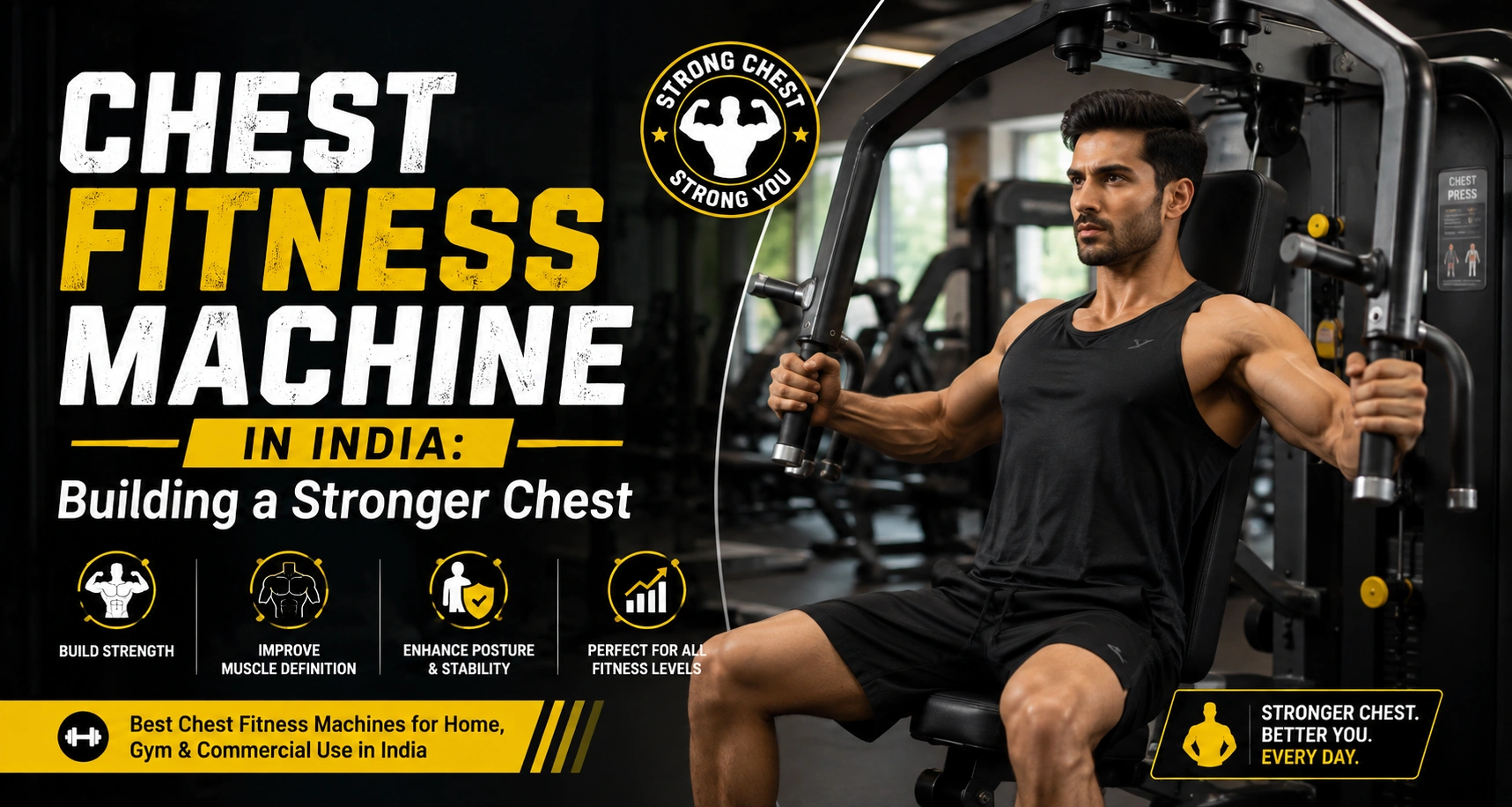
Walk into any gym in India today, and you’ll notice one thing hasn’t changed in decades — everyone wants a well-built chest. It’s the muscle group that shows up first in photos, fits every shirt better, and signals real strength. But not everyone has the time, technique, or confidence to lift a barbell correctly. That’s exactly why a chest fitness machine in India has become such a popular choice for beginners, home gym owners, and even seasoned lifters who want safer, more controlled workouts.
If you’re confused about which chest machine to buy, how it compares to free weights, or what actually works for Indian homes and budgets, this guide will walk you through everything you need to know — in plain, practical language.
Why a Chest Fitness Machine Matters for Your Upper Body
A strong chest isn’t just about looks. It plays a functional role in pushing movements, posture, shoulder stability, and overall upper-body strength. Whether you’re pushing open a heavy door, lifting your child, or carrying grocery bags up the stairs, your chest muscles are constantly at work.
A chest fitness machine makes training this muscle group far more accessible because it:
- Guides your movement along a fixed, safe path
- Reduces the risk of injury for beginners
- Removes the need for a spotter, unlike bench pressing with free weights
- Allows you to isolate the chest muscles more effectively
- Makes progressive overload easy to track with pin-loaded weight stacks
This is one of the biggest reasons demand for home gym equipment, including chest machines, has grown steadily across Indian cities like Delhi, Mumbai, Bengaluru, Pune, and Hyderabad.
Types of Chest Fitness Machines Available in India
Not all chest machines work the same way. Depending on your goals, space, and budget, you’ll find several types commonly sold across Indian fitness stores and online platforms.
Chest Press Machine
This is the most popular chest fitness machine in India for both commercial gyms and home setups. It mimics the bench press movement but along a guided track, making it beginner-friendly and joint-safe. Most chest press machines use either a weight stack or adjustable resistance bands.
Pec Deck (Butterfly) Machine
The pec deck, often called the butterfly machine, isolates the chest through a squeezing motion. It’s excellent for building the inner chest and adding definition, and it’s commonly found in multi-station home gyms sold in India.
Cable Crossover Machine
A cable crossover setup allows multiple angles of chest training — upper, middle, and lower chest — using adjustable pulleys. While more common in commercial gyms, compact versions are now available for serious home gym enthusiasts.
Multi-Gym Chest Attachments
Many Indian brands sell multi-gym stations that combine a chest press, pec deck, and other functions in one compact frame. These are ideal for people with limited space who still want variety in their chest workouts.
Smith Machine for Chest Press
A Smith machine allows a barbell-style chest press along a fixed vertical track. It’s a good middle ground between free weights and a dedicated chest machine, offering more control while still challenging stabiliser muscles.
Benefits of Using a Chest Fitness Machine
If you’re still deciding whether a machine is worth the investment, here are the practical advantages:
- Safer for beginners — No risk of the bar falling on your chest, unlike unsupervised bench pressing.
- Better muscle isolation — Machines reduce the involvement of secondary muscles, helping you target the chest directly.
- Easy to track progress — Pin-loaded stacks let you increase resistance in small, consistent increments.
- Space-efficient options available — Many compact machines are designed specifically for Indian apartments and home gyms.
- Ideal for rehabilitation — Physiotherapists often recommend machine-based chest exercises for people recovering from shoulder or chest injuries.
How to Choose the Right Chest Fitness Machine in India
With so many options in the market, picking the right one can feel overwhelming. Here’s what to actually look at before buying.
Space and Home Gym Considerations
Before anything else, measure your available space. Compact chest press machines can fit into a corner of a bedroom or balcony, while multi-gym stations need a dedicated area. If space is tight, look for foldable or wall-mounted chest machines, which are increasingly available from Indian fitness equipment brands.
Budget and Price Range
Prices for a chest fitness machine in India vary widely depending on build quality and resistance type:
- Entry-level resistance-band or hydraulic chest machines: roughly ₹5,000–₹15,000
- Mid-range pin-loaded chest press machines: roughly ₹15,000–₹40,000
- Commercial-grade or multi-station gym setups: ₹40,000 and above
These are approximate ranges — always check current listings on major Indian fitness retailers or marketplaces, as prices shift with demand, shipping costs, and ongoing promotions.
Weight Stack and Resistance Type
Machines generally use one of three resistance types:
- Pin-loaded weight stacks — most accurate and beginner-friendly
- Hydraulic resistance — compact but less precise for tracking progress
- Resistance bands or plate-loaded systems — budget-friendly and space-saving
For serious strength training, a pin-loaded chest press machine is usually the better long-term investment.
Build Quality and Warranty
Seek the warranty of at least one to three years, smooth cable or pulley movement and a sound, steel frame. The cost of cheaper machines may be reduced in bearings and cables, but this reduces safety and can impact durability in the long run — particularly in India’s different weather and usage conditions.
Best Chest Fitness Machine Options for Indian Homes and Gyms
Several Indian and international brands are commonly available through fitness retailers and e-commerce platforms in India, including names like Cosco, Kobo, Lifeline, Cockatoo, PowerMax, and Decathlon’s in-house fitness range. Availability, pricing, and specific models change frequently, so it’s worth comparing recent listings, verified customer reviews, and after-sales service before making a final decision — especially for higher-investment, pin-loaded machines meant for long-term use.
Chest Machine vs Free Weights: Which Is Better?
This is one of the most common questions among Indian fitness enthusiasts, and the honest answer is: it depends on your goals.
| Factor | Chest Machine | Free Weights (Bench Press) |
|---|---|---|
| Beginner safety | High | Requires a spotter |
| Muscle isolation | Excellent | Moderate |
| Functional strength | Moderate | High |
| Space required | Fixed, often compact | Needs a bench + rack |
| Learning curve | Low | Moderate to high |
For most home gym users in India, a chest fitness machine is the safer starting point, especially if you’re training alone. Advanced lifters often combine both — using machines for isolation work and free weights for raw strength.
Tips to Get the Most Out of Your Chest Workouts
- Warm up your shoulders and chest for 5–10 minutes before starting
- Focus on controlled movement rather than lifting heavy too soon
- Keep your shoulder blades slightly retracted to protect your shoulder joints
- Gradually increase resistance every one to two weeks
- Pair chest machine workouts with mobility stretches to avoid tightness
Common Mistakes to Avoid While Using a Chest Machine
Even with the added safety of a machine, form still matters. Watch out for these frequent errors:
- Instead of muscle control, swing the handles to use momentum — this will actually make it less effective.
- Wrong seat height – This takes stress from the chest and onto the shoulders.
- When you do not perform every repetition with full range of motion, your muscles won’t grow as much as they could (partial reps do not maximize muscle development).
- Ignoring the negative (lowering) phase — this part of the movement is just as important for building strength
- Not adjusting resistance as you progress — sticking to the same weight for months slows results
Conclusion
Choosing the right chest fitness machine in India doesn’t have to be complicated once you understand the types available, your space constraints, and your budget. Whether you go for a compact chest press machine for your home or a multi-station setup with a pec deck and cable crossover, the key is consistency — combined with correct form and gradual progression.
A well-chosen chest machine can be one of the smartest fitness investments you make this year, helping you build strength safely, track progress clearly, and stay consistent with your workouts, whether you’re training at home or in a commercial gym.
Frequently Asked Questions (FAQs)
Q.1 What is the best chest fitness machine for home use in India?
A compact pin-loaded chest press machine is generally the best choice for Indian homes, as it offers accurate resistance tracking, requires less space than a full bench-and-rack setup, and is safer for solo training.
Q.2 How much does a chest fitness machine cost in India?
Prices typically range from around ₹5,000 for basic hydraulic or resistance-band machines to ₹40,000 or more for commercial-grade, pin-loaded chest press and multi-gym stations. Always compare current listings before buying.
Q.3 Is a chest machine better than bench press for beginners?
Yes, for beginners, a chest machine is usually safer since it guides the movement along a fixed path and doesn’t require a spotter, unlike traditional barbell bench pressing.
Q.4 Can a chest fitness machine help build muscle as effectively as free weights?
Chest machines are excellent for muscle isolation and hypertrophy, especially for beginners and intermediate lifters. Advanced trainees often combine machines with free weights for maximum strength and muscle development. Complete Fitness & Workout Guide
Q.5 How many times a week should I be doing a chest fitness machine?
Many trainers recommend two-to-three chest workouts per week, with a minimum rest period of 48 hours between workouts to promote muscle recovery and growth.