

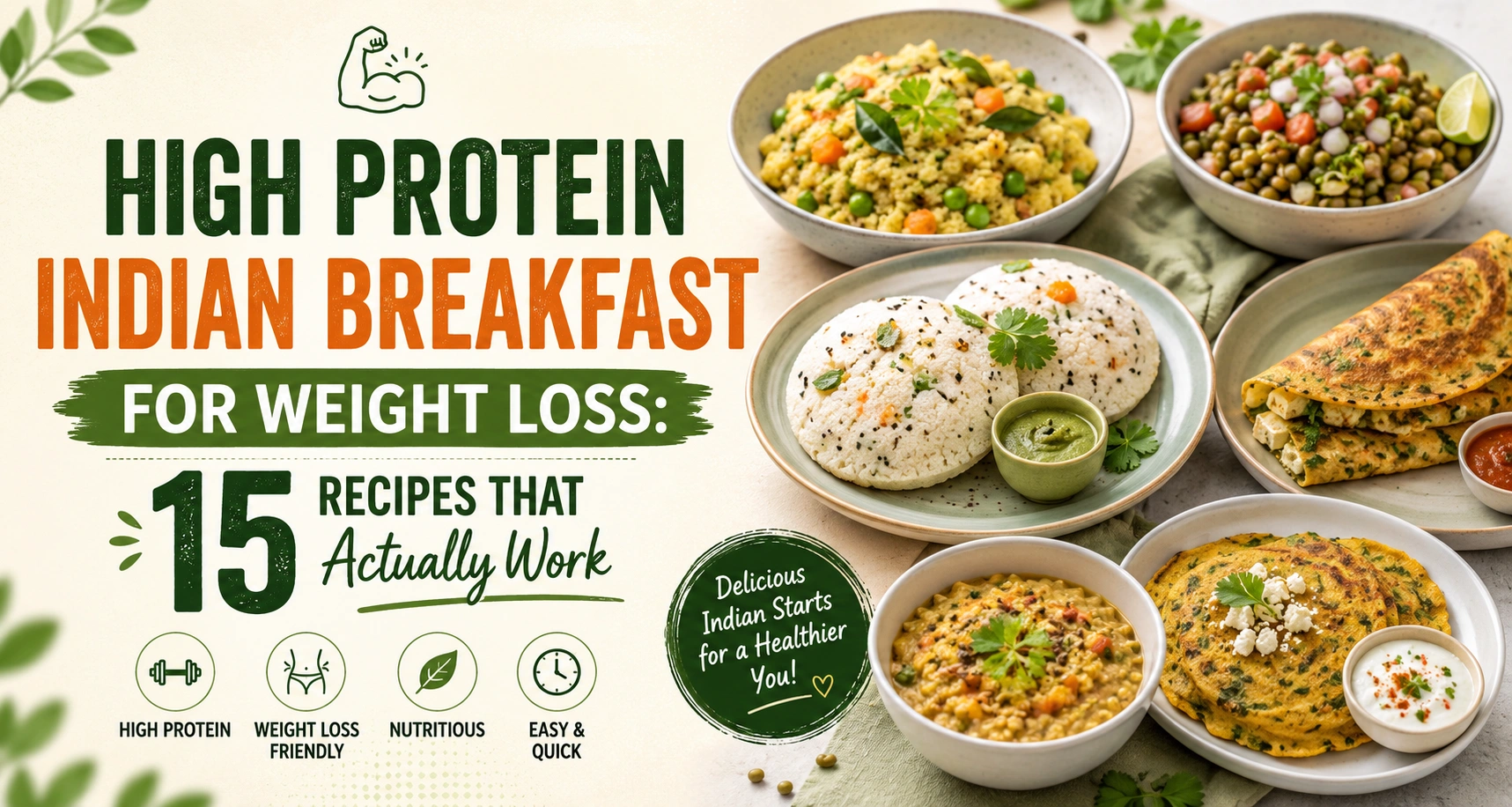
If your mornings usually start with a plate of poha, a couple of parathas, or just chai and biscuits, you’re not alone — and you’re also not doing your weight loss goals any favors. Most traditional High Protein Indian Breakfast for Weight Loss are heavy on carbs and painfully light on protein, which is exactly why so many people feel hungry again by 10:30 am and end up snacking their way through the morning.
Here’s the good news: you don’t need eggs, imported protein powders, or bland “diet food” to fix this. A high protein Indian breakfast for weight loss can be built almost entirely from what’s already sitting in your kitchen — dal, besan, paneer, curd, and sprouts. This article walks you through why breakfast protein matters, how much you actually need, and fifteen practical recipes that fit real Indian mornings, not just Instagram meal plans.
Why High Protein Indian Breakfast for Weight Loss
Protein isn’t just for gym-goers chasing muscle gain. It plays a direct role in how full you feel and how many extra calories you end up eating later in the day.
Here’s what a protein-rich start does for your body:
- Keeps hunger in check – Protein digests slowly, which means you stay satisfied for longer instead of reaching for a snack an hour later.
- Reduces overall calorie intake – When breakfast includes enough protein, most people naturally eat less at lunch and dinner.
- Supports muscle while you lose fat – During a calorie deficit, adequate protein helps your body hold on to lean muscle instead of burning it for energy.
- Improves focus and energy – Boosts focus and energy by keeping blood sugar steadier, unlike a carb-heavy breakfast that can cause a spike and crash.
For most adults looking to lose weight, consuming 20–30 grams of protein at breakfast is an effective and achievable goal using whole foods—no protein supplements needed.
How Much Protein Do You Really Need?
The best way to determine your daily protein requirements is to calculate them by multiplying your body weight (in kilograms) by 0.8–1.2 grams for every kilogram, depending on the level of activity. If a person with a weight of 65kg, for instance, requires about 52-78g of protein a day, it is best to divide this up evenly throughout the day.
Splitting this evenly across three to four meals makes it far easier to hit your target without overloading any single meal — which is exactly why breakfast protein deserves more attention than it usually gets.
High Protein Vegetarian Indian Breakfast: 15 Practical Ideas
Below are fifteen options grouped by how much time and effort they take, so you can pick what fits your morning — not the other way around.
No-Cook, Ready in Minutes
- Sprouts Chaat – Boiled moong or chana sprouts tossed with onion, tomato, lemon juice, and chaat masala. Light, filling, and genuinely refreshing.
- Hung Curd Bowl – Strain regular curd overnight to make thick, protein-rich hung curd, then top it with a handful of nuts and seeds for extra protein, healthy fats, and crunch.
- Sattu Drink – A traditional Bihari favourite made by mixing roasted gram flour with water, a pinch of salt, and lemon. Quick, filling, and surprisingly high in protein.
- Roasted Chana Bowl – Simply roasted black or white chickpeas with a dash of chaat masala make a protein-packed grab-and-go option.
High Protein Indian Breakfast Under 15 Minutes
- Moong Dal Chilla – Soaked moong dal blended into a batter with onion, green chilli, and coriander, then cooked like a savoury pancake.
- Besan Chilla – Made with gram flour instead of dal, this is one of the fastest protein-rich options in Indian cooking.
- Paneer Bhurji – Crumbled paneer sautéed with onions, tomatoes, and light spices. Pair with a small multigrain roti instead of white bread.
- Egg Bhurji (for egg-eaters) – A quick scramble with onion and tomato works just as well if eggs are part of your diet.
- Dhokla – Steamed besan cakes that are light on the stomach but still protein-rich, especially if you prep the batter the night before.
Weekend or Slightly Longer Prep
- Protein-Boosted Poha – Regular poha upgraded with roasted peanuts and paneer cubes turns a low-protein dish into a genuinely useful one.
- Ragi Dosa with Dal Filling – Finger millet dosa paired with a light dal filling adds both fibre and protein.
- Mixed Dal Idli – Traditional idli batter fortified with extra dal for a protein boost without changing the taste much.
- Pesarattu – A South Indian dosa made from green gram, naturally high in plant protein and easy to pair with chutney.
- Vegetable Oats Upma with Peanuts – Savoury oats cooked with vegetables and topped with crushed peanuts for extra protein and crunch.
- Paneer Paratha – A protein-rich twist on the classic stuffed paratha, best enjoyed with a side of curd.
Common Mistakes That Keep Your Breakfast Protein Low
Even health-conscious people often fall into a few avoidable traps:
- Relying only on dal – A small bowl of dal usually contains just 4 to 6 grams of protein — not enough on its own.
- Skipping breakfast entirely – This often backfires with overeating later in the day.
- Choosing “healthy-sounding” but low-protein foods – Plain poha, upma without additions, or fruit-only breakfasts look nutritious but fall short on protein.
- Not pairing grains with legumes can lower the quality of your protein intake; combining foods like dal with roti or chilla with curd gives you a more complete amino acid profile.
A Simple Weekly Approach
Rather than overthinking every single morning, pick four or five recipes from the list above that you genuinely enjoy and rotate them through the week. Consistency matters far more than variety when it comes to sticking with any weight loss plan — and a high protein Indian breakfast for weight loss only works if you can actually stick with it.
Final Thoughts
Losing weight doesn’t mean giving up the foods you grew up eating. It means adjusting how they’re made and what you pair them with. Whether it’s a bowl of sprouts chaat before you rush out the door, or a warm plate of paneer bhurji on a slower morning, these high protein vegetarian Indian breakfast options prove that traditional cooking and weight loss goals aren’t at odds with each other.
Start small — pick two or three recipes from this list, try them this week, and notice how much longer you stay full compared to your usual breakfast. That one change alone can make the rest of your day’s eating noticeably easier to manage.
Read More:- The Complete Indian Nutrition & Diet Guide (2026)
Frequently Asked Questions
Q.1 What is the recommended amount of protein at an Indian breakfast to lose weight?
At breakfast, try to get 20–30 grams of protein. This amount will help keep you fuller, maintain your muscle while trying to lose weight, and help decrease snacking before lunch. The target is easily achievable by consuming protein rich whole food items (even without protein supplements) such as egg, paneer, greek yoghurt, sprouts, tofu, dal chilla, moong chilla, etc.
Q.2 Which Indian breakfast has the most protein?
Paneer bhurji and moong dal chilla are among the highest, typically providing 18 to 25 grams of protein per serving depending on portion size.
Q.3 Can I get a high protein breakfast without eggs?
Yes. Paneer, dal, besan, sprouts, and curd are all strong vegetarian protein sources that work well without eggs.
Q.4 Is besan chilla actually high in protein?
Yes, one besan chilla provides roughly 10 to 12 grams of protein, making it one of the quickest high-protein options for busy mornings.
Q.5 What is a good high protein Indian breakfast under 15 minutes?
Besan chilla, moong dal chilla, sprouts chaat, and sattu drink are all ready in under 15 minutes and require no advance preparation.