

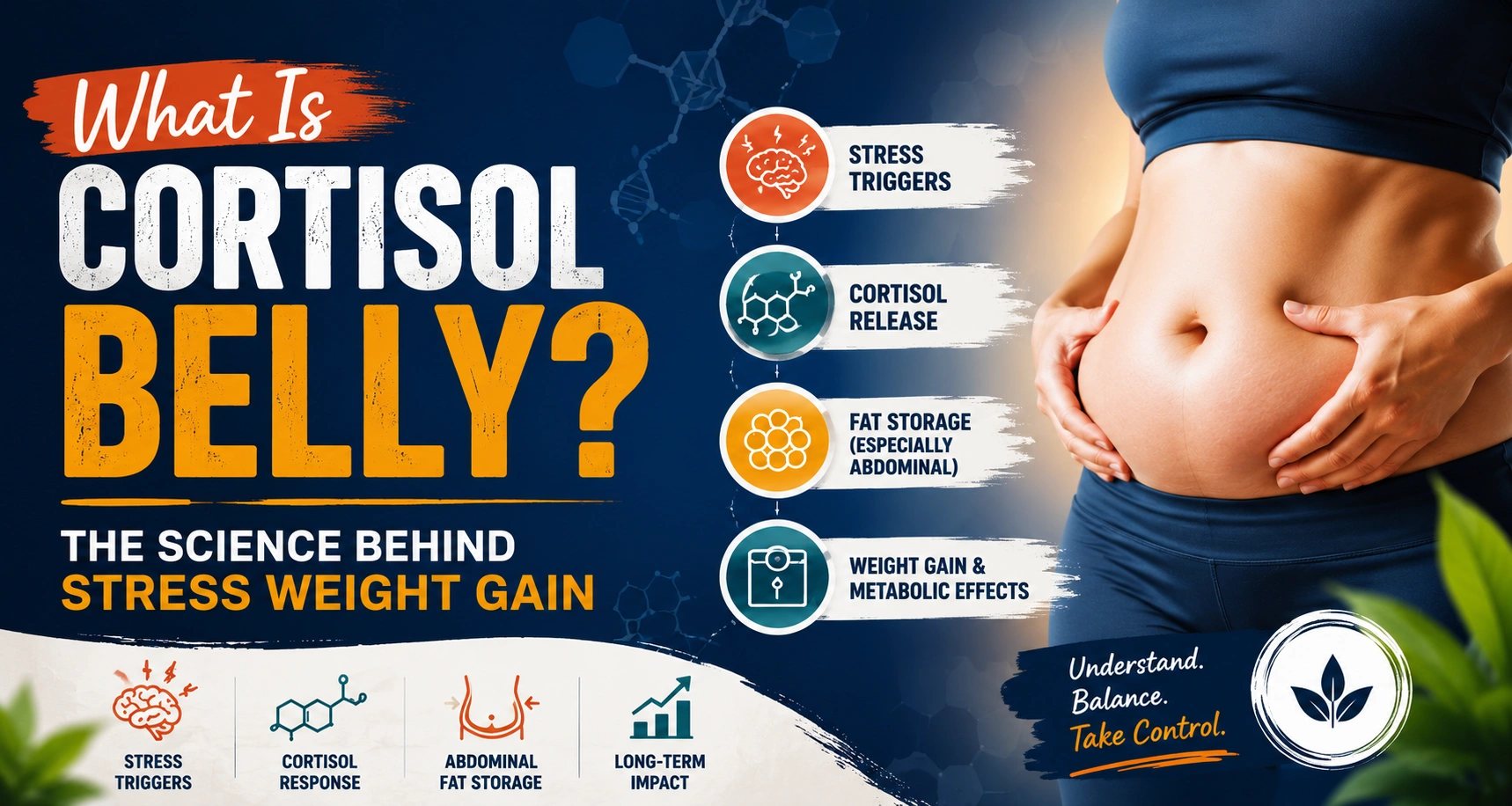
You’ve been eating well. You’re moving your body. You’re doing what the fitness advice told you to do. And yet that stubborn layer of fat around your midsection isn’t budging. If this sounds familiar, cortisol might be the missing piece of the puzzle that nobody mentioned.
Cortisol belly — the accumulation of visceral fat around the abdomen driven by chronically elevated stress hormones — is one of the most misunderstood and underdiagnosed contributors to weight gain in modern life. It doesn’t respond to calorie restriction the way regular fat does. It’s not purely about food. And for millions of people in the US, Canada, UK, and Australia living under sustained stress, it’s very, very real.
This article breaks down what cortisol belly actually is, why the science behind it matters, how to recognise it, and — most importantly — what you can do about it.
What Is Cortisol and Why Does It Matter?
Cortisol is a type of steroid hormone made in your body by the adrenal glands, which are located above your kidneys. This is often referred to as the “stress hormone” but it could be described better as the “stressed hormone. Cortisol is responsible for nearly all of the body’s systems: metabolism, immune function, blood pressure, sleep patterns and the body’s fight-or-flight response.
In the right amounts, cortisol is essential. It wakes you up in the morning (cortisol naturally peaks around 8 a.m.), keeps your energy stable, and helps you respond to physical or emotional challenges. The problem isn’t cortisol itself — it’s what happens when levels stay elevated for days, weeks, or months on end.
Science note: Cortisol is released in response to perceived threats. In ancestral environments, those threats were short-lived — a predator, a fight, a physical challenge. The body recovered. In modern life, the “threats” are often constant: job pressure, financial stress, relationship tension, poor sleep, doomscrolling. The hormonal response doesn’t distinguish between a lion and a difficult email.
What Is Cortisol Belly?
Cortisol belly is a particular kind of belly that develops from high cortisol levels and is simply visceral fat deposits in the abdomen. Visceral fat is located in the abdomen, surrounding your organs unlike subcutaneous fat which is located just beneath your skin. Unlike superficial fat, it’s metabolically active, which means it affects hormones, inflammation, and insulin sensitivity.
This type of stress belly fat isn’t simply about eating too much. Cortisol directly increases appetite (particularly for high-calorie, high-sugar foods), slows metabolism, signals the body to store fat preferentially in the abdominal area, and breaks down muscle tissue — making it harder to burn calories at rest. It’s a perfect hormonal storm for weight gain that doesn’t respond well to standard diet advice.
Research published in the journal Psychoneuroendocrinology found that women with higher cortisol reactivity to stress showed significantly greater deposits of abdominal fat than those with lower cortisol responses — regardless of their overall body weight or BMI.
High Cortisol Symptoms: How to Know If This Applies to You
Cortisol and weight gain don’t always arrive together with an obvious label. Many people living with chronically elevated cortisol don’t feel “stressed” in the way they imagine stress should feel — they’ve simply normalised a state of low-grade overwhelm that has become their baseline.
Common Signs of Chronically Elevated Cortisol
- Persistent abdominal weight gain despite regular exercise and a reasonable diet
- Difficulty falling asleep or staying asleep, even when exhausted
- Strong cravings for sugary, salty, or fatty foods — especially in the evening
- Afternoon energy crashes followed by a second wind close to bedtime
- Feeling wired but tired — mentally on edge but physically drained
- Increased anxiety, irritability, or a sense of emotional fragility
- Brain fog, poor concentration, and difficulty retaining information
- Frequent illness, suggesting a suppressed immune system
High Cortisol Symptoms in Women: What’s Different
While cortisol affects both sexes, women are disproportionately affected by its impact on body composition and emotional wellbeing. High cortisol symptoms in women frequently include irregular menstrual cycles, worsening PMS, reduced libido, skin changes (including adult acne along the jawline), and pronounced emotional reactivity. Women also tend to store more visceral fat in response to cortisol than men of equivalent stress levels, due to interactions between cortisol and oestrogen.
Perimenopause and menopause further complicate the picture, as declining oestrogen levels change how and where fat is stored — making cortisol management particularly important for women in their 40s and 50s.
Important: If you suspect cortisol levels are significantly elevated, a GP or endocrinologist can test morning serum cortisol or a 24-hour urinary cortisol test. Conditions like Cushing’s syndrome cause severe cortisol elevation and require medical treatment beyond lifestyle intervention.
The Science of Cortisol and Weight Gain
Understanding why cortisol causes abdominal fat accumulation requires a brief look at the hormonal cascade it triggers.
1. Cortisol Increases Insulin Resistance
Chronically high cortisol levels interfere with insulin signalling, making cells less responsive to insulin. This means more glucose circulates in the bloodstream, prompting the pancreas to produce more insulin. Elevated insulin is one of the most powerful drivers of fat storage — and it specifically directs fat toward the visceral abdominal region.
2. Cortisol Dysregulates Hunger Hormones
Cortisol suppresses leptin (the hormone that signals fullness) and elevates ghrelin (the hormone that triggers hunger). The result is that you feel hungry more often, satisfied less easily, and drawn specifically toward calorie-dense comfort foods. This isn’t a lack of willpower — it’s a hormonal instruction your body is following.
3. Cortisol Breaks Down Muscle
In a prolonged stress state, cortisol is catabolic — meaning it breaks down muscle tissue to convert protein into glucose for quick energy. Less muscle mass means a slower resting metabolic rate, which means fewer calories burned at rest. Over time, this compounds into significant changes in body composition even without changes in food intake.
How to Lose Cortisol Belly Fat: What Actually Works
Losing cortisol belly fat requires a fundamentally different approach from standard weight loss advice. Aggressive calorie restriction and intense daily exercise can actually elevate cortisol further — worsening the problem. The goal is to reduce the stress burden on the body, not add to it.
Prioritise Sleep Above Everything Else
Sleep is the single most effective cortisol-lowering intervention available. Deep, consistent sleep allows cortisol levels to reset overnight. Aim for 7–9 hours in a cool, dark room. Going to bed and waking at the same time daily — even on weekends — stabilises the cortisol rhythm more than almost any supplement or diet change.
Choose Exercise That Calms, Not Spikes
This is where many people go wrong. HIIT and intense cardio sessions spike cortisol acutely. For someone already in a chronically elevated cortisol state, daily HIIT can make things worse. Instead, prioritise:
- Zone 2 cardio — walking, light cycling, swimming at a conversational pace for 30–45 minutes
- Strength training 2–3 times per week — which builds muscle and improves insulin sensitivity over time
- Yoga and slow stretching — shown in multiple studies to directly lower cortisol and activate the parasympathetic nervous system
Tip: A 20-minute walk after dinner does more for cortisol belly than a punishing 45-minute spin class taken in a sleep-deprived state.
How to Reduce Cortisol Levels Through Nutrition
Dietary changes that support lower cortisol include:
- Prioritising complex carbohydrates like oats, sweet potato, legumes, and brown rice, which support serotonin production and blunt cortisol peaks
- Including magnesium-rich foods — dark leafy greens, pumpkin seeds, dark chocolate — as magnesium is depleted by stress and plays a role in cortisol regulation
- Reducing caffeine intake, particularly in the afternoon, as caffeine directly stimulates cortisol production
- Limiting alcohol, which disrupts sleep architecture and elevates cortisol the following day
Stress Management: The Non-Negotiable
No amount of kale smoothies will reduce cortisol belly if the underlying stress load isn’t addressed. The most evidence-backed stress management tools include:
- Mindfulness-based stress reduction (MBSR) — multiple clinical trials demonstrate measurable cortisol reduction after 8 weeks
- Journalling — particularly expressive writing about stressors, which reduces rumination
- Social connection — loneliness is a significant cortisol driver; meaningful time with trusted people has measurable hormonal benefits
- By slowing down and focusing on breathing from the diaphragm, breathwork can trigger a switch in the nervous system from fight-or-flight to relaxation in just a few minutes, which stimulates the vagus nerve.
Consider These Evidence-Based Supplements
While supplements aren’t a substitute for lifestyle change, a handful have solid evidence for cortisol regulation:
- Ashwagandha (Withania somnifera) — consistently shown in randomised trials to lower morning cortisol and reduce perceived stress
- Phosphatidylserine — a phospholipid shown to blunt the cortisol response to exercise stress
- Magnesium glycinate — well absorbed and supports both sleep quality and cortisol regulation
Final Thoughts
Cortisol belly is real, it’s measurable, and it explains why so many people who are doing “everything right” still can’t shift weight around their midsection. The body is not broken — it’s responding rationally to a stressful environment by protecting its energy stores in exactly the way evolution designed it to.
The path forward isn’t harder workouts or stricter eating. It’s a more compassionate approach: sleep more, move gently but consistently, eat in ways that support your hormones rather than spike them, and take the stress in your life seriously enough to actively manage it. Address the cortisol, and the belly — slowly, gradually, but genuinely — follows.
Frequently Asked Questions (FAQs)
Q1. What does cortisol belly look like compared to normal belly fat?
Cortisol belly typically presents as a rounder, fuller abdomen — often described as a “stress pouch” or “cortisol pouch” — that sits high and feels firm rather than soft. Unlike subcutaneous fat which you can pinch, cortisol-related visceral fat is deeper and often accompanied by bloating, digestive discomfort, and a midsection that remains prominent even when body weight is otherwise normal.
Q2. How long does it take to lose cortisol belly fat?
With consistent lifestyle changes — improved sleep, regulated exercise, dietary adjustments, and active stress management — most people notice measurable changes in abdominal circumference within 8–12 weeks. Because cortisol belly involves visceral fat, which is metabolically responsive, it tends to reduce faster than subcutaneous fat once the hormonal environment improves. Patience and consistency are more important than speed.
Q3. Can cortisol belly go away without losing overall weight?
Yes. Because cortisol belly is driven by visceral fat distribution rather than total body fat, some people experience a visibly flatter abdomen and reduced waist circumference as cortisol normalises — even without significant changes to overall body weight. Improving sleep and stress management often produces abdominal changes before the scale moves.
Q4. What are the most effective ways to reduce cortisol levels quickly?
The fastest-acting cortisol reduction techniques include slow diaphragmatic breathing (4 counts in, 6 counts out), cold water on the face or wrists, and brief moderate-intensity movement like a brisk 10-minute walk. Longer-term, consistent sleep, ashwagandha supplementation, mindfulness practice, and reducing caffeine and alcohol intake produce sustained reductions in baseline cortisol over 4–8 weeks.
Q5. Is cortisol belly the same as bloating?
No — though they can appear similar and sometimes occur together. Bloating is a temporary distension of the abdomen caused by gas, digestive issues, or food sensitivities, and typically varies throughout the day. Cortisol belly is a more permanent accumulation of visceral fat that doesn’t deflate after digestion. High cortisol can worsen digestive symptoms and bloating, so both may be present simultaneously — but they have different causes and different solutions.
Related Topics:-