

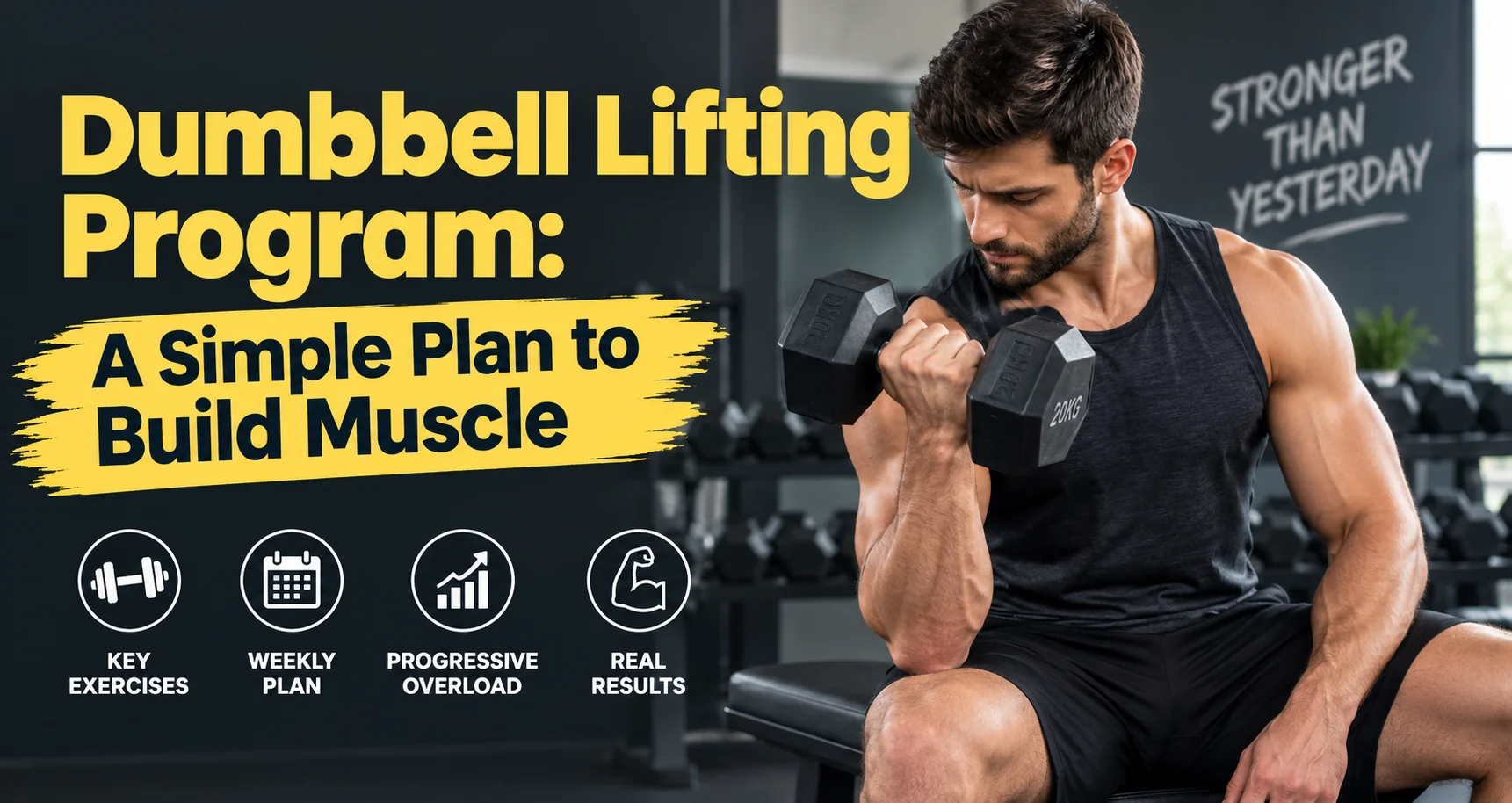
You don’t need a pricey gym membership or a room full of machines to get strong. A pair of dumbbells, a bit of floor space, and a solid plan can take you surprisingly far. Many people in the U.S. now train at home, and a well-built dumbbell lifting program is one of the easiest ways to start.
This guide covers why dumbbells work, how to structure your week, which exercises matter most, and how to keep progressing without burning out.
Why Choose a Dumbbell Lifting Program?
Dumbbells are one of the most flexible tools in fitness. Here’s why so many coaches recommend them:
- They’re space-friendly. A pair of adjustable dumbbells fits in a closet.
- They fix imbalances. Each arm and leg works on its own, so your stronger side can’t take over.
- They allow a natural range of motion. Your wrists and shoulders can move the way your body prefers, which is often kinder to your joints than a fixed bar.
- They suit every level. Beginners can start light, and experienced lifters can add weight, tempo changes, or single-limb work.
- They save money. One adjustable set often costs less than a few months of gym fees.
Before You Start: The Basics
Choose the Right Weight
Select a weight that will allow you to perform 8-12 controlled reps at the end of each set with the 2 last reps being difficult but still possible. If your form begins to collapse, too much weight. If you are able to do 20 reps very easily, add weight.
Warm Up for 5 Minutes
Don’t skip this. A short warm-up lowers your injury risk and helps you lift better. Try:
- Arm circles and shoulder rolls
- Bodyweight squats
- Hip hinges (a light Romanian deadlift motion without weight)
- A few light reps of your first exercise
Focus on Form First
Good technique beats heavy weights every time. Move with control, breathe steadily, and keep your core braced. If you’re new to lifting, consider a session with a certified trainer, or record yourself and compare your form to reliable instructional videos.
The Core Movements Every Dumbbell Lifting Program Needs
A smart plan covers the whole body through a few basic movement patterns. You don’t need dozens of exercises.
Lower Body
- Goblet squat: With one dumbbell close to your chest, squat with controlled movement. A good exercise to introduce to beginners to help learn squatting technique and depth.
- Dumbbell Romanian deadlift: Builds hamstrings and glutes.
- Reverse lunge or split squat: Strengthens each leg individually.
Upper Body Push
- Dumbbell bench press (or floor press): Works chest, shoulders, and triceps.
- Overhead press: Builds strong shoulders.
- Push-up with dumbbell support: Adds stability work.
Upper Body Pull
- One-arm dumbbell row: Targets the back and improves posture.
- Rear delt fly: Strengthens the upper back and rear shoulders.
- Dumbbell curl: Isolates the biceps.
Core
- Farmer’s carry: Walk while holding heavy dumbbells. It trains grip, core, and posture at once.
- Plank with a row: Challenges stability and strength together.
A Simple Weekly Dumbbell Lifting Program (3 Days)
This full-body plan works well for beginners and busy people. Rest at least one day between sessions.
Day 1: Full Body A
- Goblet squat: 3 sets of 10
- Dumbbell bench press: 3 sets of 10
- One-arm row: 3 sets of 10 per side
- Overhead press: 2 sets of 10
- Farmer’s carry: 3 rounds of 30 seconds
Day 2: Full Body B
- Romanian deadlift: 3 sets of 10
- Floor press: 3 sets of 10
- Reverse lunge: 3 sets of 8 per leg
- Rear delt fly: 3 sets of 12
- Plank row: 3 sets of 8 per side
Day 3: Full Body C
- Split squat: 3 sets of 8 per leg
- Overhead press: 3 sets of 8
- One-arm row: 3 sets of 12 per side
- Dumbbell curl: 2 sets of 12
- Goblet squat (slow tempo): 2 sets of 12
Rest 60 to 90 seconds between sets. On your off days, walking, stretching, or light cardio helps recovery.
How to Progress Over Time
Muscles grow when you challenge them a little more than before. This is called progressive overload, and you can apply it without always adding weight:
- Add reps. Move from 8 reps to 12 before going heavier.
- Add sets. Go from 3 sets to 4 on key lifts.
- Slow the tempo. Take three seconds to lower the weight.
- Shorten rest time. Cut breaks by 10 to 15 seconds.
- Increase the weight. Once you can complete the upper end of your target rep range with good form, increase the weight by the smallest available increment.
Keep a simple workout log in a notebook or phone app. Seeing your numbers rise is a strong motivator.
Nutrition and Recovery Matter Too
Even the best dumbbell lifting program won’t deliver without support from daily habits.
- Eat enough protein. Typical recommendations for active adults are 0.7-1 gram of protein per pound of body weight each day. The recommended intake however, may vary depending on your goals, activity level and health, so it’s best to seek advice from your doctor or registered dietitian for personal recommendations.
- Sleep 7 to 9 hours. Muscle repair happens largely while you rest.
- Stay hydrated. Even mild dehydration can hurt performance.
- Manage stress. High stress can slow recovery and sap motivation.
Common Mistakes to Avoid
- Lifting too heavy too soon
- Skipping warm-ups
- Changing programs every two weeks
- Ignoring leg and back training
- Not tracking progress
- Comparing yourself to others instead of your past self
Stick with one plan for at least 8 to 12 weeks before judging results. Consistency is the real secret.
Final Thoughts
A good dumbbell lifting program doesn’t need to be complicated. Train three days a week, focus on the major movement patterns, use controlled form, and nudge your progress forward week by week. Support it with solid sleep and nutrition, and you’ll likely notice better strength, posture, and energy within a couple of months.
Grab your dumbbells, pick a start date, and commit to the first four weeks. Your future self will thank you.
Looking for more fitness, lifestyle, and wellness reads? Explore Magzilla Trends.
Frequently Asked Questions
1. How often should I follow a dumbbell lifting program?
Most beginners do well with three full-body sessions per week. Intermediate lifters might train four days using an upper/lower split. Always leave time for recovery.
2. Can I build muscle with only dumbbells?
Yes. As long as you progressively challenge your muscles through more reps, sets, tempo changes, or heavier weights, dumbbells can build significant muscle and strength.
3. What weight dumbbells should a beginner buy?
Adjustable dumbbells are the most practical choice. A set ranging from about 5 to 50 pounds per hand covers most beginners and gives room to grow.
4. How long does it take to see results?
Many people notice better strength within 3 to 4 weeks. Visible muscle changes usually take 8 to 12 weeks, depending on nutrition, sleep, and consistency.
5. Is a dumbbell lifting program good for weight loss?
Yes. A dumbbell lifting program can support weight loss by helping build and maintain muscle, which can increase your overall calorie expenditure. For the best results, combine strength training with a balanced, calorie-controlled diet and regular walking or light cardio.