

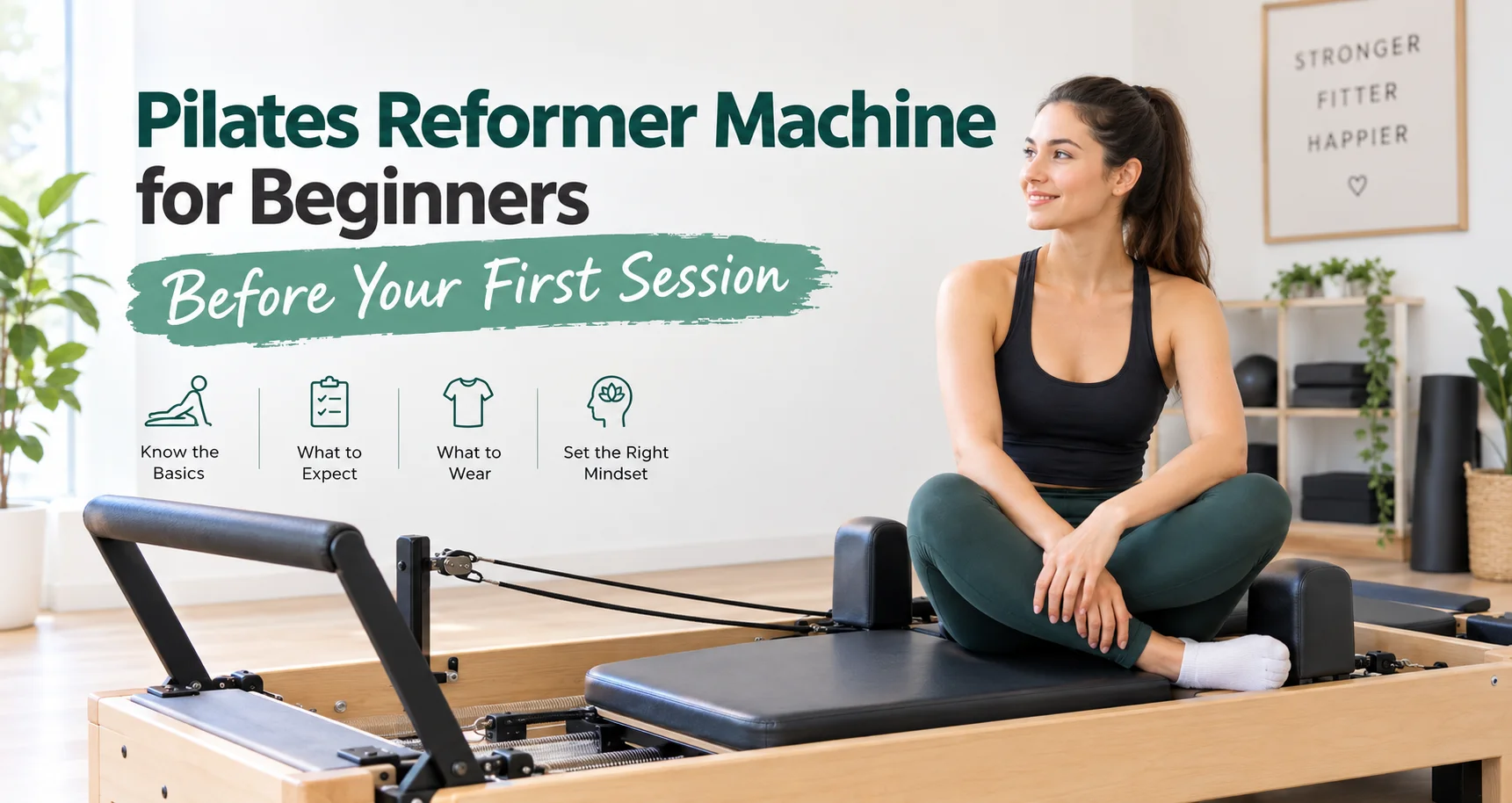
The first time you see a pilates reformer, it looks a little intimidating. There’s a sliding carriage, a tangle of springs, straps, and a footbar. It can feel like a piece of equipment from another century.
Don’t let that put you off. The pilates reformer machine for beginners is one of the friendliest ways to build strength, flexibility, and body awareness, and it’s far simpler than it looks. This guide covers how the machine works, what it can do for you, which moves to start with, and how to avoid common beginner mistakes.
What Is a Pilates Reformer Machine?
A pilates reformer is a bed-like frame with a sliding platform (the carriage) that moves back and forth on rails. Springs attached to the carriage create resistance. You push, pull, and glide against that resistance while working through controlled exercises.
Joseph Pilates developed the original system in the early 20th century. Today, reformer pilates is a staple in boutique studios, physical therapy clinics, and a growing number of home gyms across the United States.
The Main Parts, Explained Simply
Knowing the basics makes your first class far less confusing:
- Carriage: The padded platform you sit, lie, or kneel on as it glides.
- Springs: These control resistance. More tension generally means more challenge, though not always in the way you’d expect.
- Footbar: The bar at one end that you push against with your hands or feet.
- Straps and loops: Adjustable handles for arm and leg work.
- Shoulder blocks: Padded stops that keep you from sliding off the carriage.
- Headrest: An adjustable pad for neck support.
Why Beginners Love Reformer Pilates
Plenty of people start with mat pilates and move to the reformer later. Others begin right on the machine, and there are good reasons for that.
It Supports Your Body While Challenging It
The springs can assist or resist your movement, so the machine adapts to your level. If you’re just starting out, lighter spring settings give you support while you learn proper form.
It Builds Core Strength the Smart Way
Nearly every reformer exercise relies on your deep core muscles. Instead of grinding through endless crunches, you learn to stabilize through your center while your arms and legs move.
It’s Generally Low-Impact
Because you move against smooth resistance rather than pounding the floor, reformer workouts tend to be easier on the joints. That’s one reason people recovering from minor aches or returning to exercise are drawn to them. (If you have an injury or medical condition, check with your doctor or physical therapist first.)
Other Benefits Worth Mentioning
- Better posture and spinal alignment
- Improved flexibility and range of motion
- Greater balance and coordination
- More body awareness, which carries over into daily life
- A workout that can be scaled up as you improve
Beginner-Friendly Reformer Exercises to Know
You’ll likely meet a few of these in your first class. Your instructor will set the springs for you, so focus on moving slowly and breathing steadily.
Footwork
You lie on your back with your feet on the footbar and press the carriage away, then return with control. It warms up your legs, glutes, and core, and it teaches you how the carriage feels.
The Hundred
A classic pilates move. You lie back, lift your head and legs (or keep your feet down, as many beginners do), and pump your arms while breathing in a steady rhythm. It builds endurance and core awareness.
Leg Circles in Straps
With your feet in the straps, you draw small, controlled circles. It challenges hip stability without any need for extreme flexibility.
Rowing and Arm Work
Seated or kneeling, you pull the straps to work your back, shoulders, and arms. It’s great for posture, especially if you spend hours at a desk.
How to Prepare for Your First Class
A little preparation goes a long way.
- Wear fitted, comfortable clothes. Loose fabric can catch in the springs.
- Bring grip socks. Most studios require them for hygiene and traction.
- Skip the heavy meal. A light snack an hour or two beforehand works well.
- Arrive early. Let the instructor know you’re new and mention any injuries.
- Ask questions. Good instructors expect them, especially from first-timers.
Common Beginner Mistakes (and How to Avoid Them)
Rushing the movement. Speed is not the goal. Slow, controlled motion is where the benefit lives.
Holding your breath. Breathing deliberately keeps your muscles working properly and helps you stay calm.
Using too much tension too soon. Heavier springs aren’t automatically better. Start light and build up as your form improves.
Letting your shoulders creep up. Keep your neck long and your shoulders relaxed.
Skipping beginner classes. A true beginner session spends time on setup and technique, which pays off for months.
Studio Class or Home Reformer?
Both are valid choices, and the right answer depends on your budget and goals.
Studio classes give you expert guidance, correct setup, and a community. They’re usually the best choice for your first several sessions. Expect to pay anywhere from about $25 to $45 per class in many US cities, though prices vary.
Home reformers can work out well if you’re committed. Quality varies widely, so look for sturdy construction, smooth gliding, and adjustable parts. Also consider your floor space, since a full-size reformer needs room. Many people take a handful of studio classes before buying so they know what they like.
How Often Should Beginners Practice?
Most beginners do well with two to three sessions per week. That gives your muscles time to adapt while building a steady habit. Consistency matters more than intensity, and you’ll likely notice better posture and body control before you notice any dramatic physical changes.
Final Thoughts
The pilates reformer machine for beginners doesn’t have to be intimidating. Once you understand the basic parts and move with patience, it becomes a supportive, adaptable tool for building strength, flexibility, and confidence. Start with a beginner class, listen to your body, and let your technique grow before you chase harder workouts.
For more wellness and lifestyle ideas, explore the latest articles at Magzilla Trends.
Frequently Asked Questions
1. Is a pilates reformer machine good for beginners?
Yes. The adjustable springs let you add support or resistance, so you can match the workout to your level. A beginner class will teach you the fundamentals safely.
2. How long does it take to see results from reformer pilates?
Many people report feeling better posture and body awareness within a few weeks of regular practice. Visible changes vary by person, frequency, and overall lifestyle.
3. Is reformer pilates harder than mat pilates?
Not necessarily, just different. The reformer can make some moves easier through spring assistance and others harder through added resistance.
4. Do I need to be flexible to start reformer pilates?
No. Flexibility improves with practice, and instructors can modify any exercise to fit your current range of motion.
5. Can I use a pilates reformer at home as a beginner?
You can, but taking a few studio classes first is wise. Learning correct form from a trained instructor helps you get more from a home machine and reduces the risk of mistakes.