

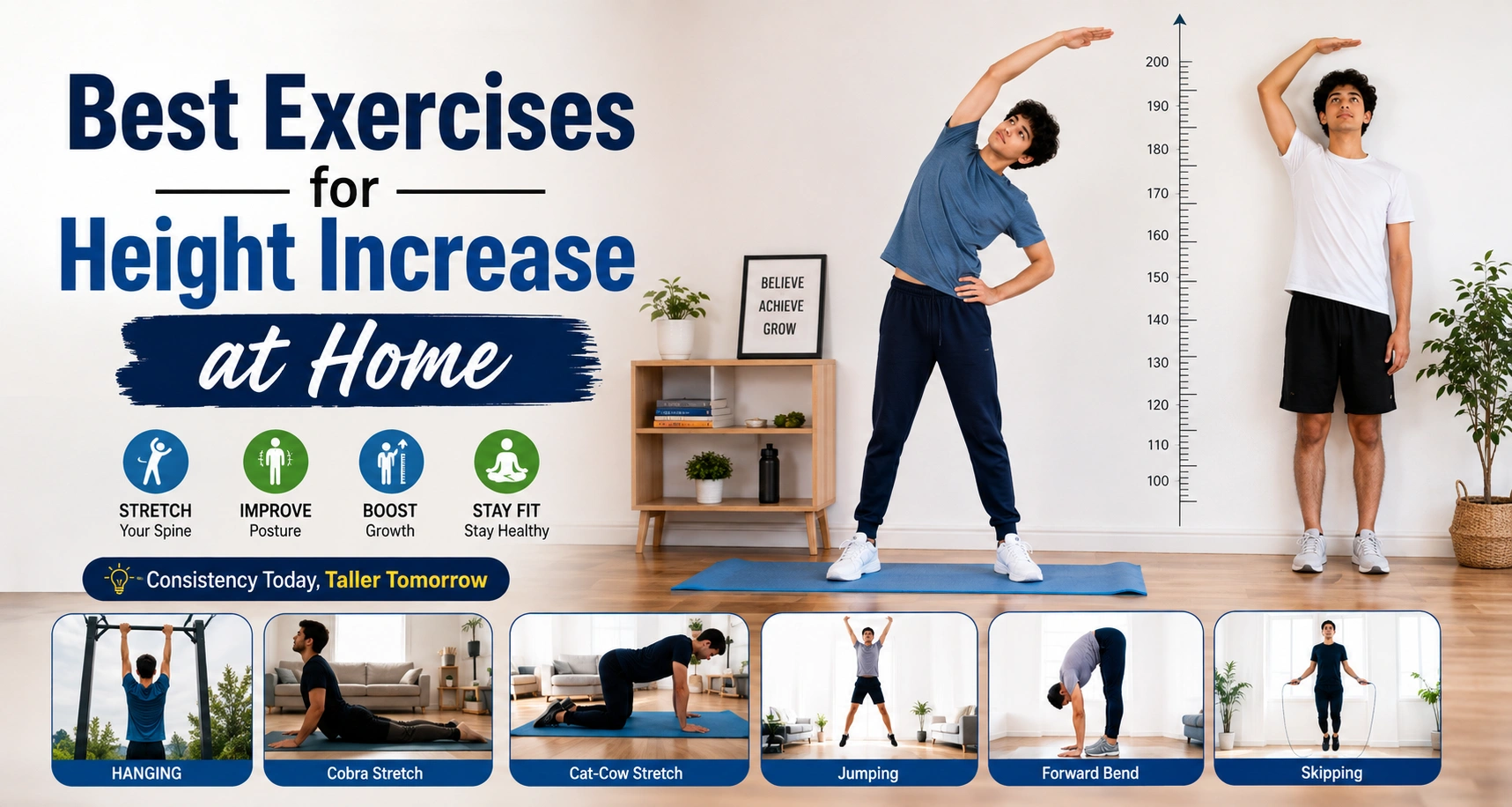
Ever stood in front of the mirror wishing you were just a couple of inches taller? You’re not alone. Height matters to a lot of people — for confidence, sports performance, or simply the way clothes fit. The good news is that you don’t need a gym membership or fancy equipment to work on this. With the right routine, the best exercises for height increase at home can help you stand taller, improve your posture, and support healthy bone and spinal development, especially if you’re still in your growing years.
This guide walks you through practical, easy-to-follow exercises you can do in your living room, along with the science behind why they work.
Can Exercise Really Increase Height?
Let’s be honest upfront: genetics play the biggest role in determining how tall you’ll be. Once your growth plates close (usually in the late teens to early twenties), no exercise can add inches to your skeleton.
That said, exercise still matters a lot, especially for:
- Teenagers and young adults whose growth plates are still open, where stretching and physical activity can support the body’s natural growth process.
- Anyone wanting better posture, since slouching can make you look shorter than you actually are.
- Spinal decompression, which can add a small, temporary boost by relieving compression built up from sitting or standing all day.
So while exercise won’t rewrite your genetic blueprint, it can help you reach your natural height potential and present yourself as taller and more confident.
Top Exercises for Height Increase at Home
Here are some simple, effective things you can do in your day to day training.
1. Hanging Exercises
Hanging from a bar is one of the most popular exercises associated with height growth, and for good reason. It stretches the spine and relieves pressure on the vertebral discs.
- Locate a firm horizontal bar (a pull up bar in your doorway is a good option).
- With arms fully-stacked, hang for 20-30 seconds.
- Repeat 3-4 times, resting between each repetition.
- Slowly build up hang time as you develop grip strength.
This move is gentle on the joints and can be done daily without much strain.
2. Cobra Stretch
The cobra stretch targets your lower back and helps improve spinal flexibility.
- Face down on a mat with palms flat under shoulders.
- Slowly lift your upper body up as you hold your hips on the floor.
- Hold for 15-20 seconds and then step down again.
- Repeat 8–10 times.
This is a classic yoga-inspired stretch that also helps with posture correction.
3. Cat-Cow Stretch
This gentle, flowing movement improves spinal mobility and reduces stiffness.
- Start on all fours, wrists under shoulders and knees under hips.
- Inhale, arch your back and lift your head (cow pose).
- Exhale, round your spine and tuck your chin (cat pose).
- Repeat for 10–15 slow cycles.
4. Pelvic Shift
The pelvic shift strengthens your lower back and core, both of which support good posture.
- Lie on your back with knees bent and feet flat on the floor.
- Push your pelvis upward, hold for 5 seconds, then relax.
- Repeat 15–20 times.
5. Forward Spine Stretch
This simple stretch loosens the hamstrings and spine together.
- Sitting with legs straight in front of you.
- With a straight back, bend forward to grasp the tips of your toes.
- Repeat between 3-5 times for 20-30 seconds.
6. Jump Rope
Skipping rope is a fun, cardio-friendly exercise that many trainers recommend for growing children and teens.
- Begin with 5-10 minutes a day.
- Fall on your backside to prevent knee stress.
- Slowly build up the length as you get stronger.
Jumping activities are believed to stimulate the growth plates in younger individuals through repeated, controlled impact.
7. Standing Wall Stretch
This exercise is great for posture and works well as a warm-up or cool-down.
- Stand with your back flat against a wall, heels a few inches away.
- Reach your arms overhead and stretch upward.
- Hold for 15–20 seconds, breathe deeply, and repeat.
Lifestyle Habits That Support Height and Posture
Exercise works best when paired with healthy daily habits:
- Sleep well — Growth hormone is released mainly during deep sleep, so aim for 7–9 hours (more for teens).
- Eat a balanced diet — Include calcium, protein, vitamin D, and zinc-rich foods to support bone health.
- Maintain good posture — Sit and stand tall throughout the day; slouching compresses your spine over time.
- Stay hydrated — Spinal discs need water to stay cushioned and healthy.
- Avoid smoking and excess caffeine — Both can interfere with bone density and growth hormone levels in younger people.
Tips for Best Results
- Be consistent — aim for at least 20–30 minutes of stretching and movement daily.
- Warm up before stretching to avoid injury.
- Combine hanging, stretching, and light cardio for a well-rounded routine.
- Track your posture and flexibility improvements over a few weeks rather than expecting overnight change.
- If you’re an adult past your growth years, focus on posture and spinal health benefits rather than expecting height gain.
Final Thoughts
While no home workout can override your genetic height potential, the best exercises for height increase at home — like hanging, cobra stretches, cat-cow poses, and jump rope — can help you look and feel taller by improving posture, spinal health, and flexibility. For teens and young adults still growing, combining these exercises with good sleep, nutrition, and hydration gives your body the best chance to reach its natural height potential.
Consistency is key. Stick with a simple daily routine, be patient, and enjoy the added benefits of better posture, stronger core muscles, and improved overall flexibility — regardless of how many inches you gain.
Frequently Asked Questions (FAQs)
Q.1 Can exercises actually increase height?
Exercises cannot significantly increase height after the growth plates have closed. However, they can improve posture and spinal alignment, helping you appear taller. For growing teenagers, regular exercise supports overall physical development, but height is still largely determined by genetics.
Q.2 At what age do these exercises work best?
These exercises are most effective during puberty and the teenage years when growth plates are still open. Adults can still benefit from improved posture and flexibility.
Q.3 How long does it take to see results from height exercises?
Posture improvements can appear within a few weeks of consistent practice, while any growth-related changes in teens take months of regular effort combined with good sleep and nutrition.
Q.4 Can hanging exercises really make you taller?
Hanging decompresses the spine and can add a small, temporary increase in height by relieving pressure on spinal discs, though this effect isn’t permanent for adults whose growth plates have closed.
Q.5 What foods help support height growth alongside exercise?
Foods rich in calcium, protein, vitamin D, and zinc — like dairy, eggs, leafy greens, and nuts — support bone health and work well alongside a regular stretching and exercise routine.