

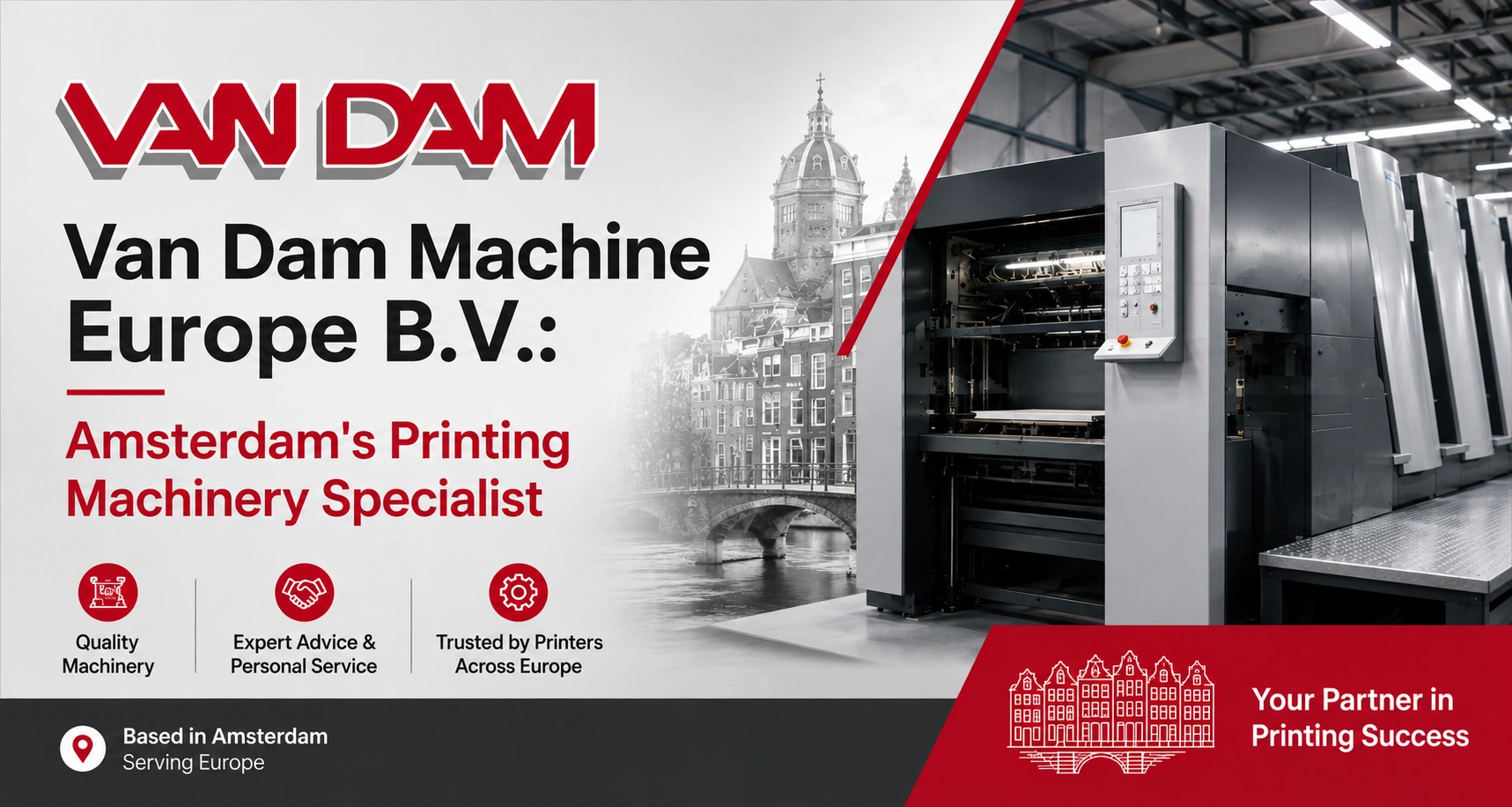
If you’ve ever picked up a yoghurt cup, a margarine tub, or a printed plastic tray and wondered how that crisp, colourful design got onto the packaging, there’s a good chance a machine built in Amsterdam had something to do with it. Van Dam Machine Europe B.V. has spent decades quietly shaping how rigid packaging gets its printed identity, and the company remains one of the more interesting names among machining manufacturers in Amsterdam, Netherlands.
This article walks through who Van Dam Machine is, what they build, why their technology matters to the packaging industry, and what sets them apart from other manufacturers in the Netherlands and beyond.
Who Is Van Dam Machine Europe B.V.?
Van Dam Machine was founded in 1962 in Amsterdam and has operated from Computerweg 21 in the city ever since. For over six decades, the company has focused on one core mission: building high-precision printing machines for rigid packaging.
In 2019, Van Dam Machine was acquired by Anders Invest, a Dutch investment group that supports established manufacturing businesses through ownership transitions while keeping operations and expertise rooted in the Netherlands. That continuity matters. It means the engineering knowledge built up over generations hasn’t been scattered — it’s been reinvested into the same Amsterdam facility.
Today, the company is known internationally simply as Van Dam Machine Europe B.V., exporting equipment to converters and packaging producers across Europe, the Americas, and beyond.
What Does Van Dam Machine Actually Build?
Unlike general-purpose machining manufacturers, Van Dam Machine specialises in a very specific niche: direct printing equipment for rigid packaging. Think plastic cups, tubs, trays, and similar containers used across the food, dairy, and consumer goods sectors.
Core Technologies
- Dry Offset Printing – A high-speed, precision printing method that transfers ink directly onto rigid packaging surfaces without the need for a wet fountain solution, resulting in sharp, consistent graphics run after run.
- Flexo Direct on Rigid (FDoR®) – A proprietary technology developed by Van Dam Machine that blends the speed of dry offset with the print quality and flexibility of flexographic printing. This hybrid approach gives packaging producers sharper colour reproduction and more design freedom without slowing down production lines.
These aren’t small engineering feats. Printing directly onto curved, rigid plastic surfaces at industrial speeds requires extremely tight tolerances — which is exactly where machining precision and mechanical engineering come together.
Why Machining Precision Matters in Printing Equipment
It’s easy to think of “printing machines” as purely graphic or ink-related equipment, but the reality is far more mechanical. Every Van Dam Machine press relies on:
- Precisely machined rollers and cylinders that must rotate in perfect synchronisation
- Tight tolerances to keep ink registration accurate across thousands of packaging units per hour
- Durable components built to withstand continuous, high-speed industrial use
- Custom tooling adapted to different cup, tub, and tray shapes and sizes
This is why Van Dam Machine sits at the intersection of two industries: precision machining and packaging print technology. It’s also why the company is frequently mentioned alongside other machining manufacturers in Amsterdam, Netherlands, even though its end product is a printing press rather than a standalone machined part.
Who Uses Van Dam Machine Equipment?
Van Dam Machine’s customer base is concentrated among rigid packaging converters — the companies that manufacture cups, tubs, and trays for brands in:
- Food and dairy packaging (yoghurt cups, margarine tubs, ice cream containers)
- Consumer goods packaging requiring durable, printed plastic containers
- Industrial and specialty packaging applications where consistent branding across large volumes is essential
Because packaging brands increasingly demand shorter runs, faster changeovers, and sustainable production methods, equipment like Van Dam Machine’s FDoR presses has become more relevant, not less, in recent years.
Sustainability and Efficiency in Focus
Modern packaging producers face growing pressure to reduce waste, cut energy use, and support recyclable materials. Van Dam Machine’s approach to dry offset and FDoR printing supports this shift in a few practical ways:
- Fewer materials in the printing process compared to some wet printing methods
- High-speed production that reduces energy use per unit printed
- Consistent quality that minimises misprints and material waste
For packaging companies trying to balance sustainability goals with production output, these efficiency gains are a genuine competitive advantage.
Van Dam Machine’s Place Among Dutch Manufacturers
The Netherlands has a long-standing reputation for precision engineering and export-driven manufacturing, and Amsterdam in particular hosts a cluster of specialised machinery producers. Van Dam Machine fits squarely into this tradition.
What distinguishes the company isn’t scale — it’s specialisation. Rather than trying to serve every corner of the packaging or machining industry, Van Dam Machine has spent over sixty years refining one specific capability: printing directly onto rigid plastic packaging with speed and precision. That kind of focused expertise is hard to replicate quickly, which is part of why the company continues to be referenced when people search for reliable machining manufacturers in Amsterdam, Netherlands.
Also Read: The Complete Business, Money & Career Guide (2026)
Frequently Asked Questions
1. What does Van Dam Machine Europe B.V. manufacture?
Van Dam Machine manufactures dry offset and FDoR (Flexo Direct on Rigid) printing presses used to print directly onto rigid plastic packaging such as cups, tubs, and trays.
2. Where is Van Dam Machine Europe B.V. located?
The company is headquartered at Computerweg 21, Amsterdam, in the Netherlands, and has operated from this location for decades.
3. When was Van Dam Machine founded?
Van Dam Machine was founded in 1962, making it one of the more established names in rigid packaging printing technology.
4. Who owns Van Dam Machine today?
Van Dam Machine was acquired by Anders Invest, a Dutch investment firm, in 2019, ensuring continued Dutch ownership and operational continuity.
5. What industries rely on Van Dam Machine’s technology?
The food, dairy, and consumer packaging industries are the primary users of Van Dam Machine’s printing equipment, particularly for cup, tub, and tray production.
Final Thoughts
Van Dam Machine Europe BV. is a strong example of how deep specialisation, rather than broad diversification, can keep a manufacturer relevant for over sixty years. By focusing on the demanding technical challenge of printing directly onto rigid packaging, the Amsterdam-based company has built a reputation that extends well beyond the Netherlands.
Whether you’re researching machining manufacturers in Amsterdam, Netherlands, or simply curious about the engineering behind the packaging on your kitchen shelf, Van Dam Machine’s story is a reminder that some of the most impactful manufacturing happens quietly, one precisely machined roller at a time.