

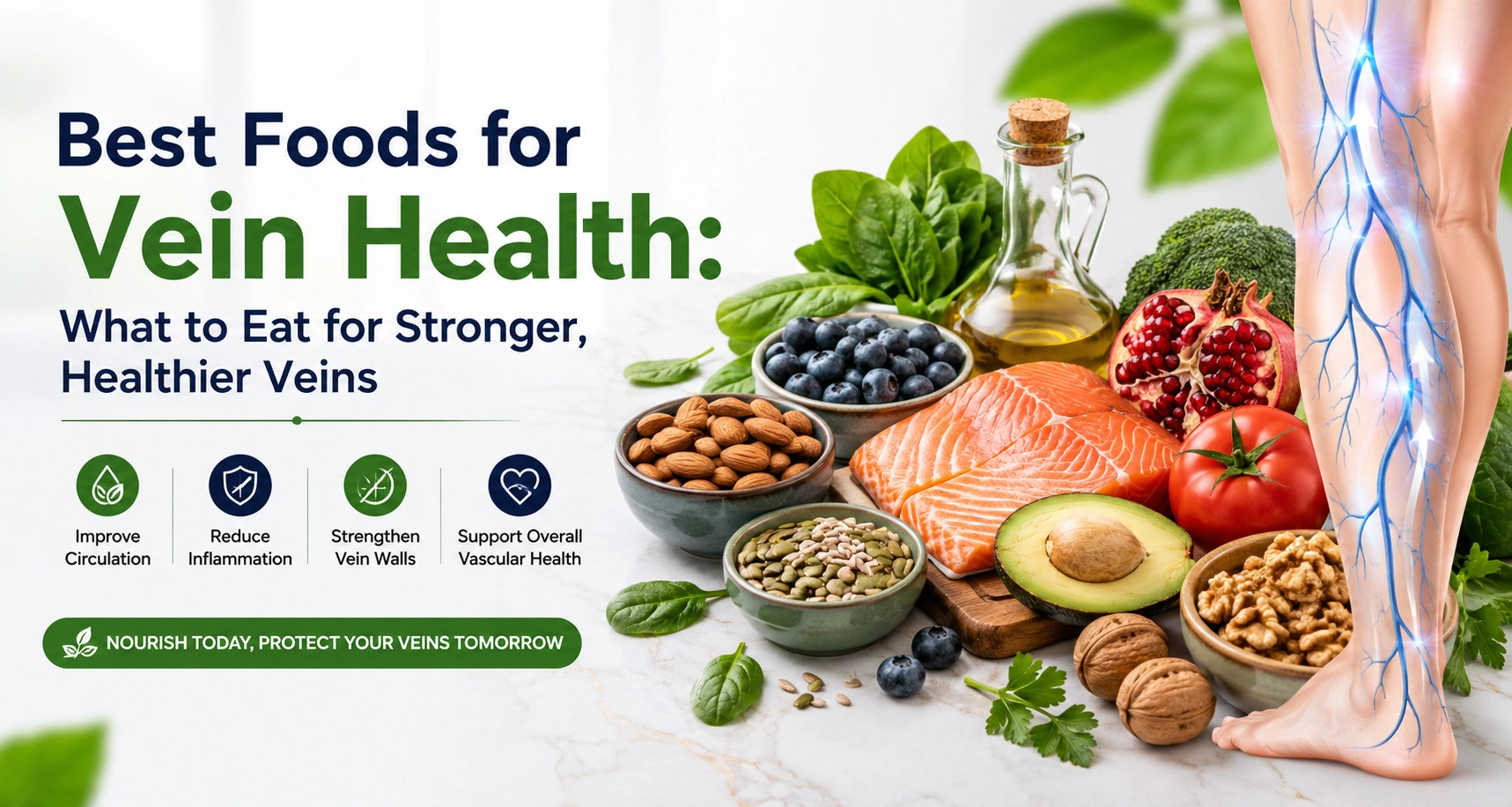
Have you ever noticed tired, heavy legs by the end of the day? Or maybe you’ve spotted a few spider veins creeping across your calves and wondered if there’s anything you can actually do about it besides compression socks and expensive creams. Here’s some good news: what’s on your plate might matter just as much as what’s in your medicine cabinet.
Vein health rarely gets the attention it deserves. We talk endlessly about heart health, gut health, and brain health, but the veins quietly working to pump blood back up to your heart against gravity often get overlooked — until they start causing problems like varicose veins, swelling, or that achy, heavy feeling after a long day on your feet.
The truth is, your diet plays a real role in keeping your circulatory system strong. Certain nutrients help strengthen vein walls, improve blood flow, reduce inflammation, and even prevent blood clots. In this guide, we’ll walk through the best foods for vein health, explain why they work, and show you how to build them into your everyday meals.
Why Vein Health Matters More Than You Think
Veins are responsible for carrying deoxygenated blood back to your heart. Unlike arteries, which get a strong pump from the heart itself, veins rely on tiny one-way valves and the natural squeezing action of your muscles to keep blood moving upward.
Over time, these valves can weaken. When that happens, blood starts to pool in the lower legs, leading to conditions such as:
- Varicose veins
- Spider veins
- Chronic venous insufficiency
- Leg swelling and heaviness
- Increased risk of blood clots
Genetics, age, prolonged sitting or standing, pregnancy, and obesity all play a part. But poor diet — particularly one low in fiber, antioxidants, and key vitamins — can make things worse. That’s exactly why focusing on the best foods for vein health is such a practical, low-effort way to support your circulation long term.
The Best Foods for Vein Health
Let’s get into the specifics. These food groups are backed by nutritional science for their role in supporting blood vessel strength, reducing inflammation, and improving circulation.
1. Citrus Fruits
Oranges, lemons, grapefruits, and limes are loaded with vitamin C and flavonoids called citrus bioflavonoids. These compounds help the body produce collagen, a protein that keeps vein walls firm and elastic. Weak collagen production is one of the reasons veins lose their structure over time.
Citrus fruits also contain a flavonoid called diosmin, which has been studied for its ability to reduce venous swelling and discomfort.
Easy way to add it: Start your morning with a glass of fresh orange juice or add lemon slices to your water throughout the day.
2. Berries
Blueberries, blackberries, raspberries, and strawberries are among the richest sources of anthocyanins — powerful antioxidants that give berries their deep color. Anthocyanins help strengthen capillary walls and reduce oxidative stress on blood vessels.
Berries are also naturally high in fiber, which supports healthy digestion and helps prevent the straining associated with constipation, a factor that can increase pressure in leg veins.
Easy way to add it: Toss a handful into your morning oatmeal, yogurt, or smoothie.
3. Leafy Greens
Spinach, kale, and Swiss chard are packed with vitamin K, which plays a crucial role in blood clotting regulation and vascular health. These greens are also rich in nitrates, compounds that help relax blood vessels and improve blood flow.
Easy way to add it: Add a big handful of spinach to soups, pastas, or a simple sautéed side dish with garlic and olive oil.
4. Beets
Beets are one of the most underrated vegetables when it comes to circulation. They’re naturally high in nitrates, which the body converts into nitric oxide — a molecule that helps widen blood vessels and improve blood flow efficiency.
Easy way to add it: Roast beets with olive oil, or blend them into a smoothie for a naturally sweet, earthy flavor.
5. Nuts and Seeds
Almonds, walnuts, chia seeds, and flaxseeds are excellent sources of vitamin E and omega-3 fatty acids. Vitamin E helps prevent blood platelets from clumping together excessively, which supports healthy circulation, while omega-3s help reduce inflammation throughout the vascular system.
Easy way to add it: Sprinkle chia or flaxseeds on cereal, or keep a small handful of raw almonds as a snack.
6. Whole Grains
Foods like oats, brown rice, and quinoa are rich in fiber, which helps regulate healthy digestion and reduces bloating and pressure in the abdominal area — pressure that can restrict blood flow back from the legs.
Whole grains also help manage cholesterol and blood sugar levels, both of which are connected to overall vascular health.
Easy way to add it: Swap white rice or refined pasta for oats, quinoa, or brown rice a few times a week.
7. Garlic and Onions
These two kitchen staples contain sulfur compounds that help thin the blood naturally, reduce inflammation, and support healthy circulation. Garlic in particular has been linked to reduced blood pressure and improved arterial and venous flexibility.
Easy way to add it: Use fresh garlic and onions as a base for soups, stir-fries, and sauces instead of relying on powdered versions.
8. Fatty Fish
Salmon, mackerel, and sardines are rich sources of omega-3 fatty acids, which help reduce inflammation and improve blood flow. Omega-3s also help lower triglyceride levels, supporting overall cardiovascular and venous health.
Easy way to add it: Aim for two servings of fatty fish per week, grilled or baked with herbs and lemon.
9. Dark Chocolate
Good news for chocolate lovers — dark chocolate (70% cacao or higher) contains flavonoids that support healthy blood flow and may help relax blood vessel walls.
Easy way to add it: Enjoy a small square after dinner as a heart-and-vein-friendly treat, in moderation.
10. Water-Rich Foods
Cucumbers, watermelon, and celery help keep the body hydrated, which is essential for maintaining proper blood volume and viscosity. Dehydration can make blood thicker and harder to circulate efficiently.
Easy way to add it: Add cucumber or watermelon to salads, or snack on celery sticks with hummus.
Foods to Limit for Better Vein Health
While loading up on the best foods for vein health is important, it also helps to be mindful of what to cut back on:
- Excess salt — contributes to water retention and swelling
- Refined sugar — linked to inflammation and weight gain, which adds pressure on veins
- Processed foods — often high in sodium and unhealthy fats
- Alcohol — can cause blood vessels to dilate and worsen swelling
- Fried and fatty foods — contribute to poor circulation and weight gain over time
Simple Lifestyle Habits to Pair With a Vein-Healthy Diet
Diet is powerful, but it works best alongside a few simple habits:
- Move your legs regularly, especially if you sit or stand for long periods
- Elevate your legs when resting to encourage blood flow back to the heart
- Stay hydrated throughout the day
- Maintain a healthy weight to reduce pressure on leg veins
- Wear compression stockings if recommended by your doctor
Building a Vein-Friendly Meal Plan
Here’s a simple example of how a day of eating might look if you’re focusing on vein health:
- Breakfast: Oatmeal topped with blueberries, walnuts, and a drizzle of honey
- Lunch: Spinach salad with grilled salmon, beets, and citrus vinaigrette
- Snack: Apple slices with almond butter
- Dinner: Quinoa bowl with roasted vegetables, garlic, and olive oil
- Dessert: A small square of dark chocolate
This kind of balanced approach gives your body consistent access to the nutrients that support strong, flexible, and healthy veins.
Frequently Asked Questions
1. Can diet alone reverse varicose veins?
Diet cannot fully reverse varicose veins once they’ve developed, but eating the best foods for vein health can reduce symptoms like swelling and discomfort, and may slow further progression. For visible or painful varicose veins, it’s worth speaking with a vein specialist about additional treatment options.
2. What vitamin is most important for vein health?
Vitamin C is especially important because it supports collagen production, which keeps vein walls strong and elastic. Vitamin E and vitamin K are also valuable for circulation and healthy blood clotting.
3. Does drinking water really help with circulation?
Yes. Staying hydrated helps keep blood at a healthy viscosity, making it easier for your heart and veins to circulate it efficiently. Dehydration can thicken the blood and slow circulation.
4. Are there foods that make vein problems worse?
Foods high in sodium, refined sugar, and unhealthy fats can contribute to inflammation, water retention, and weight gain, all of which put extra strain on your veins.
5. How long does it take to notice a difference from dietary changes?
Many people notice reduced swelling and lighter-feeling legs within a few weeks of consistent dietary changes, though individual results vary depending on overall health and lifestyle habits.
Final Thoughts
Healthy veins don’t require anything extreme — just consistent, mindful choices. Adding citrus fruits, berries, leafy greens, beets, nuts, whole grains, and fatty fish to your regular diet can genuinely support stronger circulation and reduce the discomfort that comes with poor vein health.
Pair these best foods for vein health with simple habits like staying active, keeping hydrated, and managing your weight, and you’ll be giving your veins the support they need to keep working efficiently for years to come. Small changes at mealtime really can add up to noticeably lighter, healthier-feeling legs.