

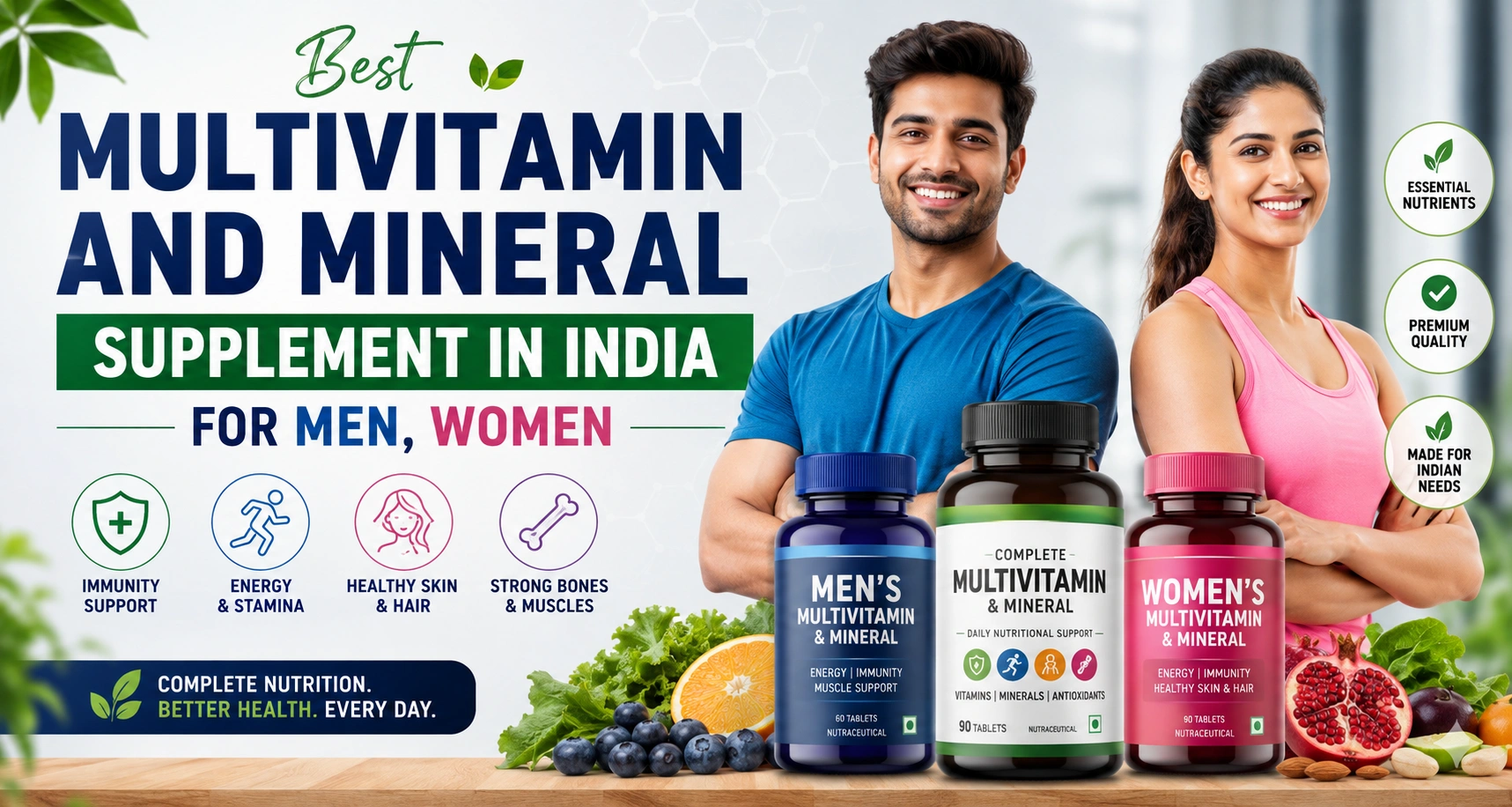
Walk into any pharmacy in India today and you’ll be greeted by a wall of colourful bottles, each one promising more energy, stronger immunity, thicker hair, or better focus. It’s overwhelming, and honestly, a little confusing. If you’ve ever stood there wondering which one to pick, you’re not alone.
The truth is, there’s no single “best multivitamin and mineral supplement in India” that works for everyone. Your body’s needs depend on your age, gender, diet, lifestyle, and even where you live. What works brilliantly for a 25-year-old gym-goer in Bengaluru might not suit a 45-year-old office worker in Delhi with a desk job and irregular meals.
This guide isn’t here to push you toward one bottle. Instead, it’ll help you understand what a good multivitamin should actually contain, why Indians in particular tend to fall short on certain nutrients, and how to pick a supplement that genuinely fits your life.
Why Do Indians Need Multivitamin Supplements?
Our diets have changed a lot over the last couple of decades. Busy schedules, processed foods, skipped meals, and even soil depletion have made it harder to get all our nutrients from food alone.
Several nutrition surveys have pointed out that a large chunk of the Indian population is deficient in:
- Vitamin D – thanks to indoor lifestyles and limited sun exposure, despite living in a tropical country
- Vitamin B12 – especially common among vegetarians and vegans
- Iron – a widespread concern, particularly among women
- Calcium – often lacking in urban diets low on dairy and leafy greens
- Zinc and Magnesium – frequently overlooked but essential for immunity and muscle function
This is exactly why the demand for a reliable multivitamin and mineral supplement in India has grown so much in recent years. It’s not about replacing food — it’s about filling the gaps that a typical modern diet leaves behind.
What Makes a Multivitamin “The Best” for You?
Before you pick up any bottle, it helps to know what actually separates a good supplement from an average one.
1. A Complete, Balanced Nutrient Profile
A quality multivitamin should ideally cover all major vitamins (A, B-complex, C, D, E, K) along with essential minerals like calcium, magnesium, zinc, iron, and iodine. Avoid products that focus heavily on just one or two nutrients while calling themselves “complete.”
2. Dosages That Match Indian Dietary Reference Intakes
Not every supplement is formulated with Indian nutritional guidelines in mind. Some imported products are designed around Western dietary standards, which may not align with what’s recommended for Indian body types and typical diets. Look for supplements formulated or adjusted for the Indian population.
3. Bioavailability of Ingredients
This is something most people overlook. It’s not just about what’s in the tablet — it’s about how well your body can absorb it. For instance:
- Chelated minerals (like iron bisglycinate or magnesium glycinate) are absorbed better than cheaper inorganic forms
- Methylcobalamin is a more bioavailable form of B12 compared to cyanocobalamin
- Vitamin D3 is generally preferred over D2 for better absorption
4. Third-Party Testing and Certifications
Look for supplements that carry certifications like FSSAI approval, GMP compliance, or third-party lab testing. This adds a layer of trust that the product actually contains what it claims — no more, no less.
5. Minimal Fillers and Additives
Some budget multivitamins load up on unnecessary binders, artificial colours, and preservatives. A cleaner formulation, even if slightly pricier, is usually a better long-term investment for your health.
Types of Multivitamins Available in India
Not all multivitamins are built the same. Depending on your needs, you’ll find different categories in the market.
General Wellness Multivitamins
These are designed for everyday adults who eat a reasonably balanced diet but want extra insurance against minor nutrient gaps.
Gender-Specific Formulas
Many brands now offer multivitamins tailored separately for men and women, since nutrient needs differ. Women, for example, often require more iron and folic acid, while men’s formulas may focus more on zinc and B-vitamins for energy metabolism.
Age-Specific Supplements
- For young adults (20s–30s): Focus on energy, skin, and immunity
- For adults over 40: Emphasis shifts toward bone health, heart support, and cognitive function
- For seniors: Formulas often include added calcium, vitamin D, and B12 due to slower absorption with age
Vegetarian and Vegan-Friendly Options
Since a large part of India follows a vegetarian diet, many supplements are now formulated without gelatin capsules and with plant-based nutrient sources — something worth checking on the label if this matters to you.
Sports and Fitness Multivitamins
These often come with added electrolytes, higher B-vitamin content, and antioxidants to support recovery and performance for people with active lifestyles.
How to Choose the Right Multivitamin for Your Needs
Instead of chasing the “best-selling” tag, ask yourself these practical questions before buying:
- What does my diet actually lack? If you eat little dairy, you likely need more calcium and vitamin D. If you’re vegetarian, B12 should be a priority.
- Do I have any specific health goals? Better sleep, stronger immunity, hair fall control, or more energy — different formulas cater to different priorities.
- Do I take any medicines? Some vitamins and minerals may interact with certain medicines, so it’s best to consult a doctor before using them.
- What’s my budget for consistency? A supplement only works if you take it regularly. Choose something you can comfortably continue for months, not just weeks.
Common Mistakes People Make While Choosing Multivitamins
- Choosing based on advertisements alone, without checking the actual nutrient breakdown
- Assuming “natural” or “herbal” always means better absorption
- Taking multivitamins as a substitute for meals, rather than a supplement to a balanced diet
- Ignoring the dosage form — tablets, capsules, and effervescent powders all have different absorption rates
- Not consulting a doctor, especially for pregnant women, people with existing health conditions, or those on regular medication
Do You Really Need a Multivitamin?
Frankly, if you follow a really diverse and a balanced diet and you have lots of fruits, vegetables, whole grains, dairy and protein, you may not even need a daily multivitamin supplement. A supplement is intended to complement a good diet rather than take the place of it.
That said, for most working professionals, students, and people juggling busy, irregular routines, a well-chosen multivitamin and mineral supplement can act as a reasonable safety net — especially for nutrients like vitamin D and B12, which are genuinely hard to get enough of through Indian diets and lifestyles alone.
Final Thoughts
There’s no universal “best multivitamin and mineral supplement in India” that suits everyone equally. The right choice depends on your diet, age, gender, health goals, and lifestyle. Rather than picking whatever’s trending or most heavily advertised, take a moment to read the label, understand what your body actually needs, and ideally, have a quick conversation with a doctor or nutritionist before starting.
A good multivitamin isn’t a magic fix — but paired with a reasonably healthy diet and lifestyle, it can genuinely help you feel more energetic, focused, and resilient through your daily routine.
Also Read:- Top 10 Pre Workout Supplements in India For Beginners
Frequently Asked Questions (FAQs)
Q.1 What is the best time to take a multivitamin supplement?
Most multivitamins are best taken with a meal, preferably breakfast or lunch, since some vitamins (like A, D, E, and K) are fat-soluble and absorb better with food containing some fat.
Q.2 Are there any side effects of taking a multivitamin daily?
Multivitamins in recommended dosage levels are safe for most healthy adults. However, over consumption of some vitamins and minerals can lead to problems in the long-term, particularly fat soluble vitamins, so it is advisable to only take the recommended dose and seek advice from a doctor if in any doubt.
Q.3 Are Indian-made multivitamins as effective as imported brands?
Yes, many Indian-manufactured multivitamins are formulated specifically to address nutrient gaps common in Indian diets, and several are FSSAI-approved and follow good manufacturing practices, making them just as reliable as imported options.
Q.4 Do vegetarians need a different type of multivitamin?
Vegetarians, especially those who avoid dairy and eggs too, often need extra attention to vitamin B12, iron, and omega-3 levels, so choosing a formula designed with these priorities in mind is a good idea.
Q.5 Can multivitamins help with hair fall and skin issues?
Deficiencies in biotin, zinc, iron, and vitamin D can contribute to hair fall and dull skin. A well-formulated multivitamin addressing these specific nutrients may help, though results vary and consistent use over a few months is usually needed to see a visible difference.