

Picture this: you’ve just landed in Tokyo, you’re exhausted from the flight, and all you want is an ice-cold beer at a konbini before checking into your hotel. Simple enough, right? Not so fast. Before you grab that can, it’s worth understanding the legal drinking age in Japan for foreigners — because assuming your home country’s rules apply here can land you in an awkward, or even costly, situation.
Whether you’re a tourist, exchange student, or newly arrived expat, this guide breaks down everything you need to know about drinking laws in Japan, how they apply to non-citizens, and practical tips to avoid confusion during your stay.
What Is the Legal Drinking Age in Japan?
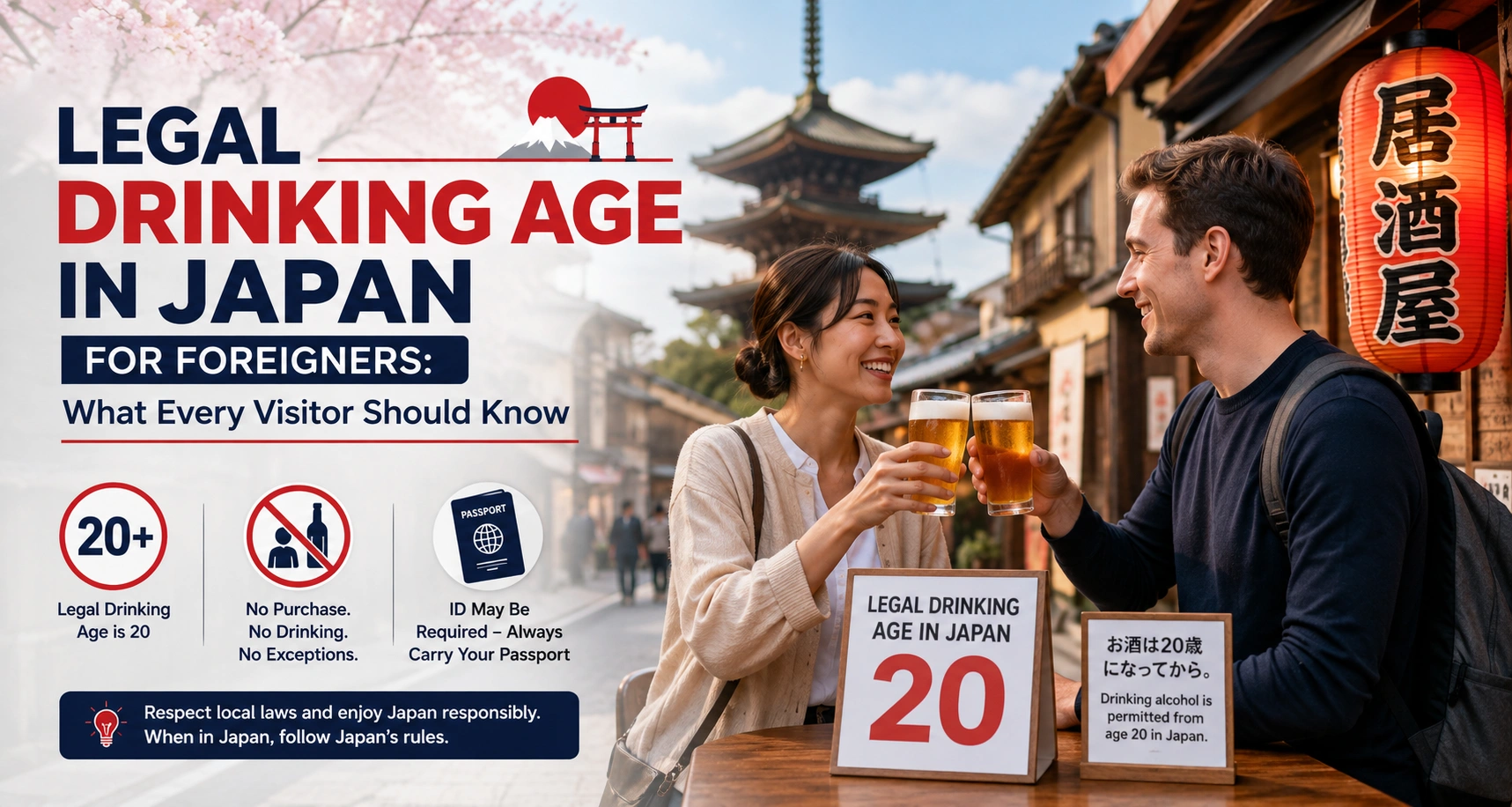
In Japan, the age of drinking is set at 20. It is for the buying and drinking of alcoholic drinks, such as beer, sake, wine, whisky and ready-to-drink beverages like chuhai.
Importantly, this law applies equally to:
- Japanese citizens
- Foreign residents and expats
- International students
- Tourists visiting for even a short trip
In other words, there’s no special exemption for foreigners simply because their home country allows drinking at a younger age.
Why 18-Year-Olds Still Can’t Legally Drink in Japan
Here’s where a lot of confusion comes in. In April 2022, Japan lowered its legal age of adulthood from 20 to 18 under a revised Civil Code. This change allowed 18-year-olds to sign contracts, get married without parental consent, and take on other adult responsibilities.
However, alcohol (and tobacco) were deliberately left out of this change. Drinking remains governed by a separate law — often referred to as the Minor Drinking Prohibition Act — which keeps the minimum drinking age firmly at 20, regardless of general adulthood status.
So even though an 18-year-old is legally considered an adult in most respects, they still cannot legally purchase or consume alcohol in Japan.
Does the Legal Drinking Age Apply to Tourists Too?
Yes. This is one of the most important points for visitors to understand. The legal drinking age in Japan for foreigners is not different from the rule for locals — it applies uniformly, regardless of nationality or how old you’re allowed to drink back home.
If you’re 18 or 19 and visiting from a country where drinking is legal at that age, Japanese law still applies while you’re within its borders. There are no exceptions for short-term tourists, working holiday visa holders, or exchange students.
How Age Verification Works in Japan
Unlike some countries where ID checks can feel inconsistent, Japan has become increasingly strict and systematic about verifying age, especially in recent years.
- Convenience stores (konbini) often require age confirmation via a touchscreen prompt or ID scan, particularly if the buyer appears young.
- Bars and restaurants may ask for identification, especially in areas frequented by tourists and students.
- Vending machines selling alcohol have become less common but may include age-verification technology where present.
If you’re a foreigner who looks younger than 20 — or even in your mid-20s in some cases — carrying identification such as your passport or residence card is a smart habit.
What Counts as Valid ID for Age Verification?
For foreigners, acceptable identification typically includes:
- A valid passport
- A residence card (if you’re living in Japan long-term)
- A driver’s license issued in Japan
It’s generally recommended to carry your passport (or a clear copy) when going out, especially during your first few visits to bars, izakayas, or convenience stores, until staff become familiar with your face.
Penalties for Underage Drinking in Japan
Japan treats underage drinking violations seriously, though enforcement tends to focus more on businesses than on individual minors.
- Businesses that knowingly sell alcohol to someone under 20 can face fines and potential business license consequences.
- Minors caught drinking may have the alcohol confiscated, and in some cases, parents or guardians (or in the case of students, their school or program) may be notified.
- Foreigners specifically risk additional complications, including potential visa issues or difficulties with immigration authorities if violations are serious or repeated.
While Japan generally isn’t looking to aggressively punish tourists for isolated mistakes, deliberately ignoring the law can create unnecessary problems during your trip or stay.
Public Drinking Rules for Adults
For those 20 and older, Japan is relatively relaxed compared to many Western countries when it comes to public drinking.
- Drinking in public spaces like parks, during hanami (cherry blossom viewing), or at festivals is generally accepted.
- Convenience stores and vending machines make purchasing alcohol simple and widely accessible.
- There are typically no nationwide restrictions on sale hours, meaning alcohol is often available late into the night.
That said, being respectful of public behavior expectations — avoiding rowdiness, excessive noise, or disruptive conduct — remains an important part of Japanese social etiquette, even where public drinking itself is legal.
Drinking and Driving: A Completely Separate, Stricter Issue
While the drinking age itself sits at 20, Japan’s drink-driving laws are exceptionally strict and apply regardless of age or nationality.
- The legal blood-alcohol limit is just 0.03%, among the lowest thresholds globally.
- The consequences can be severe, such as license suspension, heavy penalties and, in some instances, imprisonment.
- Notably, passengers who knowingly allow an intoxicated person to drive can also face legal consequences.
For foreigners planning to rent a car or drive during their stay, it’s essential to treat this rule as close to zero-tolerance, regardless of how much (or little) you’ve had to drink.
Common Misconceptions Foreigners Have About Drinking in Japan
“My home country allows drinking at 18, so it should be fine here.”
Incorrect. Japanese law applies uniformly to everyone physically present in the country, regardless of home-country rules.
“Since Japan lowered the adulthood age to 18, drinking should be legal too.”
Also incorrect. The 2022 adulthood law change specifically excluded alcohol and tobacco, keeping the drinking age at 20.
“Vending machines mean there’s no real enforcement.”
While alcohol vending machines exist, many now include age-verification systems, and relying on lax enforcement is risky rather than a safe assumption.
“Tourists won’t really face consequences.”
While enforcement may sometimes feel more lenient toward tourists making an honest mistake, repeated or serious violations can still lead to real legal and immigration-related consequences.
Practical Tips for Foreigners Navigating Japan’s Drinking Laws
- Always carry ID — especially your passport or residence card — when going out, particularly if you appear younger than 20.
- Don’t assume convenience store rules are casual — many now use digital age-verification systems.
- Avoid ordering alcohol for anyone under 20, even casually among friends, as this can create liability for both parties.
- Plan transportation in advance if you plan to drink, given Japan’s strict drink-driving laws.
- Respect public etiquette, even where public drinking is legal, to avoid unwanted attention or complaints.
Conclusion
Understanding the legal drinking age in Japan for foreigners isn’t just about avoiding fines — it’s about respecting the culture and legal framework of the country you’re visiting or living in. The rule is simple: you must be 20 years old to purchase or consume alcohol, regardless of your nationality, home-country laws, or Japan’s own lowered adulthood age of 18.
By carrying proper identification, understanding public drinking norms, and respecting Japan’s notably strict drink-driving laws, foreigners can enjoy the country’s vibrant nightlife, izakaya culture, and seasonal drinking traditions without unnecessary legal risk. When in doubt, remember: in Japan, the local law always takes priority over what you’re used to back home.
Also Read:- Best Detox Drinks at Home India: 10 Easy Homemade Recipes That Actually Work
Frequently Asked Questions (FAQs)
Q.1 What is the legal drinking age in Japan for foreigners?
The legal drinking age in Japan for foreigners is 20 years old, the same as it is for Japanese citizens. This applies to all visitors, students, and residents, regardless of the drinking age in their home country.
Q.2 Can an 18-year-old drink alcohol in Japan since the adulthood age was lowered to 18?
No. Although Japan lowered its general age of adulthood to 18 in 2022, alcohol and tobacco laws were kept separate, and the legal drinking age remains 20 nationwide.
Q.3 Do tourists need ID to buy alcohol in Japan?
Yes, tourists may be asked to show identification such as a passport, especially if they appear younger than 20. Many convenience stores now use digital age-verification systems for alcohol purchases.
Q.4 What happens if a foreigner is caught drinking underage in Japan?
Underage foreigners caught drinking may have their alcohol confiscated, and in serious or repeated cases, it could lead to complications with immigration authorities or visa status.
Q.5 Is public drinking legal in Japan for those over 20?
Yes, public drinking is generally allowed for adults over 20 in places like parks and during festivals, though respectful public behavior is still expected under Japanese social etiquette.