

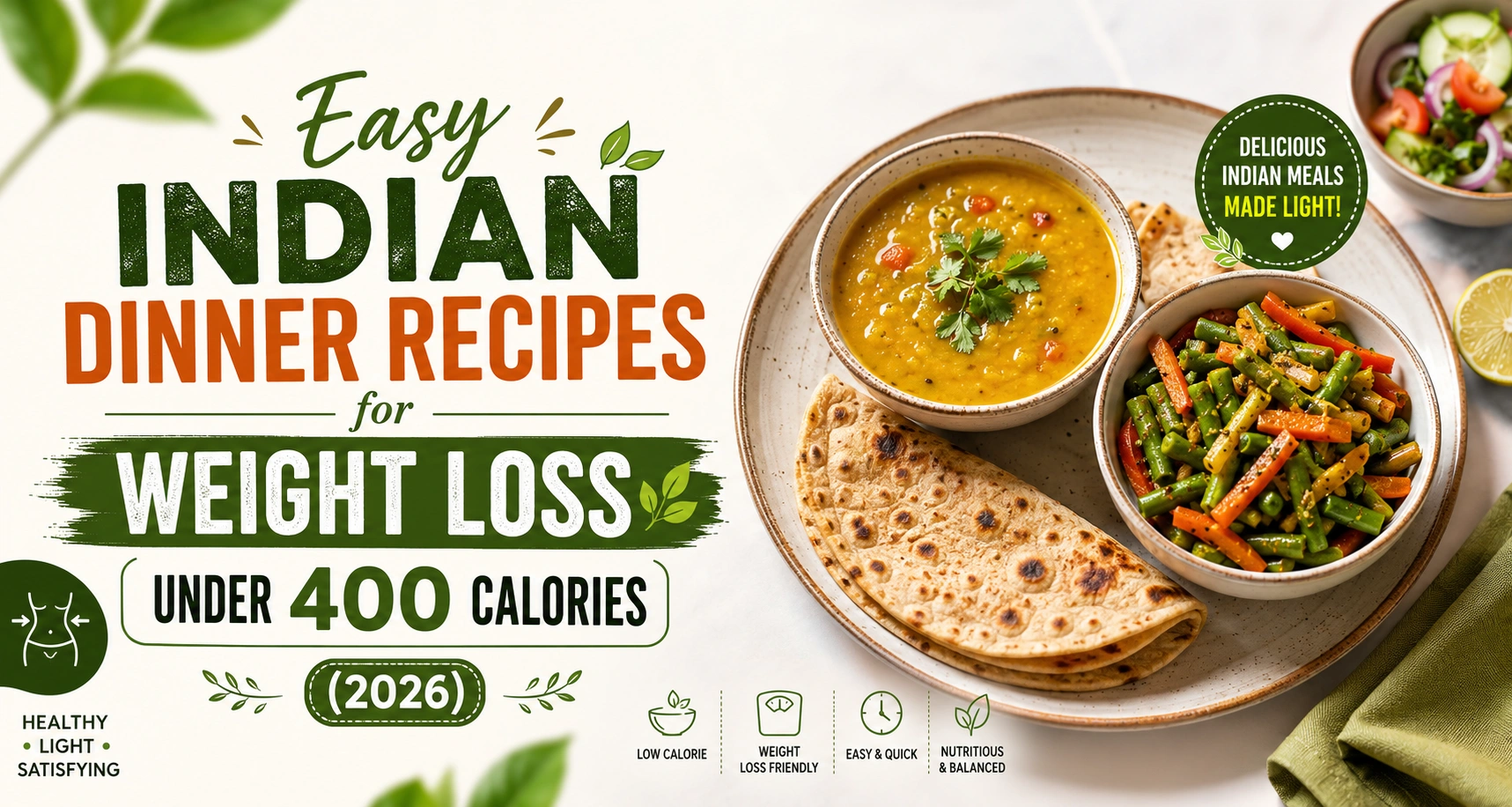
Losing weight doesn’t mean giving up dal, roti, or a proper curry. The traditional Indian plate — lentils, vegetables, modest portions of grain — was designed around balance long before “calorie deficit” became a fitness buzzword. The problem for most people isn’t Indian food itself; it’s the extra ghee, the second and third roti, and the heavy cream in restaurant-style gravies.
Quick answer: Some easy Indian dinner recipes for weight loss under 400 calories include moong dal soup (~150 kcal), palak paneer with one roti (~320 kcal), grilled tandoori chicken with salad (~280 kcal), and vegetable khichdi (~350 kcal). All rely on the same principles: lean protein, generous vegetables, minimal oil, and portion-controlled grains.
Why Dinner Matters Most for Weight Loss
Of the three main meals, dinner tends to have the biggest impact on weight management — mainly because activity levels drop in the evening, so a heavy, late meal is more likely to be stored than burned off. A few practical guidelines make the biggest difference:
- Keep dinner lighter than lunch. Your metabolism and activity are generally higher earlier in the day.
- Eat dinner 2–3 hours before bed rather than right before sleeping.
- Prioritize protein and vegetables first, then fill the remaining space with grain — not the other way around.
- Watch oil, not spice. Spices add flavor with virtually no calories; oil and ghee are where calories quietly add up.
None of these recipes require giving up flavor. They just shift the ingredient ratios — more dal and vegetables, less oil and refined flour.
8 Easy Indian Dinner Recipes for Weight Loss (Under 400 Calories)
| Recipe | Approx. Calories | Protein | Best For |
|---|---|---|---|
| Moong dal soup | ~150 kcal | High | Light, easy-to-digest dinners |
| Palak paneer + 1 roti | ~320 kcal | High | Vegetarian, iron + protein |
| Tandoori chicken + salad | ~280 kcal | Very high | Non-veg, high protein/low carb |
| Vegetable khichdi | ~350 kcal | Moderate | Comfort food, easy digestion |
| Rajma with ½ cup brown rice | ~380 kcal | High | Filling, fiber-rich |
| Egg bhurji + salad | ~250 kcal | High | Quick, 15-minute dinner |
| Lauki chana dal + 1 roti | ~300 kcal | Moderate | Budget-friendly, high fiber |
| Grilled paneer + stir-fried veg | ~310 kcal | High | Low-carb, high-protein |
Calorie counts are approximate and depend on exact portion size, oil quantity, and ingredient brand — use them as a planning guide, not a precise figure.
1. Moong Dal Soup (~150 kcal)
Pressure-cook ¼ cup moong dal with a chopped tomato and onion, turmeric, and salt for about 20 minutes. Blend lightly if you prefer a smoother texture, then garnish with coriander. This is the lightest option on the list and works well as a simple weeknight dinner when you want something easy on digestion.
2. Palak Paneer with One Roti (~320 kcal)
Blanch and blend spinach with onion and tomato, then simmer with cubed low-fat paneer (about 50g) and light spices for 5 minutes. Serve with a single whole wheat roti. Spinach brings iron and fiber; paneer brings protein — together they make a genuinely filling, nutrient-dense dinner.
3. Tandoori Chicken with Salad (~280 kcal)
Marinate chicken in curd, turmeric, and tandoori spices for at least an hour, then grill or bake until cooked through — no oil needed beyond a light brush. Pair with a large cucumber-tomato salad. This is one of the highest-protein, lowest-calorie non-vegetarian options on the list.
4. Vegetable Khichdi (~350 kcal)
Wash rice and moong dal together, then pressure-cook with mixed vegetables, turmeric, and 3 cups of water for 3–4 whistles. Top with a light cumin tadka. Khichdi provides a complete protein profile (dal plus rice supplies all essential amino acids) and is easy to digest, making it a good choice for lighter, comfort-food nights.
5. Rajma with Brown Rice (~380 kcal)
Cook rajma (kidney beans) in a lightly spiced tomato-onion gravy, and serve with ½ cup of cooked brown rice. Rajma is high in protein, iron, and resistant starch — the latter of which supports digestion and helps you stay full longer.
6. Egg Bhurji with Salad (~250 kcal)
Scramble two eggs with chopped onion, tomato, capsicum, and spices, cooked in just a teaspoon of oil. Serve with a large salad of cucumber, tomato, and lettuce with a lime dressing. This is the fastest recipe on the list — under 15 minutes start to finish — and works well for busy weeknights.
7. Lauki Chana Dal with One Roti (~300 kcal)
Cook bottle gourd (lauki) with chana dal, tomatoes, and cumin until soft. Lauki is one of the most effective low-calorie vegetables in Indian cooking — high water content and fiber add volume to the meal without adding meaningful calories. Serve with one multigrain roti.
8. Grilled Paneer with Stir-Fried Vegetables (~310 kcal)
Marinate paneer cubes in curd, turmeric, cumin, and lime, then grill or pan-cook without excess oil. Serve alongside a stir-fry of capsicum, broccoli, and onion. This combination is high in protein and comparatively low in carbohydrates, making it a solid option if you’re managing both calories and carb intake.
Simple Swaps That Cut Calories Without Cutting Flavor
- Ghee → 1 tsp cold-pressed oil. Most recipes work fine with a fraction of the oil traditionally used.
- Cream → curd or low-fat yogurt. Curd-based gravies still taste rich, at a fraction of the calories.
- White rice → brown rice or a smaller portion. You don’t need to eliminate rice — ½ cup instead of 2–3 cups makes the real difference.
- 4–5 rotis → 1–2 rotis. The roti itself isn’t the problem; the quantity typically is.
- Deep frying → grilling, steaming, or a non-stick pan. Same spices, same flavor base, far fewer calories.
Getting Portions Right (Without Weighing Everything)
Calorie counts on any recipe list, including this one, are only useful if the portions match. A few reference points make this easier without needing a kitchen scale every night:
- Roti: one medium roti (about the size of your palm) is roughly 70–90 kcal depending on thickness and flour type.
- Cooked rice: ½ cup is a fist-sized portion — a useful visual reference when you don’t have a measuring cup handy.
- Oil: 1 teaspoon is about the size of a bottle cap’s worth — most home cooks pour closer to a tablespoon without realizing it.
- Paneer or chicken: 50–100g, roughly the size of a deck of cards, is a reasonable protein portion for a single dinner.
- Dal: ¾ cup to 1 cup cooked is typically enough to anchor a meal without needing a large grain portion alongside it.
None of this requires precision to the gram. The goal is a rough mental model — enough protein to feel satisfied, a modest grain portion, and vegetables filling the rest of the plate — that you can apply consistently without turning dinner into a math exercise.
A Simple 5-Day Dinner Rotation
- Day 1: Palak Dal + 1 roti
- Day 2: Grilled Paneer with Stir-Fried Vegetables
- Day 3: Moong Dal Soup with a side salad
- Day 4: Rajma with ½ cup brown rice
- Day 5: Tandoori Chicken with Salad
Pair this with a protein-forward start to the day using our guide to High Protein Indian Breakfast for Weight Loss — dinner alone won’t move the needle if breakfast and lunch are working against it.
Frequently Asked Questions
Q.1 Can I really lose weight while eating Indian food every day?
Yes. Weight loss depends on maintaining an overall calorie deficit, not avoiding a specific cuisine. Indian cooking is naturally built around lentils, vegetables, and spices, which makes it easier — not harder — to eat well within a calorie target once portions and oil are controlled.
Q.2 Is rice bad for weight loss?
No, not in moderate portions. A half-cup of cooked rice is a reasonable portion; the common mistake is eating 2–3 cups in one sitting, not the rice itself.
Q.3 How many rotis can I eat per meal while losing weight?
One to two whole wheat rotis per meal is generally fine. The bigger factor is usually what’s served alongside them — a heavy, high-oil curry adds far more calories than the roti itself.
Q.4 What’s the best low-calorie protein for Indian dinners?
Moong dal, low-fat paneer, chicken, and eggs are all efficient, affordable sources of protein that fit comfortably within a 250–400 calorie dinner.
Q.5 Should dinner be the smallest meal of the day?
It’s generally a good pattern for weight loss — eat your largest meal at lunch when activity and metabolism are higher, and keep dinner lighter and earlier in the evening.
Q.6 Do I need to cut out ghee completely?
No — a small amount of ghee for tempering (tadka) adds flavor at a low calorie cost. The issue is usually using it as a primary cooking fat in large quantities rather than as a finishing touch.
Q.7 Can these recipes work for meal prep, not just fresh cooking?
Most of them hold up well for 2–3 days refrigerated — dal-based dishes like moong dal soup, rajma, and lauki chana dal actually taste better the next day as the flavors settle. Egg bhurji and grilled paneer are best made fresh or reheated gently to avoid overcooking.
Conclusion
You don’t need to give up Indian food to lose weight — you need to adjust the ratio of protein and vegetables to oil and refined carbs, and keep portions in check. Start with two or three recipes from this list, build a simple weekly rotation, and pair them with a protein-rich breakfast for a complete, sustainable routine. For more meal ideas built around this same approach, explore the full Indian Nutrition & Diet Guide.