

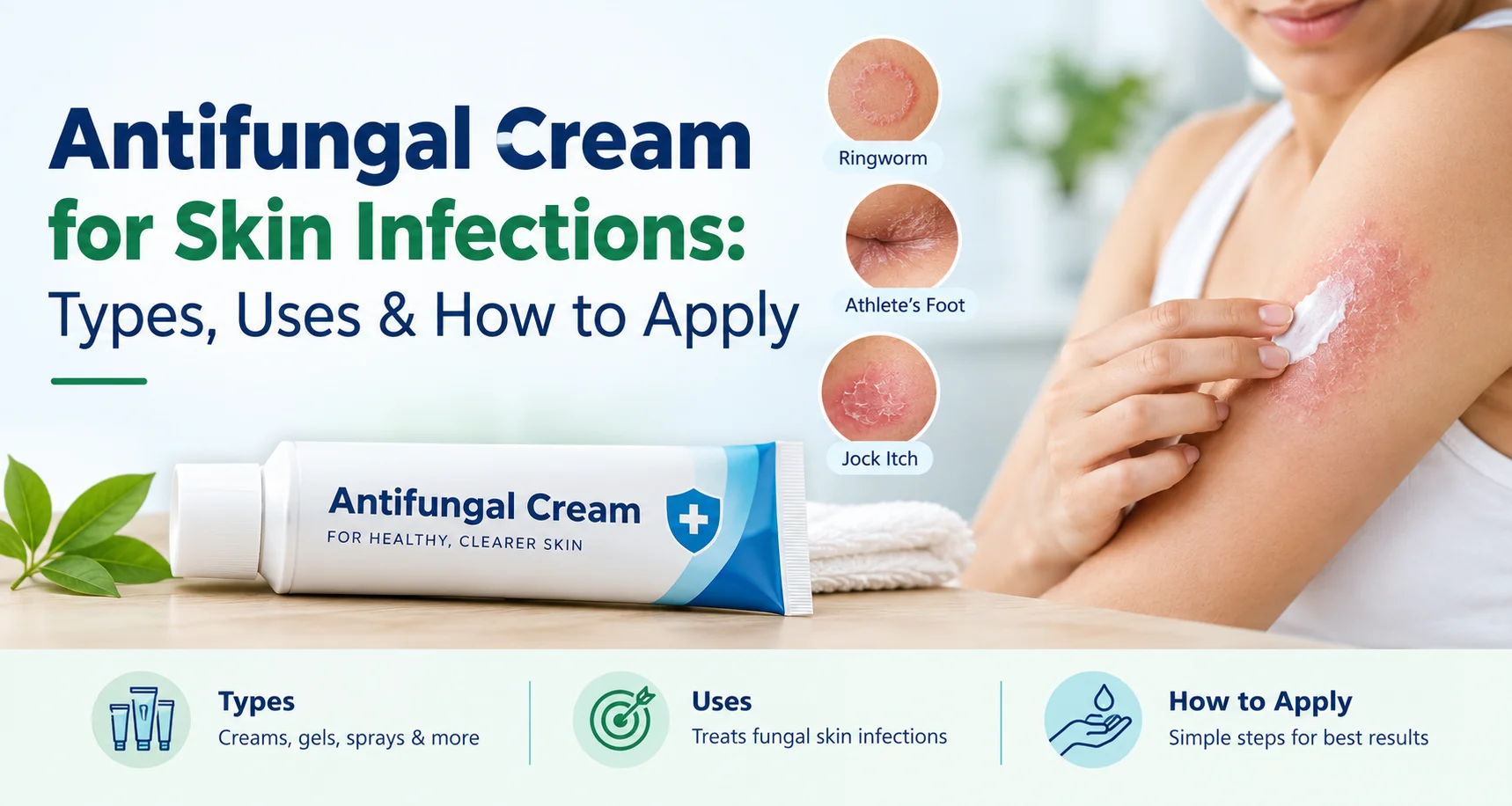
If you live in India, chances are you or someone in your family has dealt with an itchy, red, ring-shaped rash that just won’t go away. Hot summers, heavy monsoons, sweaty commutes and damp clothes create the perfect home for fungi. The good news? Most of these problems respond well to the right antifungal cream for skin infections, as long as you use it the right way.
This guide explains how these creams work, which ingredients to look for, how to apply them properly, and the common mistakes that make infections worse.
Why Fungal Skin Infections Are So Common in India
Fungi love warmth, moisture and friction. India’s humid climate gives them all three for most of the year. Add tight clothing, synthetic fabrics, shared towels and long hours in damp shoes, and it is easy to see why fungal infections are so widespread.
People who sweat heavily, have diabetes, or have a weak immune system are especially prone to them.
Common Types of Fungal Skin Infections
Knowing what you are dealing with helps you choose the right treatment.
Ringworm (Tinea Corporis)
Known as dad or dadru in many Indian households, ringworm shows up as a red, scaly, circular patch with a clearer centre. It itches, especially when you sweat.
Jock Itch (Tinea Cruris)
This affects the groin and inner thighs. It causes a red, itchy rash and often flares up in summer and the rainy season.
Athlete’s Foot (Tinea Pedis)
Peeling, cracking skin between the toes is the classic sign. It is common in people who wear closed shoes all day or walk through wet areas.
Yeast and Other Skin Infections
Candida can cause red, moist rashes in the folds of skin and pityriasis versicolor causes light or dark patches on the chest, back and neck.
How Does an Antifungal Cream Work?
An antifungal cream either stops fungus from growing (fungistatic) or kills it outright (fungicidal). The medicine damages the fungal cell membrane, which weakens the organism until the skin can clear it. Because the cream is applied directly to the affected area, it delivers the medicine where it is needed with relatively little absorption into the body.
Common Active Ingredients to Look For
When you read the label of an antifungal cream for skin infections, check the active ingredient rather than just the brand name. Widely used options in India include:
- Clotrimazole: A long-standing, affordable choice for ringworm, jock itch and candida.
- Terbinafine: Often works faster for ringworm and athlete’s foot, with shorter treatment courses.
- Luliconazole: A newer option that is commonly prescribed for stubborn or recurring ringworm.
- Miconazole: Useful for athlete’s foot and yeast-related skin problems.
- Ketoconazole: Used for fungal rashes and conditions like seborrhoeic dermatitis.
- Sertaconazole: Often prescribed for tinea and candidal infections.
The best choice depends on the type and severity of your infection, so a doctor’s advice is always worth having.
How to Choose the Right Antifungal Cream
- Match the infection: Ringworm, jock itch and candida may need different products.
- Check the ingredient: Look for a single antifungal agent unless a doctor says otherwise.
- Consider the area: Creams suit most body areas, while powders or sprays may help in very sweaty folds.
- Check your skin type: If your skin is sensitive, mention it to a pharmacist or dermatologist.
- Look at the expiry date: Old creams may not work as well.
How to Apply Antifungal Cream the Right Way
Many infections return simply because the cream was used incorrectly. Follow these steps:
- Wash the area gently and pat it completely dry.
- Wash your hands before and after applying.
- Apply to a rash and 2cm of healthy skin.
- Use it once or twice a day, as directed on the label or by your doctor.
- Keep using it for the full recommended time, even after the itching stops.
Stopping early is the most common reason for relapse. Many infections need two to four weeks of treatment, sometimes longer.
The Steroid Combination Cream Problem
This is a major concern in India. Many over-the-counter creams combine an antifungal with a strong steroid and, sometimes, an antibiotic. They bring quick relief from itching, which makes people think they are cured. But steroids can hide the infection, thin the skin, and help fungus spread and become resistant to treatment. Dermatologists across the country have raised alarm about the rise of stubborn, hard-to-treat ringworm linked to this misuse.
So avoid using any combination cream unless a doctor has prescribed it specifically for you, and never use leftover creams from someone else’s prescription.
Simple Habits to Prevent Fungal Infections
Treatment works best alongside good habits:
- Wear loose, breathable cotton clothes, especially in summer.
- Dry skin folds, groin and toes thoroughly after bathing.
- Do not share towels, combs, clothes or footwear.
- Wash bedsheets and towels in hot water regularly.
- Wear slippers in public bathrooms and gyms.
- Rotate your shoes so they can dry fully.
When Should You See a Doctor?
A cream is not always enough. Consult a dermatologist if:
- The rash does not improve after two weeks of proper use.
- It keeps coming back.
- It spreads to the scalp, nails or large areas of the body.
- You have diabetes or a weak immune system.
- The skin looks swollen, painful or oozing pus.
Some infections need oral antifungal tablets, and only a doctor can decide that safely.
Frequently Asked Questions
1. Which is the best antifungal cream for skin infections?
There is no single best option. Clotrimazole, terbinafine and luliconazole are popular, and the right choice depends on your type of infection. A doctor or pharmacist can guide you.
2. How long does it take for an antifungal cream to work?
Itching often eases within a few days, but the infection usually takes two to four weeks to clear. Keep applying for the full course.
3. Can I use an antifungal cream on my face?
Some creams are suitable for facial use, but facial skin is delicate. Check with a dermatologist before applying anything on your face.
4. Is it safe to use antifungal cream with a steroid?
Only under a doctor’s supervision. Unsupervised use of steroid combinations can worsen the infection and damage your skin.
5. Why does my fungal infection keep coming back?
Common reasons include stopping treatment too early, staying in damp clothes, sharing personal items, or using the wrong cream. Good hygiene and completing the course help prevent relapse.
Final Thoughts
A reliable antifungal cream for skin infections can clear most common rashes, but success depends on choosing the right ingredient, applying it correctly and finishing the full course. Avoid steroid-heavy combination creams, keep your skin dry, and see a doctor when things are not improving.
Looking for more everyday health and lifestyle reads? Explore more articles at Magzilla Trends.