

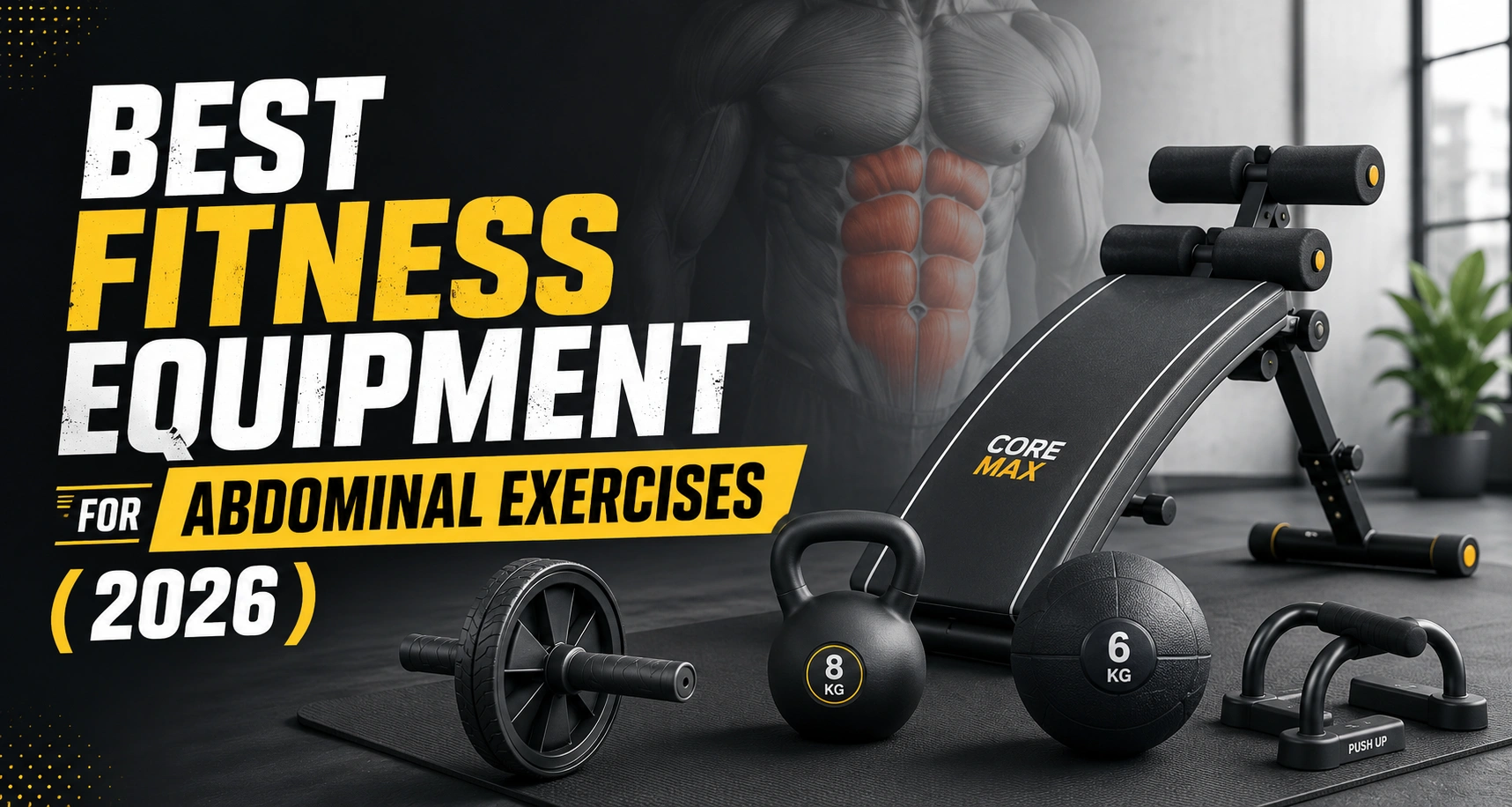
Everyone wants strong abs, but most people are training them the least effective way possible — endless crunches on a hard floor, hoping for the best. The truth is, the right Best Fitness Equipment for Abdominal Exercises can make your core training dramatically more effective, whether your goal is visible definition, better posture, or genuine functional strength.
This guide breaks down the most useful ab training equipment available today, what each tool actually does for your core, and how to build a smart, well-rounded ab routine around it.
Why Your Core Deserves More Than Just Crunches
Your core isn’t just the “six-pack” muscles you see in the mirror. It includes deeper stabilizing muscles like the transverse abdominis and obliques, which play a critical role in posture, balance, and protecting your lower back during everyday movement and heavier lifts.
Using dedicated fitness equipment for abdominal exercises offers real advantages over bodyweight-only training:
- Adds resistance, which is necessary for continued strength and muscle development over time
- Increases exercise variety, targeting the core from multiple angles
- Improves range of motion for movements that are hard to load with bodyweight alone
- Reduces strain on the neck and lower back compared to poorly performed floor crunches
- Makes tracking progress easier through adjustable resistance or added weight
Best Fitness Equipment for Abdominal Exercises
Ab Wheel (Ab Roller)
The ab wheel is one of the most effective and affordable pieces of core training equipment available. Rolling out from a kneeling position forces your entire core, including deep stabilizers, to work hard to control the movement and prevent your lower back from sagging.
Why it works: It combines core strength with anti-extension stability, making it far more challenging than a standard crunch.
Best for: Intermediate to advanced trainees who have already built a baseline level of core strength.
Cable Machine (for Cable Crunches and Woodchoppers)
A cable machine is one of the most versatile tools for ab training, allowing for resisted crunches, woodchoppers, and anti-rotation exercises. Unlike bodyweight movements, cables let you progressively add resistance as your strength improves.
Why it works: Continuous tension throughout the movement keeps the core engaged from start to finish, unlike many bodyweight exercises.
Best for: Anyone who already trains at a gym with cable machine access and wants to add resistance to core work.
Stability Ball (Swiss Ball)
A stability ball adds an element of balance to ab exercises, forcing your core to work harder to stay stabilized throughout each movement. It’s commonly used for ball crunches, planks, and rollouts.
Why it works: The unstable surface increases core activation compared to performing the same exercises on the floor.
Best for: Beginners and intermediate trainees looking to add variety and a balance challenge to their core routine.
Ab Roller Machine (Seated or Captain’s Chair Style)
Seated ab machines, often found in commercial gyms, allow for controlled, resisted crunching movements with adjustable weight. Captain’s chair machines, which support your body while you lift your knees, are especially effective for targeting the lower abs and hip flexors.
Why it works: These machines isolate the abdominal muscles while reducing strain on the neck and lower back compared to floor-based crunches.
Best for: Gym-goers who want a controlled, joint-friendly way to progressively overload their core.
Hanging Ab Straps
Hanging ab straps attach to a pull-up bar and support your arms while you perform hanging leg raises or knee raises. This removes grip strength as a limiting factor, letting you focus entirely on core engagement.
Why it works: The most effective bodyweight exercises for lower abs and hip flexors.
Best for: Anyone with access to a pull-up bar who wants a more advanced core challenge.
Medicine Ball
Medicine balls are a simple but effective tool for dynamic core training, commonly used for Russian twists, overhead slams, and rotational throws. They’re especially useful for building core power and rotational strength, which is often overlooked in standard ab routines.
Why it works: Adding weight to rotational and dynamic movements builds functional core strength that translates well to sports and everyday activities.
Best for: Athletes and anyone looking to build explosive, functional core strength rather than just static strength.
Resistance Bands
Resistance bands are an affordable, portable option for adding tension to core exercises like Pallof presses, band-resisted crunches, and standing rotations. They’re especially useful for training anti-rotation strength, which helps stabilize the spine during everyday movements.
Why it works: Bands provide variable resistance, meaning the tension increases as you stretch them further, closely matching how muscles naturally generate force.
Best for: Home gym users or anyone traveling who wants effective core training without bulky equipment.
Adjustable Weight Bench (for Decline Sit-Ups and Leg Raises)
A decline bench increases the range of motion and resistance for classic exercises like decline sit-ups and leg raises, making bodyweight core training more challenging without needing external weight.
Why it works: The added incline increases the resistance your core has to overcome compared to a flat surface.
Best for: Home gym owners who already have a bench and want more challenging bodyweight ab options.
How to Choose the Right Ab Training Equipment for You
Match Equipment to Your Fitness Level
Beginners often do best starting with a stability ball or resistance bands, which allow for controlled, lower-intensity core work. More advanced trainees can progress to ab wheels, hanging ab straps, or weighted cable exercises as their strength improves.
Consider Your Available Space
- Small apartments or limited space: Resistance bands, ab wheel, or medicine ball
- Home gyms with more room: Adjustable bench, stability ball, hanging ab straps (if you already have a pull-up bar)
- Full gym access: Cable machines, seated ab machines, captain’s chair
Think About Your Specific Goals
- Building visible definition: Combine resistance-based training with overall body fat management through diet and consistent training
- Improving core stability for lifting: Prioritize anti-rotation and anti-extension tools like resistance bands and the ab wheel
- Building explosive core power: Medicine ball throws and rotational movements are especially effective
Sample Core Workout Using Common Ab Equipment
Here’s a simple, equipment-based core routine you can adapt based on what you have available:
- Ab wheel rollouts — 3 sets of 8-10 reps
- Hanging knee raises (using ab straps) — 3 sets of 10-12 reps
- Cable woodchoppers — 3 sets of 12 reps per side
- Resistance band Pallof press — 3 sets of 10-12 reps per side
- Medicine ball Russian twists — 3 sets of 20 reps total
Perform this routine two to three times per week, allowing at least one rest day between core-focused sessions to support recovery.
Common Mistakes to Avoid with Ab Equipment
- Relying only on crunches, which primarily target the upper abs and neglect rotational and stabilizing muscles
- Skipping progressive overload, using the same resistance or reps for months without increasing difficulty
- Using momentum instead of control, especially with ab wheels and hanging leg raises
- Ignoring form for the sake of more reps, which reduces effectiveness and increases injury risk
- Expecting visible abs from training alone, without addressing overall nutrition and body composition
Conclusion
The Best Fitness Equipment for Abdominal Exercises can transform your core training from a repetitive, ineffective routine into a genuinely productive part of your fitness program. Whether you start with something as simple as an ab wheel and resistance bands or work your way up to cable machines and hanging ab straps, the key is progressive overload, proper form, and variety across different movement patterns — rotation, flexion, and anti-extension.
Pick one or two tools from this list that match your current fitness level and available space, build a consistent routine around them, and remember that visible abdominal definition ultimately depends on combining strong core training with solid overall nutrition habits.
Also Read:- Lebert Resistance Mini Bands Review: Specs, Uses & Pack Options
Frequently Asked Questions (FAQs)
Q.1 What is the best fitness equipment for abdominal exercises for beginners?
Resistance bands and a stability ball are great starting points for beginners, offering controlled resistance and reduced strain compared to more advanced tools like the ab wheel.
Q.2 Can ab equipment alone give me visible six-pack abs?
No, visible abdominal definition depends heavily on overall body fat levels, which are influenced by diet and total activity, not just core exercises alone.
Q.3 Is an ab wheel effective for building core strength?
Yes, the ab wheel is considered one of the most effective tools for core training, as it challenges both abdominal strength and spinal stability through a controlled rolling motion.
Q.4 How often should I train my abs using fitness equipment?
Training your core two to three times per week, with at least one rest day between sessions, is generally sufficient to see strength and definition improvements over time.
Q.5 Do I need a gym membership to train my abs effectively?
No, many effective ab training tools, including resistance bands, an ab wheel, and a medicine ball, can be used at home without requiring gym equipment like cable machines.