

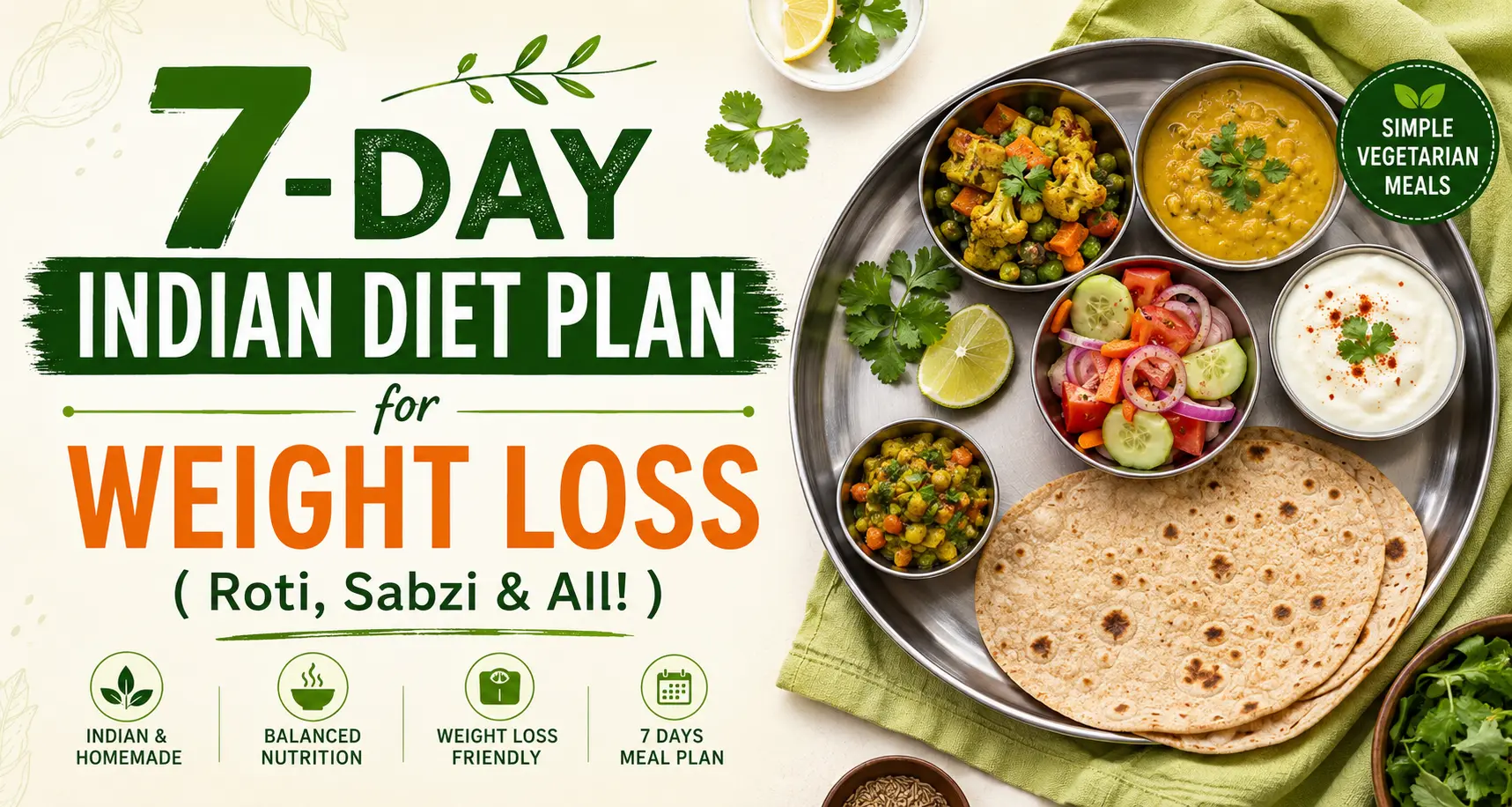
You don’t need to give up roti. You don’t need to stop eating dal. And you definitely don’t need to survive on expensive salads or protein powders with names you can’t even pronounce.
The truth is, traditional Indian food is already one of the healthiest eating patterns in the world. Whole grains, lentils, seasonal vegetables, curd, and spices like turmeric, cumin, and fenugreek make everyday Indian meals naturally supportive for weight management and overall health.
The issue is rarely the food itself. More often, it comes down to portion sizes, irregular meal timings, cooking methods, and the gradual addition of extra sugar, refined flour (maida), and ultra-processed snacks into our daily routines.
Important: This is a general sample meal plan designed for healthy adults. Before starting any new diet, especially if you have diabetes, thyroid conditions, PCOS, or any other medical concerns, please consult your doctor or a registered dietitian for a personalized nutrition plan.
How This Plan Works
A well-designed Indian diet plan for weight loss focuses on balanced nutrition, portion control, and calorie management to support gradual fat loss. Daily meals typically provide around 1,200–1,500 calories with balanced carbohydrates, proteins, healthy fats, vitamins, and fibre.
The four pillars of this plan are:
- Protein at every meal — Protein keeps you full and reduces cravings. Good Indian sources include paneer, dal, sprouts, eggs, curd, and chicken.
- High-fibre foods — Fibre improves digestion and keeps you satisfied longer. Great sources include vegetables, fruits, oats, brown rice, millets, and salad.
- Smart carb control — Instead of removing carbs completely, use portion control — 1–2 rotis, 1 bowl rice, oats, or poha per meal.
- Better meal timing — Eating at the right intervals reduces overeating. Current diet plans emphasize balanced macros and meal timing rather than extreme restriction.
Before You Start — The Golden Rules
- ✅ Drink 8–10 glasses of water every day — it directly supports digestion and fat burning
- ✅ Never skip breakfast — it sets your metabolism for the day
- ✅ Eat your last meal by 8 PM — late-night eating slows weight loss
- ✅ Cook in less oil — use 1–2 teaspoons per meal, preferably mustard oil, ghee (in moderation), or cold-pressed coconut oil
- ✅ Avoid these completely during the 7 days: cold drinks, packaged juices, biscuits, white bread, maida rotis, deep-fried snacks, and sugar in chai
- ✅ Consume your meals slowly and attentively to prevent overeating. Dedicate half of your plate to vegetables.
- ✅ Refrain from going below 800 calories per day unless supervised by a certified nutritionist.
- The 7-Day Plan
🌅 DAY 1 — Monday: Fresh Start
| Time | Meal | What to Eat |
| 6:30 AM | Wake-up drink | 1 glass warm water + juice of half a lemon |
| 8:00 AM | Breakfast | 1 bowl vegetable poha + 1 cup green tea (no sugar) |
| 11:00 AM | Mid-morning snack | 1 medium apple + 5 soaked almonds |
| 1:00 PM | Lunch | 2 whole wheat rotis + 1 bowl palak dal + 1 bowl cucumber-tomato salad + 1 small bowl curd |
| 4:00 PM | Evening snack | 1 cup masala chaas (buttermilk, no sugar) + 1 handful roasted chana |
| 7:30 PM | Dinner | 1–2 rotis + 1 bowl mixed sabzi (lauki/tinda/bhindi) + 1 bowl moong dal |
Why this works: Poha is light and energizing. Palak dal gives iron + protein. Moong dal at night is easy to digest. Total estimated calories: 1,200–1,350.
🌅 DAY 2 — Tuesday: Protein Boost
| Time | Meal | What to Eat |
| 6:30 AM | Wake-up drink | 1 glass warm water + 1 tsp soaked methi seeds |
| 8:00 AM | Breakfast | 2 moong dal cheelas + 2 tbsp green chutney + 1 cup chai (less sugar, skimmed milk) |
| 11:00 AM | Mid-morning snack | 1 guava or 1 pear |
| 1:00 PM | Lunch | 1 cup brown rice or 2 rotis + 1 bowl rajma + 1 bowl seasonal sabzi + salad |
| 4:00 PM | Evening snack | 1 small bowl sprouted moong chaat (lemon + chaat masala) |
| 7:30 PM | Dinner | 2 rotis + 1 bowl paneer bhurji (minimal oil) + 1 bowl soup |
Why this works: Moong dal cheela is a protein powerhouse breakfast. Rajma rice is a complete protein combination. Paneer at dinner keeps you full through the night. Total estimated calories: 1,250–1,400.
🌅 DAY 3 — Wednesday: Millet Day
| Time | Meal | What to Eat |
| 6:30 AM | Wake-up drink | 1 glass warm water + 1 tsp apple cider vinegar (optional) |
| 8:00 AM | Breakfast | 1 bowl bajra or jowar upma + 1 cup green tea |
| 11:00 AM | Mid-morning snack | 5–6 walnut halves + 1 small orange |
| 1:00 PM | Lunch | 2 bajra rotis + 1 bowl chana dal + 1 bowl bhindi sabzi + 1 bowl curd |
| 4:00 PM | Evening snack | 1 cup green tea + 2 rice cakes or 1 handful makhana (foxnuts, lightly roasted) |
| 7:30 PM | Dinner | 1 bowl dalia khichdi (broken wheat + vegetables) + 1 bowl thin dal |
Why this works: Millets like bajra and jowar have lower glycemic index than wheat — they release energy slowly, keeping hunger away longer. Makhana is a fantastic low-calorie, high-protein snack. Total estimated calories: 1,150–1,300.
🌅 DAY 4 — Thursday: Light & Refreshing
| Time | Meal | What to Eat |
| 6:30 AM | Wake-up drink | 1 glass warm water + cinnamon powder (pinch) |
| 8:00 AM | Breakfast | 1 bowl overnight oats with skimmed milk + 1 tsp honey + banana slices |
| 11:00 AM | Mid-morning snack | 1 bowl papaya or watermelon (seasonal) |
| 1:00 PM | Lunch | 2 rotis + 1 bowl arhar/toor dal + 1 bowl aloo gobhi (less oil, dry sabzi) + salad |
| 4:00 PM | Evening snack | 1 cup low-fat curd + cucumber slices |
| 7:30 PM | Dinner | 1 bowl vegetable daliya + 1 bowl moong soup |
Why this works: Thursday is a lighter day to give your digestive system a gentle break mid-week. Oats keep you full till lunch. Daliya at dinner is warming, filling, and very easy on the stomach. Total estimated calories: 1,100–1,250.
🌅 DAY 5 — Friday: Energy Day
| Time | Meal | What to Eat |
| 6:30 AM | Wake-up drink | 1 glass warm water + lemon + ginger slice |
| 8:00 AM | Breakfast | 2 besan chillas + green chutney + 1 cup chai |
| 11:00 AM | Mid-morning snack | 1 medium banana + 5 soaked almonds |
| 1:00 PM | Lunch | 1 cup rice + 1 bowl sambar + 1 bowl mixed vegetable sabzi + 1 papad (roasted, not fried) |
| 4:00 PM | Evening snack | 1 cup masala chaas + 1 small bowl roasted peanuts |
| 7:30 PM | Dinner | 2 rotis + 1 bowl palak paneer (minimal cream) + 1 bowl thin dal |
Why this works: Friday is a slightly higher-energy day to keep you motivated through the week. Besan (gram flour) is high in protein. Palak paneer gives you iron, calcium, and protein in one delicious dish. Total estimated calories: 1,300–1,450.
🌅 DAY 6 — Saturday: Weekend Smart
| Time | Meal | What to Eat |
| 7:00 AM | Wake-up drink | 1 glass warm water + turmeric + black pepper (haldi pani) |
| 9:00 AM | Breakfast | 2 idli + sambar + coconut chutney (light) + 1 cup filter coffee or chai |
| 12:00 PM | Mid-morning snack | 1 bowl mixed fruit chaat (no sugar, lemon + chaat masala) |
| 2:00 PM | Lunch | 2 rotis + 1 bowl rajma or chole (home-cooked, less oil) + 1 bowl raita + salad |
| 5:00 PM | Evening snack | 1 cup green tea + 1 handful makhana |
| 8:00 PM | Dinner | 1 bowl khichdi (dal + rice + vegetables) + 1 tbsp ghee + 1 bowl curd |
Why this works: Saturday is a slightly relaxed schedule — meals are spaced wider to fit a weekend rhythm. Idli is fermented, making it excellent for gut health. Khichdi is the perfect complete meal — protein, carbs, and micronutrients in one bowl. Total estimated calories: 1,250–1,400.
🌅 DAY 7 — Sunday: Reset & Celebrate
| Time | Meal | What to Eat |
| 7:00 AM | Wake-up drink | 1 glass warm water + lemon + honey (1 tsp) |
| 9:00 AM | Breakfast | 1 bowl vegetable sevai (rice noodle) upma + 1 boiled egg (optional) + 1 cup chai |
| 12:00 PM | Mid-morning snack | 1 small bowl sprouted moong + lemon + rock salt |
| 2:00 PM | Lunch | 2 rotis + 1 bowl dal makhani (light version) + 1 bowl bhindi or beans sabzi + salad + curd |
| 5:00 PM | Evening snack | 1 cup turmeric milk (haldi doodh, skimmed milk, no sugar) |
| 8:00 PM | Dinner | 1 bowl light vegetable soup + 2 rotis + 1 bowl sauteed mixed vegetables |
Why this works: Sunday is a light dinner to prepare your body for the week ahead. Haldi doodh in the evening is anti-inflammatory, aids sleep, and supports recovery. Sprouted moong is one of the best snacks for weight loss — high protein, very low calories. Total estimated calories: 1,200–1,350.
Best Indian Foods for Weight Loss
Eat More Of:
| Food | Why It Helps |
| Moong dal | High protein, easy to digest, very filling |
| Bajra & jowar roti | Low glycemic index, rich in fibre |
| Curd / dahi | Probiotics for gut health, keeps you full |
| Makhana (foxnuts) | Low calorie, high protein snack |
| Lauki (bottle gourd) | 96% water, extremely low in calories |
| Palak (spinach) | Iron, fibre, very low calories |
| Sprouts | High protein, high fibre, zero fat |
| Roasted chana | Best mid-meal snack — protein + fibre |
| Haldi (turmeric) | Anti-inflammatory, supports metabolism |
| Methi (fenugreek) | Controls blood sugar, reduces cravings |
Foods to Avoid During These 7 Days
Sugary beverages, cold drinks, packaged juices, bakery items like cakes and biscuits, refined foods such as pasta and white bread, fried foods, and processed fatty meats.
Also avoid:
- Adding white sugar to tea or coffee (switch to no sugar, or use jaggery in moderation)
- Maida-based rotis, naan, and butter-loaded parathas
- Packaged namkeen, chips, and biscuits
- Alcohol and high-calorie mixers
5 Tips to Make This Plan Actually Work
- Cook with less oil — but don’t go zero
Use 1–2 teaspoons of good quality oil per meal. Completely fat-free cooking is neither healthy nor sustainable. A small amount of ghee in dal or on roti is perfectly fine. - Eat roti — just control the number
Instead of removing carbs completely, use portion control — 1–2 rotis per meal is ideal for weight loss. Switching to bajra or jowar roti gives you even better results. - Make lunch your biggest meal
Your metabolism is most active in the middle of the day. Eat the most at lunch and keep dinner light. This one change alone can make a significant difference. - Walk after dinner
Even a 15–20 minute walk after your evening meal can significantly lower blood sugar and improve digestion. It is one of the most underrated weight loss habits. - Prep your snacks in advance
The moment you feel hungry and there is nothing ready to eat, you reach for biscuits or chips. Keep roasted chana, makhana, or cut fruit ready in your fridge so the healthy choice is always the easy choice.
What Results Can You Expect?
Losing weight does not mean starving — it is about eating the right foods in the right portions. This Indian diet plan is sustainable, nutritious, and effective for long-term weight management.
Realistically, following this 7-day plan consistently alongside light daily movement (walking, yoga, or any exercise you enjoy) can help you lose 0.5 to 1 kg per week — which is the healthy, sustainable rate that nutrition experts recommend.
The goal is not to crash-diet for 7 days and go back to old habits. The goal is to use these 7 days to reset your relationship with food — to prove to yourself that Indian food, cooked right, is all you need to be healthy and feel great.
The Bottom Line
You do not need a foreign diet. You do not need expensive superfoods. You do not need to stop eating roti, dal, or curd.
You just need to eat smarter — more protein, more vegetables, right portions, right timing, and less oil and sugar.
Your dadi’s kitchen already had the answer. This plan just puts it on a schedule.
Start Monday. Be consistent for 7 days. See how your body feels at the end of the week — lighter, more energetic, and genuinely proud of yourself.
Disclaimer: This diet plan is for general informational purposes only and is not a substitute for professional medical advice. Please consult your doctor or a registered dietitian before making significant changes to your diet, especially if you have any health conditions.
Sources: Truemeds Indian Diet Plan 2026 | Practo Indian Weight Loss Diet Chart April 2026 | Oliva Clinic 7-Day Indian Diet Plan | Netmeds Indian Vegetarian Diet Plan | StyleCraze Indian Diet Chart for Weight Loss | Apollo 247 Indian Diet Chart
Also read on Magzilla Trends: